Loango National Park
In 2000, the ecologist Mike Fay completed a 3,000-kilometer walk through the forest corridor between Congo and Gabon. What he found at the end of his journey was a stretch of coastline so ecologically intact that he gave it a name that stuck: Africa's Last Eden. Loango National Park, sprawling across 1,550 square kilometers of Gabon's coastal plain, is the place where the continent's great wildlife spectacles play out on a beach. Forest elephants lumber across open sand. Red river hogs root at the tide line. Hippos wade into the Atlantic surf. Nowhere else in Africa do these scenes unfold against the sound of breaking waves.
Where the Forest Meets the Sea
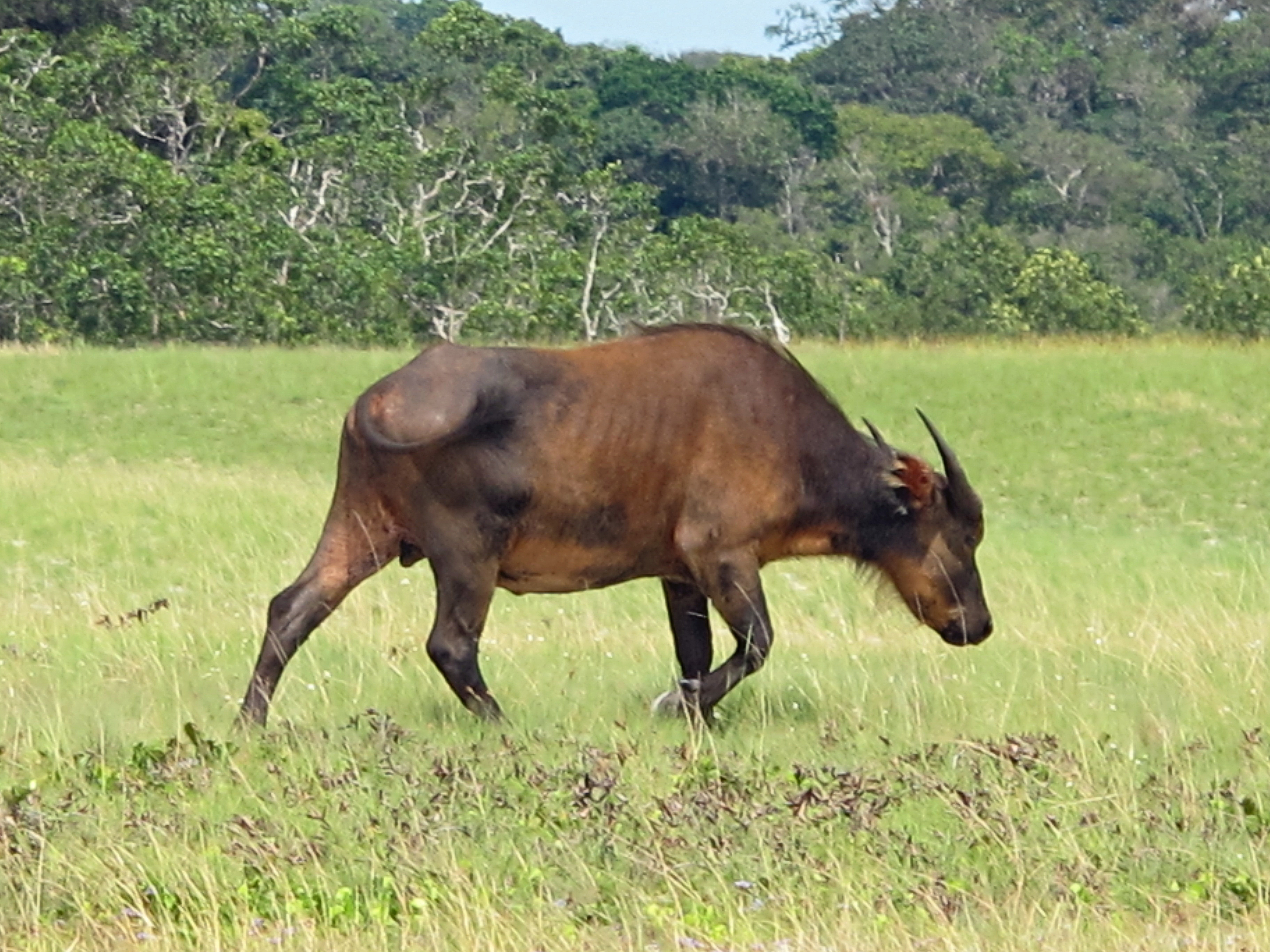
Loango's geography reads like a catalog of West African habitats compressed into a single park. Starting at the ocean, the landscape shifts from white sand beaches to coastal lagoons, then into mangrove swamps and salt marshes. Further inland, coastal forest gives way to swamp forest and eventually dense equatorial rainforest. Savannahs open up in clearings, and rivers thread through the canopy, ending in papyrus-choked wetlands. This mosaic of ecosystems explains the park's extraordinary biodiversity. Nearly 200 mammal species inhabit Gabon, and Loango concentrates a remarkable share of them: western lowland gorillas and chimpanzees in the interior forests, forest elephants and red forest buffalo in the clearings, sitatunga and duikers in the wetlands, slender-snouted crocodiles in the lagoons, and over 600 species of birds overhead.
Born from a Presidential Decree
For decades, the forests and coastline of Loango existed without formal protection. That changed in 2002, when Gabon's President Omar Bongo Ondimba made an announcement that astonished conservationists worldwide: he designated thirteen new national parks in a single decree, setting aside roughly eleven percent of the country's land area for preservation. Loango was among them. The decision was partly inspired by Fay's megatransect walk and the international attention it brought to Gabon's forests. The park's creation represented a gamble that ecotourism could eventually replace logging revenue, and that the intact wilderness Fay had documented was worth more standing than felled. The gamble has drawn researchers, filmmakers, and adventurous travelers to a coastline that remains one of the most remote in Africa.
Surfing Hippos and Beach Elephants
Loango's signature spectacle is wildlife on the beach. Forest elephants emerge from the tree line and cross the sand, sometimes wading into the shallows. Hippos, typically associated with inland rivers and lakes, swim in the ocean here, a behavior documented by researchers and filmed for international audiences. During the right season, humpback whales breach offshore while buffalo graze on the coastal grasslands behind the dunes. The park is also home to a gorilla habituation project on Evengue Island, just outside the park boundary, where researchers work with western lowland gorillas in their natural forest habitat. Walking safaris, kayaking through the lagoons, whale-watching expeditions, and birding trips offer ways to explore the park's varied ecosystems on foot and by water.
A Church by Eiffel, a Lodge in the Wild
Among Loango's unexpected landmarks is a church built by Gustave Eiffel, the same engineer who designed the famous Parisian tower. The iron-framed structure stands as evidence of the French colonial presence along this coast in the nineteenth century. Today, the park's main access point is Evengue Island, reachable by boat up the Mpivie River from the town of Omboue or by charter flights to the Iguela airstrip. Temperatures hover between 28 and 31 degrees Celsius year-round, with rains falling from October through April and a brief dry spell in December and January. The remoteness that once made Loango inaccessible now serves as its greatest asset. Visitors who make the journey find a landscape that feels genuinely untouched, where the only tracks on the beach belong to elephants.
From the Air
Loango National Park is centered at approximately 2.17S, 9.57E along Gabon's Atlantic coast. From altitude, the park is identifiable by the long, undeveloped coastline, the network of coastal lagoons, and the Mpivie River system. The nearest airstrip is Iguela (no ICAO code; charter flights only), with connections to Port-Gentil International Airport (FOOG) and Libreville Leon M'ba International Airport (FOOL). The terrain is flat coastal plain; expect tropical weather with frequent cloud cover and rain from October through April.