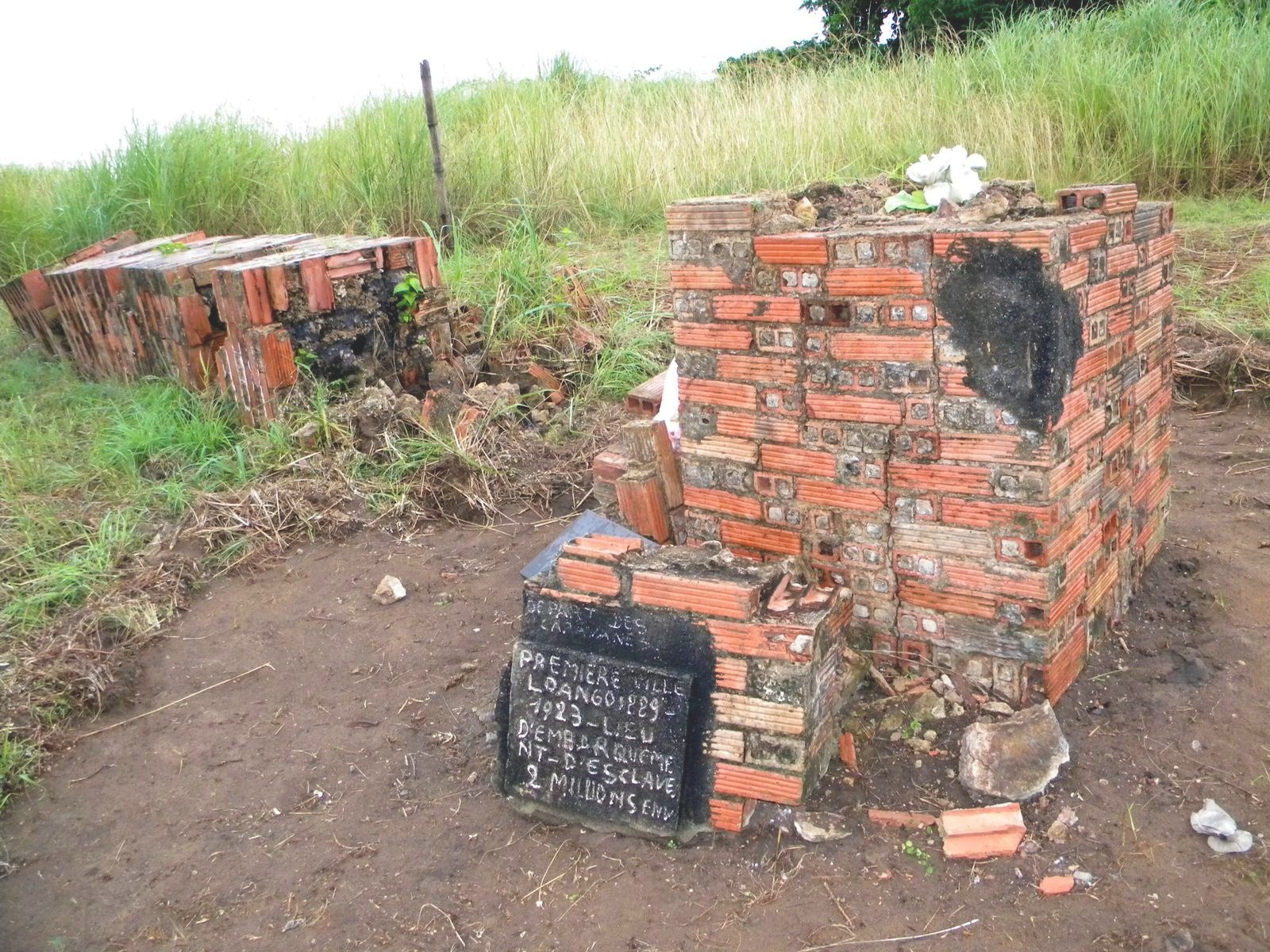
Loango Slavery Harbour
A double row of mango trees, roughly 30 meters tall and three centuries old, lines the ridge of a hill near the Atlantic coast of the Republic of the Congo. The path between them runs straight along the ridgeline, then turns abruptly toward the ocean, ending at a clifftop above the water. This was the last road that enslaved people walked before being loaded onto boats in Loango Bay. The trees still stand. The path is overgrown. Most visitors who find their way here are shocked by the abandonment of a site where, by some estimates, more than two million human beings were taken from their homes and shipped across the Atlantic.
The Scale of What Happened Here
Between 1500 and 1867, the transatlantic slave trade moved nearly 12.5 million enslaved Africans from the continent's coasts to the Americas and the Caribbean. The Loango coast -- stretching from Mayumba in the north through Loango Bay, Malemba, and Cabinda -- was one of the five most significant embarkation zones. More than two million people from areas that now constitute Chad, Angola, southern Gabon, the Democratic Republic of the Congo, and the Republic of the Congo were funneled through this site. At least 475,000 enslaved people departed from Loango coast ports during the initial centuries of trade, and 1.3 million more were recorded between 1811 and 1867 on Portuguese, Brazilian, and American ships. Combining the figures for Central Africa and the East Coast, roughly 6.2 million of the total -- about half -- were from Bantu-speaking peoples.
Commerce Before Chains
Before 1660, Europeans came to the coast of Loango for other things entirely. Raffia fabrics, ivory, rare woods like okoume and padouk, and elephant tails were the trade goods that drew merchants to the Bay of Loango, located about 10 kilometers from Bwali, the capital of the Kingdom of Loango. Foreign traders were escorted to the capital to negotiate with the Maloango or his officials, the mafouks. The kingdom maintained a complex network of internal trade routes extending north to Mayumba, east to Pool Malebo, and south toward Luanda through the kingdoms of Ngoyo and Kakongo. But after 1660, the trade in goods was definitively replaced by the trade in human beings. The kingdom set the terms, playing French, English, and Dutch merchants against one another, and those who violated local rules faced severe consequences -- including death.
The Trees of Forgetting
The harbour's most haunting remnants are its rituals made physical. Three mango trees once served as counters where transactions were finalized before the final ceremony. Chained captives were forced to circle what was called the tree of oblivion -- seven times for women and girls, nine times for men. The ritual was meant to sever their memory of home, to erase who they had been before the crossing. A second tree, the tree of return, represented the belief that the spirit of anyone who died in the Americas might find its way back to Loango. Beyond these trees lay the path between the towering mango rows, running along the ridge before turning sharply toward the Atlantic. The bay was too shallow for ships to dock; they anchored 30 kilometers offshore. Enslaved people were loaded onto smaller boats at a jetty that was little more than a mudflat with a grass-covered runway, a calm stretch of shore that still resists the erosion consuming the rest of the coastline.
A Memorial Consumed by Grass
In 1897, the French explorer Pierre Savorgnan de Brazza erected a seven-meter stele near the site, marking the location where caravans departed and the great market of transactions once stood. In February 2002, the stele collapsed into the tall grass from simple neglect. Joseph Kimfoko Madoungou, the former curator of the nearby Museum of Diosso, spent years guiding visitors through the site and preserving its memory with modest means. The Loango Slavery Harbour was added to UNESCO's World Heritage Tentative List in 2008, a recognition of its significance but not yet a guarantee of protection. Samuel Mabandza, the departmental director of heritage in Kouilou, has acknowledged plans for an open-air museum and African city of arts to honor the site, though no timeline has been provided. For now, the harbour remains what it has been for decades: wild vegetation slowly reclaiming the ground where an unthinkable volume of human suffering was transacted, a place that demands remembrance and receives mostly silence.
From the Air
Located at 4.63S, 11.82E on the Atlantic coast of the Republic of the Congo, in the Hinda district of Kouilou department. The site lies between Pointe Indienne to the southeast and the village of Matombi to the northwest, with the town of Diosso (the former capital of Bwali) to the northeast. From altitude, look for the coastline near the dramatic Diosso Gorge and the shallow arc of Loango Bay. Nearest airport: Pointe-Noire Airport (FCPP), approximately 20 km to the south. The double row of mango trees on the ridgeline may be visible at lower altitudes.