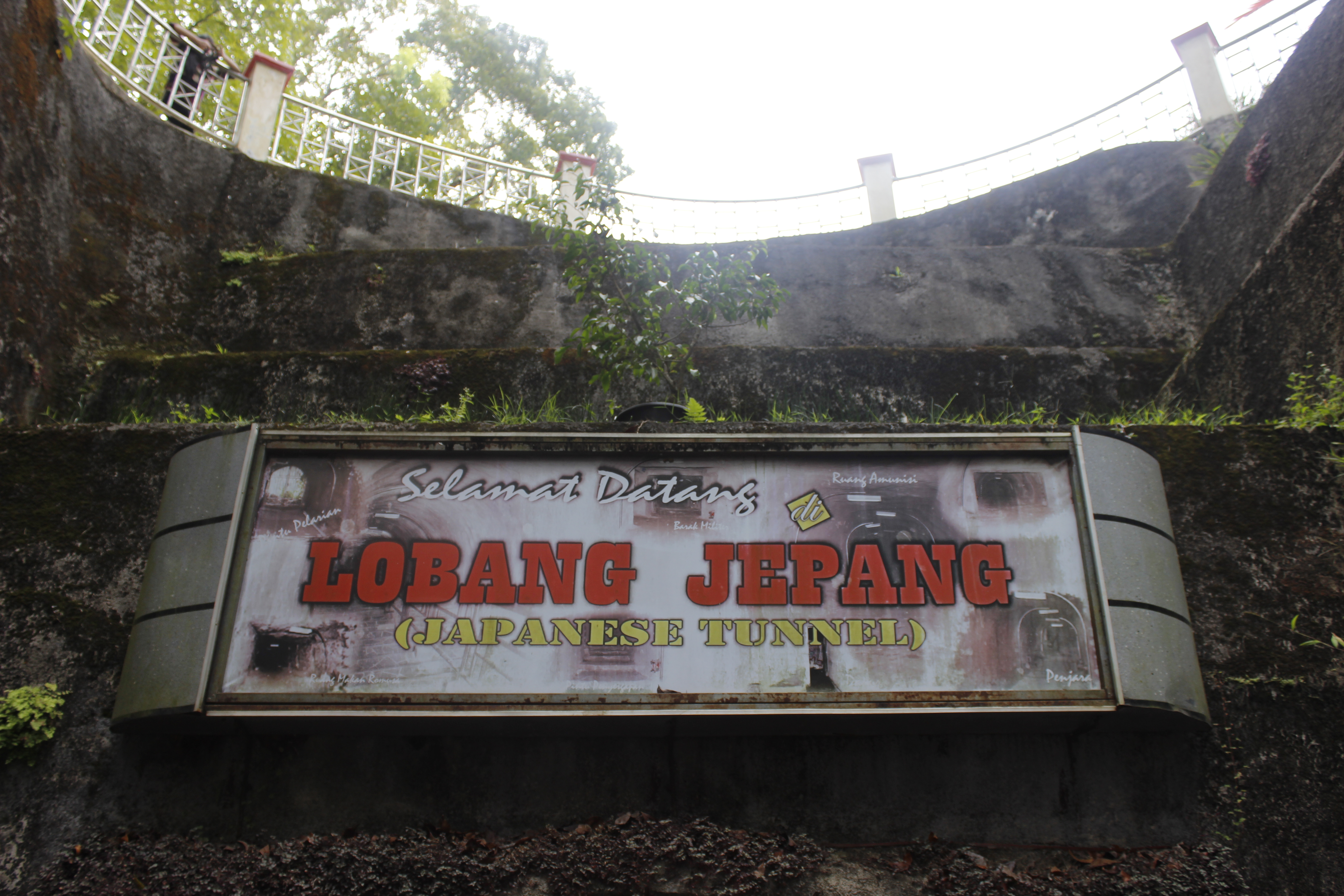
Lobang Jepang
Beneath the pleasant highland streets of Bukittinggi, West Sumatra, a labyrinth stretches for kilometers through the earth. Lobang Jepang -- "Japanese Tunnel" in Indonesian -- is an underground military complex that the Japanese Imperial Army carved out of the volcanic soil during World War II. Completed in 1944, the tunnel system extends an estimated six kilometers, making it one of the longest military tunnels in Asia. But the engineering is not what makes this place unforgettable. It is the story of how it was built: by the hands of tens of thousands of forced laborers, many of whom never emerged alive.
Orders from the 25th Army
In 1942, as Allied forces pushed closer to the Dutch East Indies, Japan's occupying military began constructing defensive tunnel networks across the Indonesian archipelago. Bukittinggi was a strategic prize -- it had served as a center of government for Sumatra. Lieutenant General Moritake Tanabe, Commander-in-Chief of the Japanese 25th Army, ordered the construction of what would become Lobang Jepang. The tunnel was designed not merely as a hiding place but as a fully operational underground base. At roughly 1,400 meters long and two meters wide, it wound through the hillside in a deliberately disorienting pattern. Inside, the Japanese built specialized chambers: a reconnaissance room, an ambush room, an armory, and a prison. The soil itself cooperated with their plans. When mixed with water, the local earth hardened into a remarkably durable material -- so durable that the 2009 West Sumatra earthquakes caused no significant structural damage to the tunnels.
The Romusha Who Built It
The Japanese called them romusha -- forced laborers conscripted from across the archipelago. Tens of thousands were transported from Java, Sulawesi, and Kalimantan to dig these tunnels. The selection was deliberate: by bringing workers from distant islands, the Japanese ensured that no one in Bukittinggi would know the project's true scope. Local workers, meanwhile, were shipped off to dig similar tunnels in Bandung and Biak Island, part of a calculated exchange meant to keep everyone ignorant of the larger defensive network. Thousands of romusha died in the process. The conditions underground were brutal, and the Japanese military treated the laborers as expendable. One chamber, referred to as the kitchen room, tells the grimmest part of this story. It contained two holes: one above, likely for surveillance, and one below, through which the bodies of dead laborers and prisoners of war were disposed into the water system. A concrete table inside the room is believed to have been used for executions. When the tunnel was first explored in the early 1950s, workers found skulls and construction tools -- hoes and picks -- still lying where they had been abandoned.
Decades in Darkness
After Japan's surrender in 1945, the tunnels fell silent. For years, few people in Bukittinggi knew the full extent of what lay beneath their feet. The complex was first rediscovered in the early 1950s, but it would take decades before anyone thought to open it to the public. In 1984, the city government of Bukittinggi began managing the tunnels as a historical site. A decade later, in 1994, Lobang Jepang officially opened to tourists. Only about 1.5 kilometers of the estimated six-kilometer network is accessible today. Visitors descend 49 meters below ground to walk the narrow, winding corridors, passing through the 21 chambers that once served the Japanese military machine -- ammunition rooms, meeting rooms, escape passages, and the prison cells where captives awaited fates they could not have imagined.
Walking Through Memory
Several entrances lead into Lobang Jepang, some near the dramatic Sianok Gorge, others beside Panorama Park, the Bung Hatta Palace, and the Bukittinggi Zoo. The juxtaposition is striking: above ground, Bukittinggi is a charming highland city at roughly 900 meters elevation, known for its cool climate and Minangkabau culture. Below, the tunnels preserve a chapter of history that the pleasant surface belies. The markings on the kitchen room walls remain visible. The narrow corridors still carry a chill that has nothing to do with temperature. Lobang Jepang does not soften its story for visitors. It stands as a memorial not just to wartime strategy but to the human cost of that strategy -- the romusha whose labor and lives were consumed in darkness so that an occupying army could hide from the war it had started.
From the Air
Located at 0.30S, 100.37E in the West Sumatra highlands near Bukittinggi, elevation roughly 900 meters. The Sianok Gorge adjacent to the tunnel entrances is a visible landmark from the air. Nearest major airport is Minangkabau International Airport (WIPT/PDG) approximately 70 km to the southwest near Padang. The Bukit Barisan mountain range dominates the terrain; expect turbulence and variable visibility in this equatorial highland region.