Loch Ness Monster
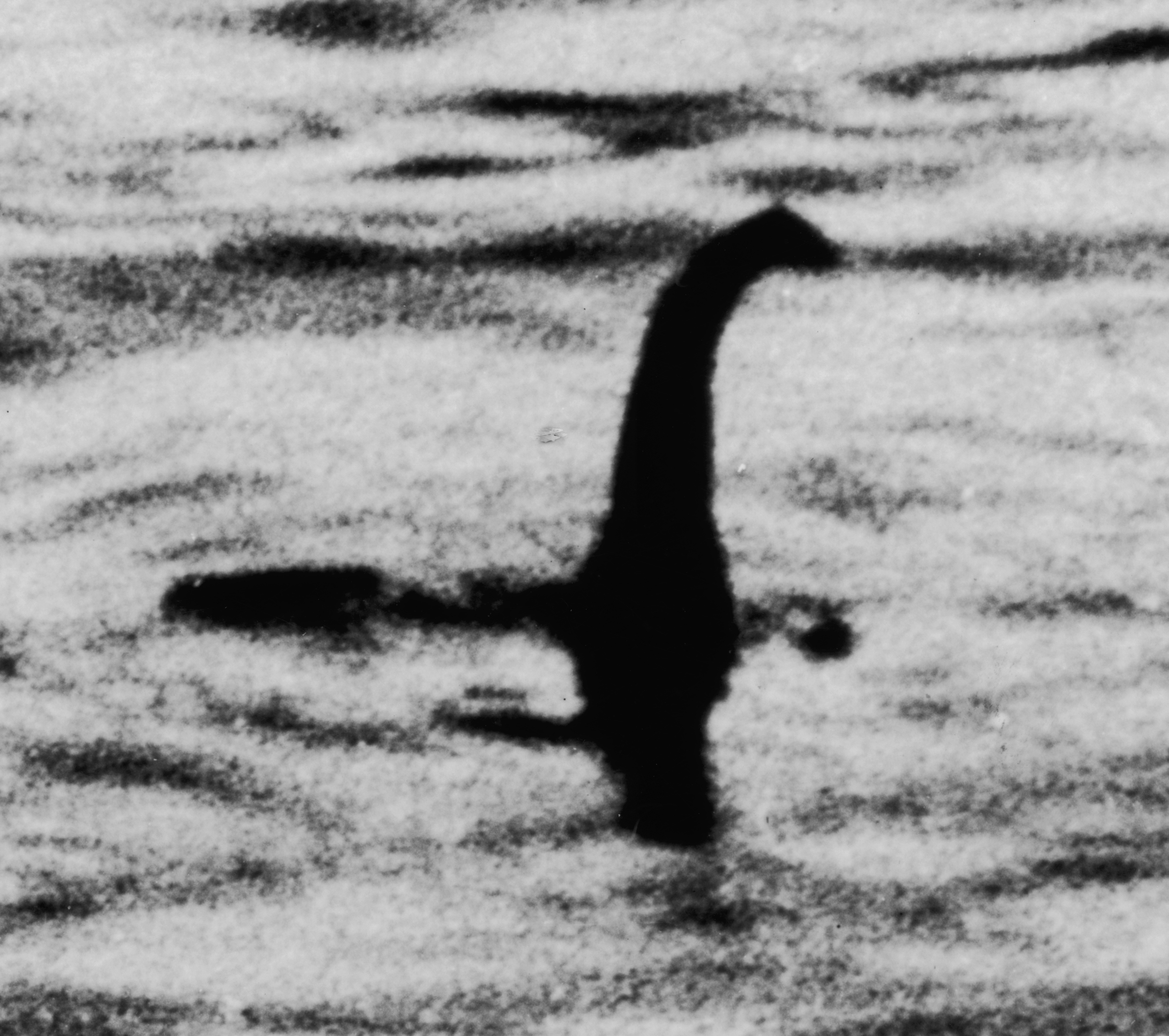
The most famous photograph of the Loch Ness Monster was built in a bathtub. In 1934, a London surgeon named Robert Kenneth Wilson submitted a photograph to the Daily Mail showing what appeared to be a long-necked creature rising from the loch. The image, known as the 'Surgeon's Photograph,' became the defining image of Nessie for sixty years. In 1994, it was revealed as a hoax: a toy submarine bought from Woolworths, fitted with a sculpted head of plastic wood, photographed at close range to create an illusion of scale. The confession came from Christian Spurling, who had helped construct the fake and admitted the deception shortly before his death at age ninety. That the most iconic piece of evidence was a department-store toy has not diminished Nessie's hold on the public imagination. If anything, the hoax has become part of the legend.
The Saint and the Water Beast
The earliest recorded account of a creature in the waters around Loch Ness dates to the seventh century. Adomnan's Life of Saint Columba, written around 700 AD, describes an encounter in 565 AD in which Columba was traveling near the River Ness and found local people burying a man who had been attacked by a 'water beast.' Columba sent one of his followers to swim across the river, and when the creature rose toward the swimmer, Columba commanded it to stop, invoking the power of God. The beast retreated, and the onlookers converted to Christianity. The story is a hagiographic miracle narrative -- its purpose was to demonstrate Columba's saintly power rather than to document zoology. But it established a literary tradition connecting Loch Ness with something large and dangerous beneath the surface, a tradition that lay mostly dormant for thirteen hundred years.
The Modern Monster
Modern interest in the Loch Ness Monster ignited in 1933. On 2 May, the Inverness Courier published a report from John Mackay and his wife, who claimed to have seen an enormous creature rolling and plunging in the loch. Later that year, George Spicer and his wife described seeing a large creature cross the road near the loch, carrying what appeared to be an animal in its mouth. The newly built road along the northern shore of the loch had opened up views of the water to motorists for the first time, and sightings multiplied. The Daily Mail sent a big-game hunter, Marmaduke Wetherell, to investigate. Wetherell found large footprints on the loch shore, but the Natural History Museum identified them as having been made with a dried hippo foot -- likely an umbrella stand. The debunking did nothing to slow the phenomenon. The monster had entered mass culture and would not leave.
Searching the Depths
The scientific efforts to find the monster have been thorough, expensive, and empty-handed. Operation Deepscan in 1987 deployed a flotilla of boats with sonar equipment in the most extensive sweep of the loch ever attempted. The results were inconclusive -- some unexplained sonar contacts, nothing definitive. In 2003, the BBC sponsored a full sonar survey using 600 separate beams and satellite navigation. They found nothing. The most rigorous investigation came in 2019, when Professor Neil Gemmell of the University of Otago conducted an environmental DNA survey, sampling water from across the loch and analyzing it for genetic traces of every species present. The results were decisive in one respect: there was no DNA from large unknown animals -- no plesiosaur, no giant sturgeon, no unidentified species. There was, however, a significant quantity of eel DNA, leading Gemmell to suggest that sightings might be explained by unusually large European eels. The loch's dark, peat-stained water -- visibility rarely exceeds a few metres -- remains the monster's best ally.
Why Nessie Endures
Loch Ness receives hundreds of thousands of visitors each year, and the monster is the reason most of them come. The Official Loch Ness Monster Exhibition Centre at Drumnadrochit presents the evidence -- and the lack of it -- with a tone that balances genuine investigation with commercial awareness. Nessie has appeared on Scottish tourism materials, whisky labels, and shortbread tins. The creature has its own webcam, its own fan clubs, and its own taxonomy of reported forms: long-necked, humped, serpentine. What sustains the legend is not evidence but the loch itself. Twenty-three miles long and up to 755 feet deep, Loch Ness contains more freshwater than all the lakes of England and Wales combined. Its water is so dark with peat that anything below the surface is effectively invisible. It is the perfect habitat for a mystery -- large enough to hide something, dark enough to prevent proof, and beautiful enough to keep people looking.
From the Air
Loch Ness stretches from approximately 57.32°N, 4.44°W (Urquhart Castle) to Fort Augustus at its southwestern end. The loch is 23 miles long and unmistakable from the air -- a dark ribbon of water along the Great Glen. Drumnadrochit and the Nessie exhibition centre lie on the northwestern shore. The A82 follows the western shore, the B862 the eastern. Nearest airport: Inverness (EGPE) approximately 7 nm from the northeastern end of the loch.