Lodi Gardens
Nobody buried here ruled for very long. The Sayyid and Lodi sultans who built these tombs controlled Delhi for barely a century between them, a footnote squeezed between the grandeur of the Tughlaqs and the spectacle of the Mughals. Yet their monuments endure, scattered across 90 acres of green in the heart of New Delhi, now surrounded not by courtiers but by morning joggers, yoga practitioners, and couples sharing chai on the grass. Lodi Gardens is that rare thing: a park where the architecture predates the city around it by five hundred years.
Sultans in the Shade
The oldest structure here is the tomb of Muhammad Shah, the last ruler of the Sayyid dynasty, built in 1444 by his successor Ala-ud-din Alam Shah. It is octagonal, a form the Sayyids favored, and its architecture reveals something important about Delhi's identity: the dome is Indo-Islamic, but the small canopied pavilions surrounding it -- the chhatris -- are unmistakably Hindu in design, each capped with a lotus finial. Sloping buttresses anchor the corners, and arched openings lead to a veranda that wraps the structure. The whole building sits on a 16-sided base that makes the flattened dome above it appear almost modest. This blending of Hindu and Islamic architectural traditions was not a political statement. It was simply how things were built in 15th-century Delhi, where cultures had been layering over one another for centuries.
The Lodi Inheritors
When the Lodi dynasty succeeded the Sayyids, they built on what their predecessors had started -- in some cases literally. The tomb of Sikandar Lodi, constructed around 1517, appears to have been copied from Muhammad Shah's tomb, repeating the octagonal plan with battlemented enclosure walls. Near the garden's center stand two structures that anchor its visual identity: the Bara Gumbad and the Shisha Gumbad. The Bara Gumbad, built in 1494 during Sikandar Lodi's reign, is not actually a tomb but a gateway, likely leading to the adjacent three-domed mosque. Beside it stands a residence organized around a central courtyard, where the remains of an old water tank are still visible. Opposite sits the Shisha Gumbad -- the "glass dome" -- named for the glazed tiles that once decorated its surface. Whose graves lie inside remains uncertain: perhaps a family from Sikandar Lodi's court, perhaps Bahlul Lodi himself.
Bridges Between Empires
North of the tombs, the remains of a stream trace a path that may once have reached the Yamuna River. Along its bank stands one of the garden's most unexpected structures: the Athpula Bridge, a seven-arched span built not by the Sayyids or the Lodis but during the reign of the Mughal emperor Akbar. It is one of the few Mughal-era monuments in Delhi to survive in this part of the city, a quiet reminder that the garden's timeline extends beyond the two dynasties that give it its name. The central arch is the largest, and the whole structure carries a sturdy elegance that has weathered centuries of monsoons. Walking across it, you move from one historical period to another in a few steps.
A Park Made from a Cemetery
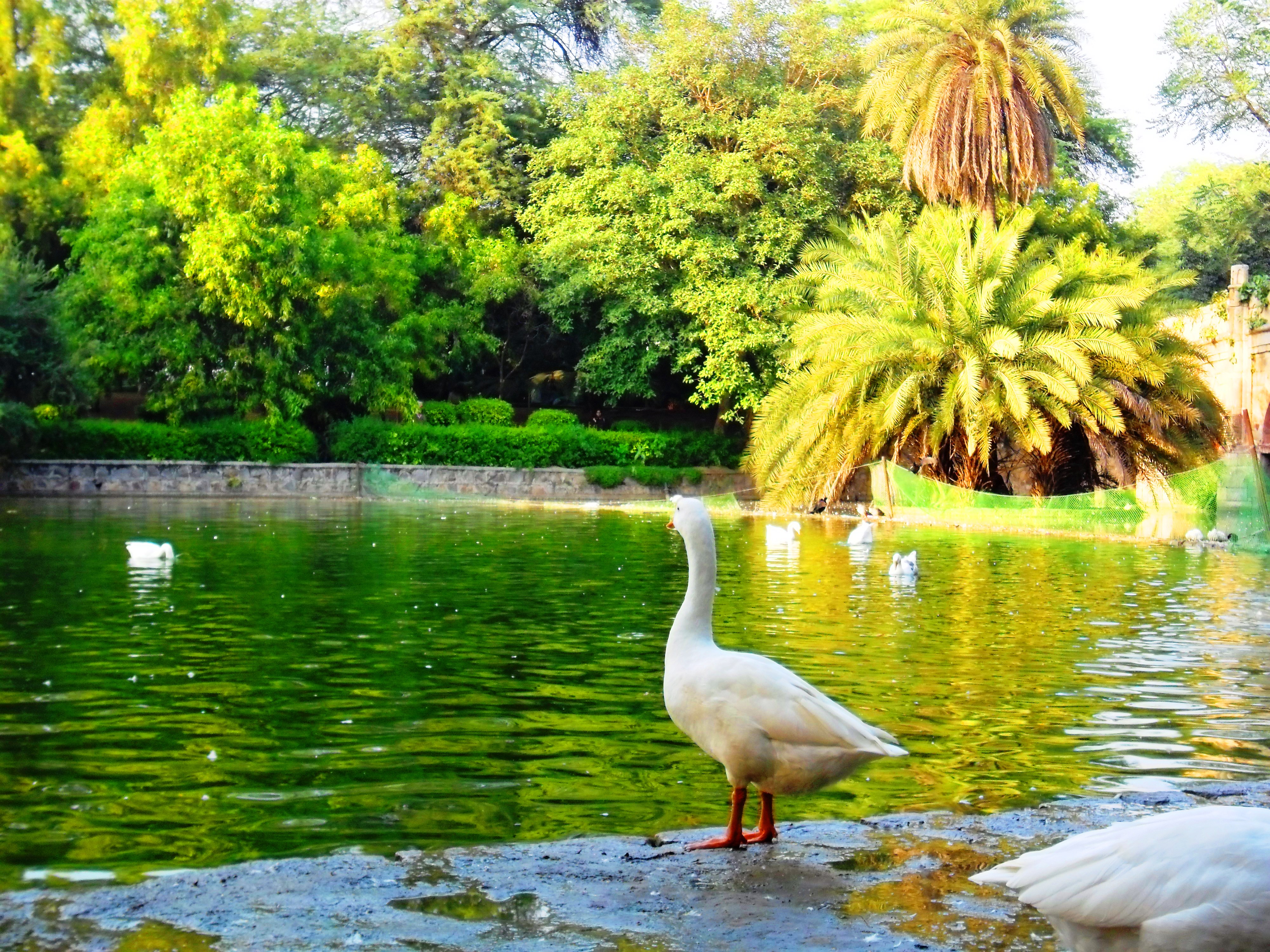
Lodi Gardens did not always look this way. The site was redesigned in 1936 by Lady Willingdon, wife of the Viceroy, who transformed the area around the scattered tombs into a landscaped park initially called Lady Willingdon Park. After Indian independence, it was renamed. Today the Archaeological Survey of India protects the monuments, which represent some of the only surviving architecture from the Sayyid and Lodi periods anywhere. The park itself has become one of New Delhi's most beloved public spaces -- 90 acres of lawns, flowering trees, and small lakes where egrets wade. On any given morning, the paths fill with walkers and runners who navigate between medieval tombs as casually as they would pass a park bench. Heritage and daily life occupy the same ground, neither one displacing the other.
From the Air
Located at 28.594N, 77.220E in central New Delhi, between Khan Market and Safdarjung's Tomb. The 90-acre green expanse is visible from lower altitudes as a distinctive patch amid the urban grid of Lutyens' Delhi. Nearest major airport is Indira Gandhi International Airport (VIDP), approximately 15 km southwest. The garden's tree canopy and open lawns distinguish it from surrounding dense development.