Lofoten Fishery
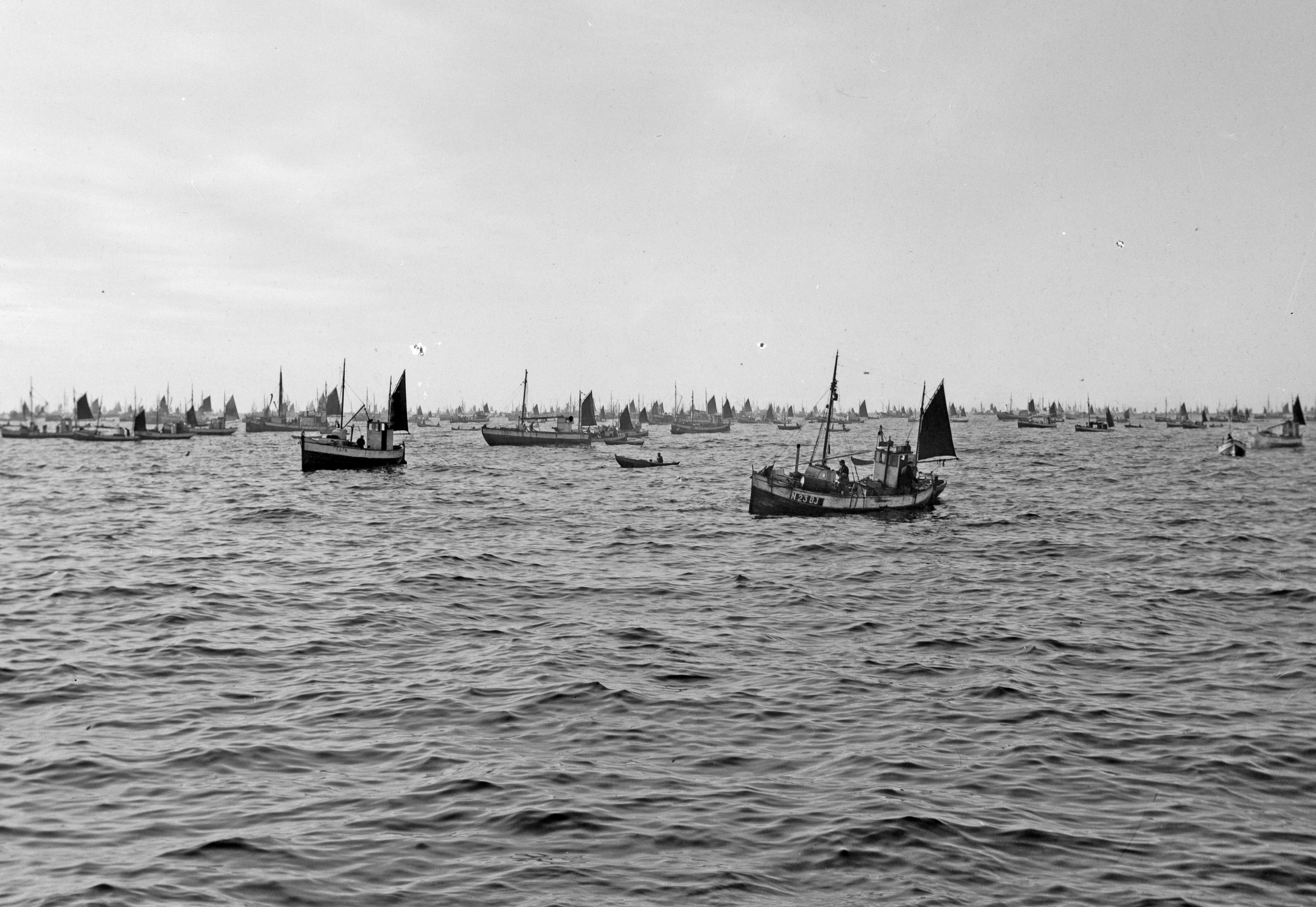
Every January, as the Arctic night loosens its grip on northern Norway, the cod arrive. Millions of Atlantic cod, migrating south from the Barents Sea to spawn in the warmer currents off the Lofoten Islands, have drawn fishermen to these waters for as long as anyone can remember. The Lofoten fishery is not merely old. It is foundational -- the economic engine that sustained coastal Norway for centuries, the reason settlements clung to these remote, storm-battered islands at all. Even today, boats from up and down the Norwegian coast converge on Lofoten between January and mid-April, continuing a tradition that predates written records.
Cod and Commerce
The Lofoten archipelago sits at 68 degrees north, well inside the Arctic Circle, yet the Gulf Stream keeps its waters remarkably temperate for the latitude. This confluence of cold and warm currents creates ideal spawning grounds for the northeast Arctic cod, the largest remaining cod stock in the world. By the early 1100s, Norwegian fishermen had learned to air-dry their catch on wooden racks called hjell, producing stockfish -- unsalted, wind-dried cod so durable it could survive months of overland trade. Stockfish became one of Norway's primary exports, traded through Hanseatic merchants in Bergen to markets across Europe. Lofoten was the epicenter of this production, and the rhythms of the fishery shaped the rhythms of Norwegian life.
The Law and the Landlords
For centuries, access to the fishing grounds was controlled by local landowners known as vaereeiere, who decided who could fish, where, and when. Fishermen arriving from distant villages had little choice but to accept these terms. In 1816, the Norwegian government introduced the Lofotloven, a law born of liberalist economic thinking that opened the fishery to all tools and methods, from nets to longlines. But true reform came in 1857, when a revised Lofotloven declared the ocean open to all and placed fishing activities under state supervision. The change was transformative, breaking the grip of the landlord class and allowing smaller operators to compete on more equal footing. Disputes over gear types -- net fishermen versus longline fishermen -- would persist for decades, but the principle of open access endured.
From Open Boats to Motorized Fleets
Until the late 1800s, Lofoten fishermen worked from open boats, hauling lines and nets by hand in seas that could turn lethal without warning. Winter storms above the Arctic Circle are violent and unpredictable; capsizings were common and often fatal. The arrival of motorized boats in the early twentieth century changed the calculus of risk and reward. Smaller crews could now haul larger catches, and the range of the fleet expanded. Through the 1900s, Lofoten accounted for 40 to 50 percent of all cod caught along the Norwegian coast, a staggering concentration that reflected both the richness of the spawning grounds and the tenacity of the fishermen who worked them. The fleet modernized steadily -- diesel engines, echo sounders, synthetic nets -- but the fundamental pattern held: leave home in winter, follow the cod to Lofoten, return in spring.
Survival Through Plague and Price
The Black Death struck Norway in 1349 and devastated the Lofoten communities. Fishing capacity plummeted as entire villages were emptied, and the elaborate trade networks that moved stockfish to continental Europe frayed badly. Yet the fishery survived. Demand for dried cod remained strong, and the fishermen who endured commanded high prices for their catch. This pattern of shock and recovery repeated itself across the centuries -- wars, market collapses, overfishing scares -- and each time the fishery adapted. Prices have fluctuated with supply and demand, with European politics, with the health of the cod stock itself. What has not fluctuated is the fishery's persistence, or the willingness of Norwegian fishermen to make the winter journey north.
A Living Tradition
Today the Lofoten fishery remains a working tradition, not a museum piece. Wooden drying racks still line the shorelines of Lofoten villages, hung with split cod that will cure for months in the salt wind. The stockfish produced here is exported worldwide, prized especially in Italy, where it becomes baccala. Modern fishing boats equipped with GPS and refrigerated holds work alongside smaller vessels, and the annual migration of fishermen to Lofoten continues as it has for a thousand years. The landscape itself tells the story: red-painted rorbuer, the seasonal fishing cabins that once housed visiting fishermen, dot every harbor. Many have been converted to tourist lodging, but the harbors still smell of cod and diesel, and the business of the fishery goes on.
From the Air
Centered at 68.00N, 14.40E over the Lofoten archipelago in Nordland county, northern Norway. The islands are visible as a dramatic chain of jagged peaks rising from the Norwegian Sea, well inside the Arctic Circle. Wooden fish-drying racks (hjell) are visible along the shorelines of villages. Nearest airports include Svolvær/Helle (ENSH) and Leknes (ENLK). Best viewed at 3,000-5,000 ft to appreciate the coastline and fishing villages. Winter conditions can bring limited daylight and challenging winds.