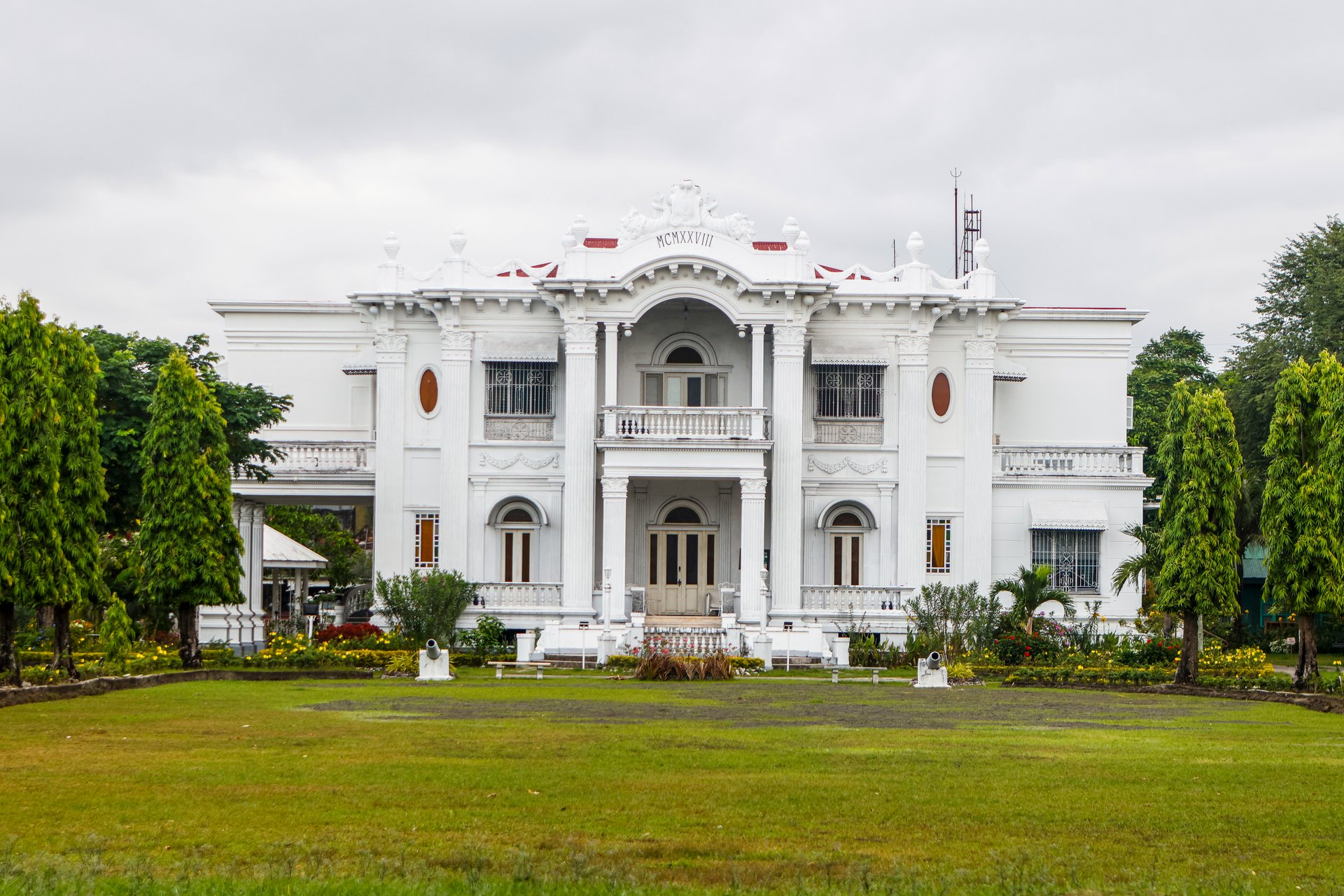
Lopez Heritage House
The kerosene was already on the ground. Filipino guerrillas, under orders from an Ilonggo general, were razing every mansion in the province to keep the Japanese from using them as headquarters during World War II. The Lopez mansion in Jaro was next. Lilia Lopez-Jison, the third child of Don Vicente and Dona Elena, begged them to stop. Her husband joined the plea. The guerrillas hesitated - and then a squad of Japanese soldiers appeared, and a firefight erupted around the house. When the shooting stopped, the mansion still stood. It had survived not because someone saved it, but because violence interrupted violence at exactly the right moment. The house that sugar built, that cannons once drove its builders away from, that an assassination in the family had already shadowed - this house would not burn.
The Sugar Baron's Retreat
Don Vicente Lopez y Villanueva was a sugar planter and industrialist, a prominent member of the wealthy Lopez clan of Iloilo. He and his wife Elena Hofilena originally lived near Jaro Cathedral, but the constant boom of cannons fired during religious celebrations eventually drove them to seek quieter ground. They settled about a kilometer from the town center and completed their new home in 1928, naming it after their eldest daughter, Nelly. The four-hectare property became known as Nelly Garden. Don Vicente's story, though, carried a darker thread. In 1908, his elder brother Don Benito Lopez y Villanueva, then governor of Iloilo, was assassinated by a rival political faction linked to the Jalandoni clan. After the murder, Don Vicente took guardianship of his brother's sons: Eugenio and Fernando. Those orphaned nephews grew up in and around this mansion and went on to become two of the most powerful figures in Philippine history - tycoon Don Eugenio Lopez Sr. and Vice President Fernando Lopez, co-founders of ABS-CBN Corporation.
Beaux-Arts in the Tropics
The Lopez Heritage House is a Beaux-Arts mansion designed to project the extravagant lifestyle of Iloilo's wealthiest families during the American colonial era. Ornately carved columns and pilasters line the facade, making the house look as imposing from the outside as it feels within. Two sets of wooden stairs lead to the family's cavernous common room, where original furniture and paintings remain in place. The poster beds on the second floor are preserved for public viewing, still dressed as though someone might return to sleep in them. Crystal chandeliers hang from the ceilings, casting warm light across elaborately carved wooden dividers that separate the rooms. In the dining room, a hexagonal table seats twenty-four guests beneath a chandelier suspended from a fifteen-foot ceiling, with door-length windows flooding the space with tropical light. The National Historical Institute declared it a National Heritage House on March 28, 2004, recognizing both its architectural significance and its role in the story of Iloilo's elite.
Governors, Presidents, and a Prince
The Lopez mansion's guest list reads like a compressed history of Philippine and international diplomacy. Governor-Generals of the Philippines visited, including Frank Murphy - who later became a U.S. Supreme Court Justice - and Theodore Roosevelt Jr. Thailand's Prince Chupra came. Former First Lady Imelda Marcos attended receptions here, as did President Corazon Aquino. The house functioned as a venue where political power and social prestige intersected, a private home that served public purposes. This dual role was common among the great mansions of Iloilo's sugar elite, but the Lopez house maintained it longer than most, its Beaux-Arts grandeur providing a stage that outlasted the sugar economy that built it.
The Queen Still Holds Court
Today the Lopez Heritage House and its four-hectare grounds are open for public tours and events. The house is regarded as the 'Queen of Heritage Houses in Iloilo,' a title earned not just by its architecture but by its survival. It endured political assassination in the family, a world war that destroyed most comparable mansions, and the long economic decline that followed the collapse of the sugar industry. Where other heritage houses became ruins or parking lots, Nelly Garden persisted. The furniture is original. The chandeliers still work. The hexagonal dining table still waits for twenty-four guests. Walking through the rooms, you feel the specific weight of a house that was built to display wealth and has outlived the wealth that built it, finding a second purpose as a museum of a way of life that no longer exists but whose physical setting remains immaculate.
From the Air
Located at 10.719°N, 122.562°E in the Jaro district of Iloilo City. The four-hectare estate with its Beaux-Arts mansion is identifiable as a large green compound within the urban fabric of Jaro, roughly one kilometer from Jaro Cathedral. Iloilo International Airport (RPVI / ILO) is approximately 19 km northwest. Best viewed at 1,000-2,500 ft AGL. Jaro Cathedral and its free-standing belfry are nearby visual references.