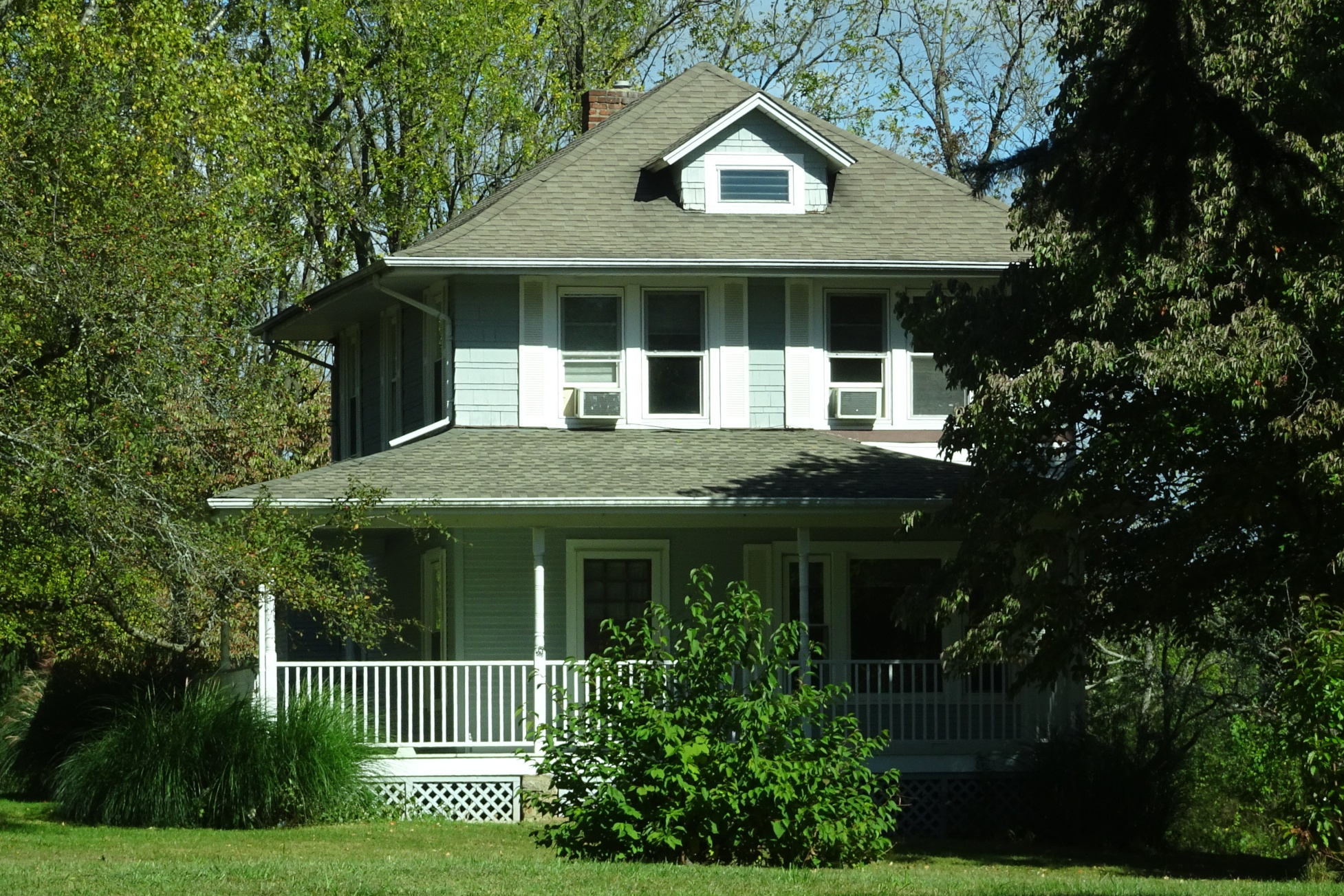
Lord Stirling Manor Site
The neighbors called it "The Buildings," as though one name could not contain all that William Alexander, Lord Stirling, had constructed on his Basking Ridge estate. The manor he built in 1763 was among the finest in colonial New Jersey -- a sprawling complex that announced its owner as a man of wealth, ambition, and contested nobility. Alexander claimed the lapsed Scottish earldom of Stirling, and while the House of Lords rejected his petition, colonial America addressed him as "Lord" anyway. He repaid the courtesy by becoming a major general in the Continental Army, fighting at Long Island, Brandywine, Germantown, and Monmouth. The estate he left behind has since burned, crumbled, and been built over, yet what remains underground tells stories that the mansion itself never could.
A Self-Made Lord's Grand Ambition
William Alexander acquired the land from his father in 1761 and spent two years constructing the manor complex, completing it in 1763. The result was impressive enough that locals did not bother learning its proper name -- "The Buildings" sufficed as shorthand for the grandest estate in the area. Alexander lived as colonial aristocracy: he entertained lavishly, managed a large property in the Basking Ridge section of Bernards Township, and pressed his claim to the Stirling earldom with a persistence that his peers found either admirable or absurd, depending on whom you asked. When the Revolution came, he chose the American side without hesitation, rising to major general under George Washington.
The Enslaved People Who Built It
Among the structures that survived the manor's eventual decline were the slave quarters -- the only known surviving slave quarters in New Jersey at the time of the site's nomination to the National Register of Historic Places. Their existence is a corrective to the comfortable narrative of colonial country estates. Lord Stirling's wealth rested, in part, on the labor of enslaved people, and the quarters they occupied constitute one of the most significant physical records of slavery's history in New Jersey. The state's relationship with slavery was complicated -- gradual emancipation did not begin until 1804, and the last enslaved people in New Jersey were not freed until the Thirteenth Amendment in 1865. These quarters put a material reality on that timeline.
Decay, Fire, and a Mail-Order House
Lord Stirling died in 1783, and the property was sold. Without his resources or attention, the structures fell into disrepair. The house was rebuilt in 1825, though not according to the original design -- a compromise between preservation and practicality that satisfied neither impulse fully. Then, in 1919, fire destroyed the rebuilt structure entirely. What remained were the bones: cisterns, outbuildings, the slave quarters, and the mansion's stone foundation. Sometime in the 1920s, a Montgomery Ward mail-order house was placed directly on that foundation -- a mass-produced kit home sitting atop the ruins of a Revolutionary War general's estate. The juxtaposition is almost too neat: American history literally layered on top of itself.
What the Ground Remembers
The site was added to the National Register of Historic Places on May 22, 1978, recognized for its significance in both military and social history. Archaeological excavations sponsored by Somerset County Parks have unearthed thousands of artifacts spanning from Lord Stirling's occupation through the 20th century -- fragments of daily life that document how the property was used, reused, and transformed over more than two centuries. The manor site is now part of Lord Stirling Park, a county park that preserves the grounds Alexander once landscaped with aristocratic ambition. Visitors walk over layers of history: the 1763 manor, the 1825 rebuild, the 1919 fire, the mail-order house, the archaeological trenches. Each layer tells a different version of the same place.
From the Air
Located at 40.694N, 74.531W in the Basking Ridge section of Bernards Township, Somerset County, New Jersey. The site is within Lord Stirling Park, a green area along the Passaic River headwaters. Somerset Airport (KSMQ) is approximately 4 miles to the south. Morristown Municipal Airport (KMMU) is about 8 miles to the north. Best viewed at 1,500-2,500 feet AGL. The Great Swamp National Wildlife Refuge lies to the southeast, providing a distinctive wetland landmark.