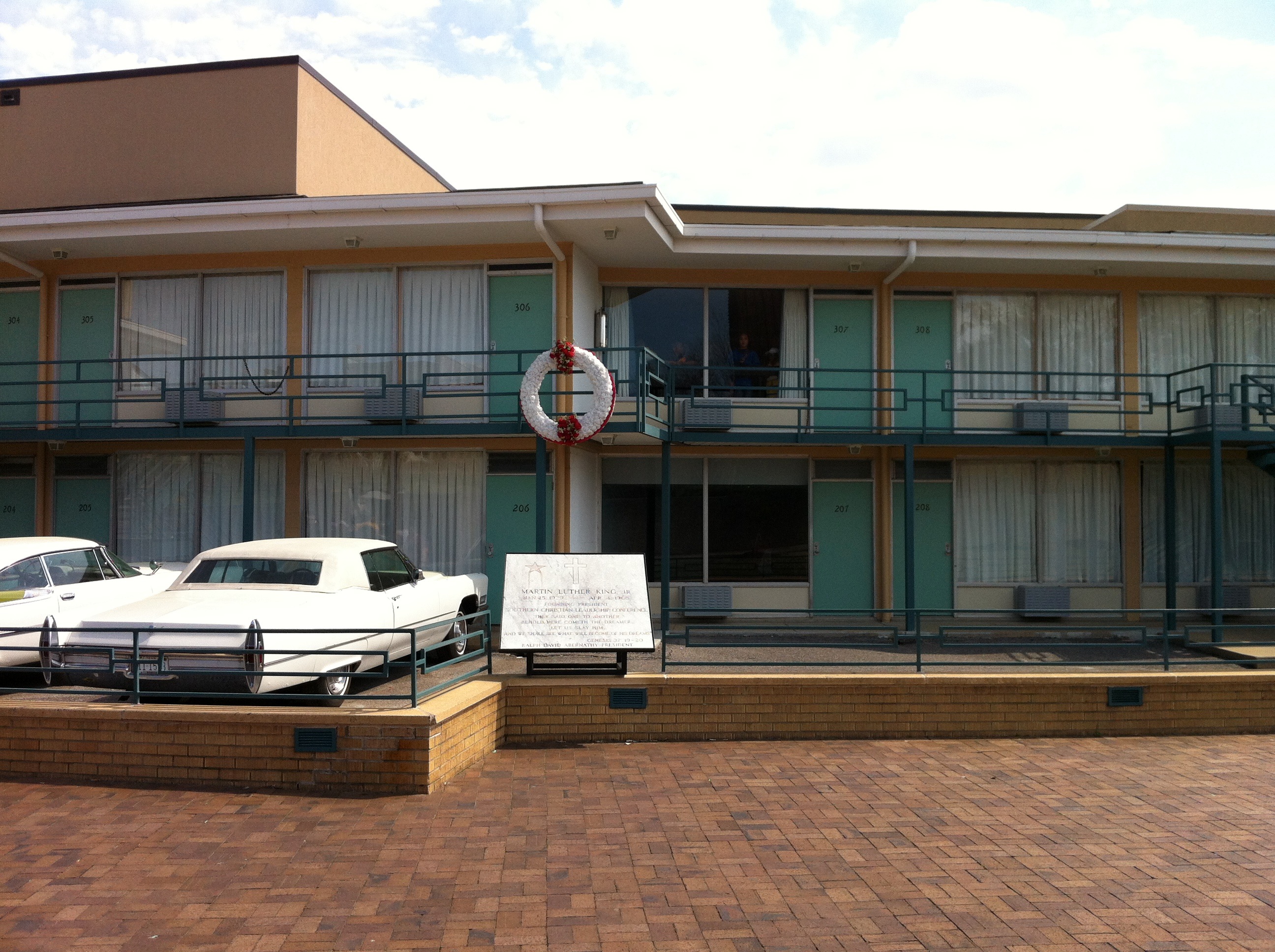
Lorraine Motel
At 6:01 PM on April 4, 1968, Dr. Martin Luther King Jr. stepped onto the second-floor balcony of the Lorraine Motel in Memphis, Tennessee. He was preparing to go to dinner, joking with colleagues in the parking lot below. A shot rang out from a flophouse across the street. The bullet struck King in the jaw and severed his spinal cord. He died at St. Joseph's Hospital an hour later. He was thirty-nine years old. The assassination triggered riots in over 100 American cities, accelerated the passage of the Civil Rights Act of 1968, and transformed King from a controversial figure into a martyred saint. The Lorraine Motel, where King had stayed many times during his Memphis visits, became sacred ground. Today the National Civil Rights Museum wraps around and incorporates the building, the balcony preserved exactly as it was on that terrible evening.
Why Memphis
King came to Memphis in March 1968 to support striking sanitation workers. The strike had begun after two workers were crushed by a malfunctioning garbage truck, their deaths highlighting the dangerous conditions and poverty wages Black workers endured. The workers' simple demand - to be treated as human beings - resonated with King's evolving focus on economic justice. His first visit ended in chaos when a march devolved into violence. King returned on April 3, determined to lead a peaceful demonstration. That night, at Mason Temple, he delivered his final speech: 'I've seen the Promised Land. I may not get there with you. But I want you to know tonight, that we, as a people, will get to the Promised Land.' Twenty-four hours later, he was dead.
The Assassin
James Earl Ray was a petty criminal and escaped convict with a long record and racist views. On April 4, he rented a room at Bessie Brewer's rooming house across the street from the Lorraine Motel. From the shared bathroom window, he had a clear shot at the motel's second-floor balcony. He waited with a Remington rifle until King appeared. After firing, Ray fled, leaving behind the rifle, binoculars, and a bag of belongings. He eluded capture for two months before being arrested at London's Heathrow Airport. Ray pleaded guilty and received a 99-year sentence. He immediately recanted, claiming he was a patsy in a larger conspiracy. He spent the rest of his life seeking a trial he never received, dying in prison in 1998.
The Conspiracy Questions
Like the Kennedy assassination, King's murder spawned endless conspiracy theories. Ray's claim that he was set up by a mysterious figure named 'Raoul' has never been verified or conclusively debunked. The House Select Committee on Assassinations concluded in 1979 that Ray was the shooter but that a conspiracy was 'likely.' Allegations have implicated the FBI, the Memphis police, organized crime, and various combinations thereof. King's family came to believe Ray was innocent and called for a new trial. In 1999, a civil jury found that King was killed as a result of a conspiracy involving government agencies - though the verdict has been disputed. The truth may never be fully known. What's certain is that a bullet from Ray's rifle ended King's life.
The Aftermath
News of King's assassination triggered the Holy Week Uprising - riots in more than 100 cities, including Washington, D.C., where flames rose within sight of the White House. Forty-three people died; thousands were arrested. The National Guard was deployed to American cities. One week later, President Johnson signed the Civil Rights Act of 1968, including the Fair Housing Act that King had championed. The violence of that week - and the assassination that sparked it - accelerated legislation that might otherwise have taken years. King's death transformed him from a controversial radical into an American hero. The campaign for a federal holiday in his honor began almost immediately, though it took until 1983 to succeed.
Visiting the Lorraine Motel
The National Civil Rights Museum incorporates the Lorraine Motel at 450 Mulberry Street in Memphis. The museum tells the story of the American civil rights movement from slavery through the present, using the motel as both artifact and symbol. Room 306, where King spent his final night, and the balcony where he fell are preserved behind glass. Across the street, the rooming house from which James Earl Ray fired is now part of the museum, telling the story of the assassination and its aftermath. The experience is emotionally powerful - standing where King stood, looking at the window where his killer waited. The museum draws over 200,000 visitors annually. Memphis International Airport (MEM) is 15 miles south. The museum is in downtown Memphis, near Beale Street and other attractions.
From the Air
Located at 35.13°N, 90.06°W in downtown Memphis, Tennessee, south of Beale Street. From altitude, the Lorraine Motel is visible as a low-rise building with a distinctive turquoise facade along Mulberry Street. The museum complex includes the rooming house across the street. The Mississippi River flows just west of downtown.