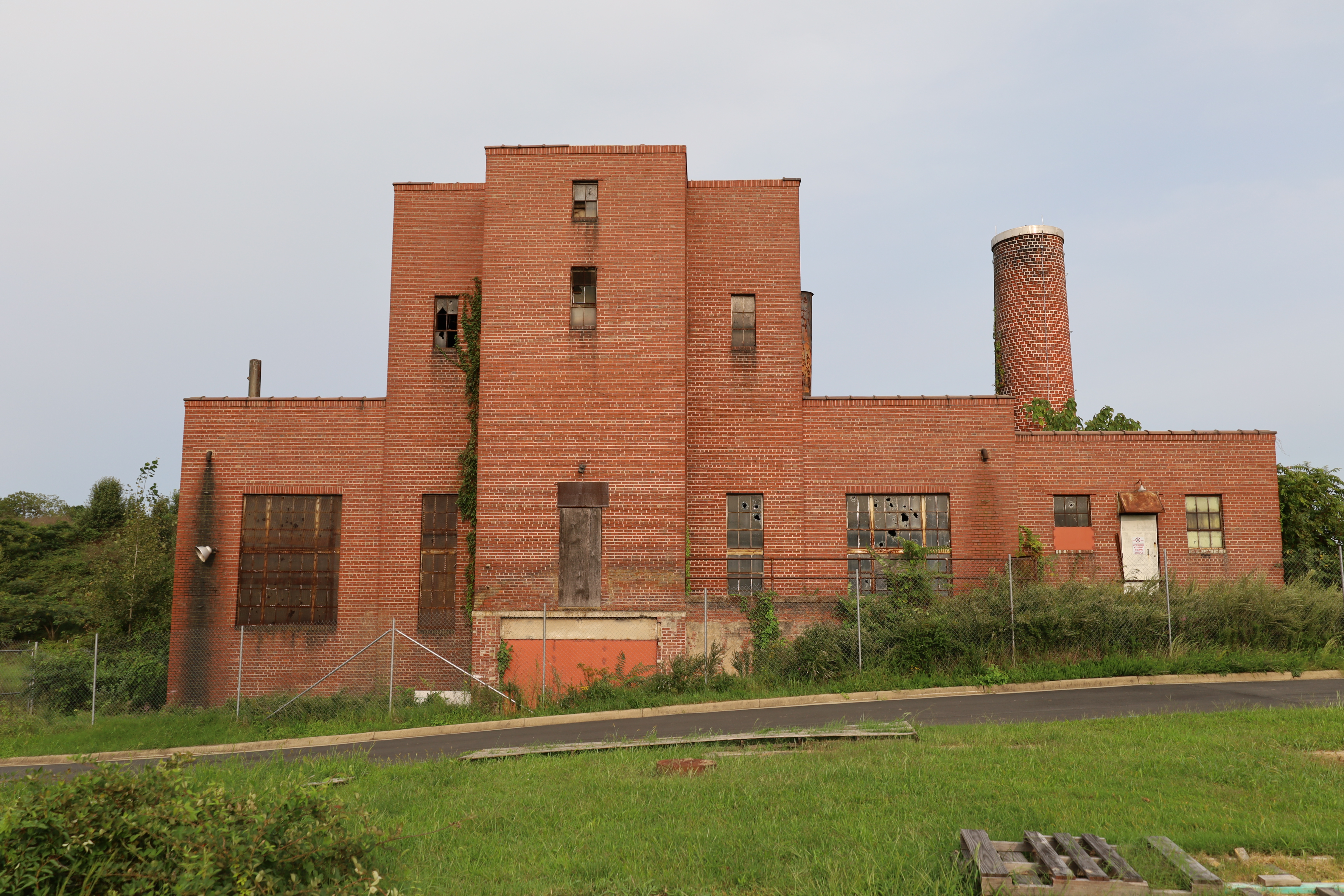
Lorton Reformatory
The night of November 14, 1917, is known as the Night of Terror. That evening, guards at the Occoquan Workhouse in Lorton, Virginia, beat, tortured, and brutalized approximately 168 women -- suffragists arrested for picketing the White House in their campaign for the right to vote. Alice Paul, Lucy Burns, and other members of the National Woman's Party endured force-feeding during hunger strikes behind these walls. Seven decades later, in 1974, a hundred armed inmates took ten guards hostage during a riot; in 1986, fourteen buildings were set ablaze in a separate uprising. The Lorton Reformatory held both the best and worst of American civic life for ninety-two years. Today, where guard towers once ringed prison yards built from Occoquan River clay, there is a ceramics studio, a yoga room, and a swimming pool.
Roosevelt's Reform Experiment
The complex began as an act of idealism. In 1908, President Theodore Roosevelt appointed a special Penal Commission to investigate deplorable conditions in the District of Columbia's jail and workhouse. Congress acted on the commission's recommendations, purchasing a tract of land north of the Occoquan River through condemnation proceedings in 1910. District architect Snowden Ashford drew plans for the workhouse, while Leon E. Dessez served as special architect for the new facility. The Occoquan Workhouse opened in 1916 with classically inspired, symmetrical dormitory complexes designed for nonviolent offenders serving short sentences. The complex even had its own railroad, the Lorton and Occoquan Railroad, operating from 1911 until 1977. An adjacent reformatory was established in 1914, and from 1931 through 1938 inmates themselves constructed a walled penitentiary, manufacturing bricks at an on-site kiln complex using clay dredged from the Occoquan River. The prisoners literally built the walls that confined them.
The Night of Terror
The workhouse entered national history in 1917, when suffragists from the Silent Sentinels -- women who stood motionless outside the White House gates holding banners demanding the vote -- were arrested and sent to Occoquan. From June to November 1917, approximately 168 women, most affiliated with the National Woman's Party, were imprisoned there. They endured mistreatment, and when they launched hunger strikes, some were force-fed. The violence peaked on November 14, 1917, when guards subjected the suffragist prisoners to a night of beatings, physical abuse, and psychological torture so severe it became known as the Night of Terror. Lucy Burns was handcuffed to her cell bars with her arms above her head and left hanging through the night. The brutality, once it became public, helped galvanize support for women's suffrage. These events were dramatized in the 2004 film Iron Jawed Angels. In 2020, the Lucy Burns Museum opened at the site to honor these women and their sacrifice.
Descent and Closure
What began as reform gradually became something else. The Youth Center, opened in 1960 to house prisoners aged 18 to 22, was designed to resemble a university campus with open-plan dormitories. Young inmates wore suits and ties and carried books titled So We All Understand. The original concept -- that young offenders could acquire a trade, earn an education, and have their records expunged -- eroded when older adult felons began to be housed alongside them. The Washington City Paper described the center as 'a sort of parody of its original inception,' noting it became at one point the 'murder capital' of Lorton. Prison riots plagued the facility throughout the 1970s and 1980s. In 1974, a hundred armed inmates took ten guards hostage. In 1986, fourteen buildings burned during another uprising. By the late 1990s, Congress ordered the complex closed. The final prisoners were transferred out in November 2001, ending ninety-two years of operation.
From Cell Blocks to Art Studios
Fairfax County purchased the property on July 15, 2002, with a congressional mandate to maximize the land for open space, parkland, and recreation. The Lorton Arts Foundation proposed transforming the prison into the Workhouse Arts Center. After approval from the Fairfax County Board of Supervisors in 2004, restoration began -- walls were repaired, rooms cleared, and the tall perimeter fences taken down. By 2008, six former prison buildings had been converted into studios for ceramics, photography, painting, theater, and film, offering over 800 art classes to the public. The New York Times cited the redevelopment as a national model for repurposing closed prisons. The complex now includes 165 apartments, 157 town homes, and 24 single-family homes alongside commercial spaces, schools, a park, and a golf course. Guard towers still ring the grounds, but they watch over baseball fields and soccer pitches now. The site has been listed on the National Register of Historic Places as the D.C. Workhouse and Reformatory Historic District since 2006.
Cold War Beneath the Yard
Lorton held one more secret. From 1959 to 2001, a government bunker beneath the reformatory housed emergency communications equipment designed to function in the event of nuclear war with the Soviet Union. The complex also hosted Nike missile site W-64, part of the Cold War ring of anti-aircraft defenses surrounding Washington, D.C. For decades, the prisoners above ground had no idea that beneath their feet lay the infrastructure for an entirely different kind of national emergency. The bunker was decommissioned when the prison closed, one more layer of history sealed beneath a site that had already accumulated more than most places see in centuries.
From the Air
The Lorton Reformatory complex sits at 38.698N, 77.255W in Lorton, Virginia, approximately 18nm south-southwest of the National Mall. From the air, the former prison complex is identifiable by its large footprint of institutional buildings arranged in a campus-like grid pattern, now interspersed with residential development, athletic fields, and the Workhouse Arts Center. The nearby Occoquan River and I-95 corridor provide visual reference points. Nearest general aviation airport is Stafford Regional (KRMN) approximately 20nm south, or Manassas Regional (KHEF) approximately 15nm west. Ronald Reagan Washington National (KDCA) is approximately 15nm northeast. Caution: portions of this area may fall within the outer ring of the Washington D.C. Special Flight Rules Area (SFRA). Davison Army Airfield (KDAA) at Fort Belvoir is approximately 5nm northeast. Best viewed at 2,000-3,000 feet AGL for the full extent of the former complex.