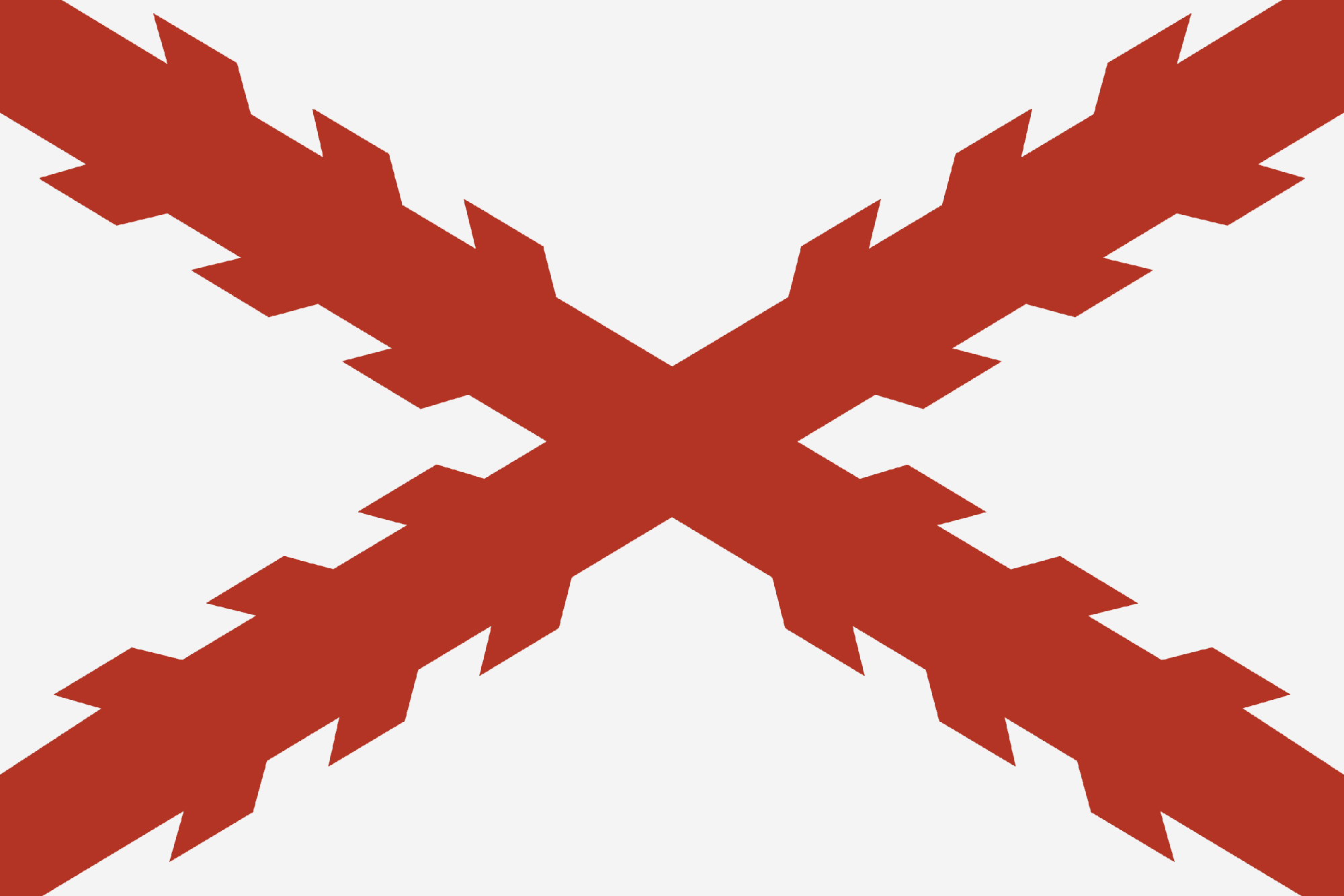
Los Adaes
The first capital of Texas sits in Louisiana. That sentence is not a mistake. In 1721, when Spain needed to assert its claim over the vast territory it called Tejas, it built a presidio called Nuestra Senora del Pilar de Los Adaes near the present-day town of Robeline, Louisiana -- just twelve miles from a French fort at Natchitoches. For more than fifty years, this remote outpost of six cannons and a hundred soldiers served as the administrative seat of Spanish Texas, a capital so isolated from the rest of the province that its settlers bought their goods from the very French colonists they were supposed to be defending against. When Spain finally closed Los Adaes in 1773, it forced the entire population to march to San Antonio, but the displaced settlers refused to stay -- and their restless wandering would eventually found the city of Nacogdoches.
Empires Shoulder to Shoulder
Spain had claimed the Gulf Coast for centuries but largely ignored everything east of the Rio Grande until 1699, when French forts appeared at Biloxi Bay and on the Mississippi River. Suddenly the buffer was gone. In 1716, an expedition under Domingo Ramon left San Juan Bautista to establish missions and a presidio in Texas, planting Spanish flags in a region France also claimed. The boundary dispute was real: France insisted the Sabine River marked Louisiana's western edge, while Spain drew the line at the Red River, leaving a wide overlap where neither crown had clear authority. The Spanish founded San Miguel de los Adaes as one of six missions in the contested zone. Then, in 1719, the War of the Quadruple Alliance erupted in Europe, and seven Frenchmen from Natchitoches simply walked over and seized the mission from its single defender -- a soldier who did not even know his country was at war.
The Marquis and His Six Cannons
Spain's response came in the person of the Marquis de San Miguel de Aguayo, who raised an army of 500 soldiers to reconquer Texas. By July 1721, Aguayo had reached the Neches River and encountered a French force marching to attack San Antonio de Bexar. Outnumbered, the French agreed to retreat. Aguayo pressed on to the site of the fallen mission and ordered a new presidio built: Nuestra Senora del Pilar de Los Adaes, armed with six cannons and garrisoned by a hundred men. It became the capital of Tejas -- a declaration of sovereignty planted provocatively close to French Natchitoches. The name itself came from the Adai people, members of the Caddoan confederacy, whose homeland the Spanish had chosen for their frontier fortress. The Adai were friendly, but friendship and conversion proved to be different things entirely.
Trading with the Enemy
Life at Los Adaes was defined by a single, absurd fact of geography: the nearest Spanish settlement of any size was hundreds of miles away, while a French trading post sat just twelve miles down the road. Spanish trade law required all goods bound for Texas to ship first to Vera Cruz, then travel overland to Mexico City, then be sent north -- a journey that made basic supplies ruinously expensive. The settlers did what anyone would: they traded with the French. Without much to offer in return, however, the Spanish missionaries and colonists could never match French traders in winning the loyalty of local indigenous peoples. The Adai and other Caddoan-speaking groups remained more connected to French commerce than to Spanish religion. After 46 years of missionary effort, the Franciscans had accomplished what the Marques de Rubi later summarized as 'little more than baptize a few of the dying.' Not a single indigenous person lived at the mission. The missionaries were recalled in 1768, and the mission doors closed.
Exile and a New Beginning
The end of Los Adaes came not from war but from diplomacy. In 1762, the Treaty of Fontainebleau transferred western Louisiana to Spain, eliminating the French threat that had justified the outpost's existence. The Marques de Rubi inspected Los Adaes and found a forlorn scene: two missionaries, twenty-five Spanish families on small ranches, poor crops from a lack of irrigation, and barely enough water to drink. He recommended abandoning eastern Texas entirely. In 1773, the Spanish government forced the settlers of Los Adaes to relocate to San Antonio. They went, but they protested loudly and persistently. A year later, the former residents won permission to leave San Antonio, though they could settle no farther east than the Trinity River. When Comanche raids struck their new settlement in 1779, the displaced families pushed east again to the old mission of Nacogdoches, founding the town that still bears that name -- a place that quickly became a hub for contraband crossing the border between Spanish and French territory.
A Capital Unearthed
Today the site of Los Adaes is preserved as a Louisiana State Historic Site near Robeline, designated a National Historic Landmark in 1986. Archaeologist Hiram F. 'Pete' Gregory Jr. of Northwestern State University conducted landmark excavations at the presidio from the 1960s through the 1980s, revealing one of the most important colonial Spanish archaeological sites in the United States. In the 1990s, Dr. George Avery was appointed the site's first station archaeologist, contributing years of research into the daily life of this remote frontier capital. The site speaks to a chapter of American history that defies simple borders: a Spanish capital of Texas built on Louisiana soil, defended against a France that never attacked, sustained by trade with the supposed enemy, and abandoned when its diplomatic reason for existing vanished overnight. The Adai Caddo people, whose name gave Los Adaes its identity, maintain their cultural presence in the region to this day.
From the Air
Located at 31.71°N, 93.29°W near Robeline in Natchitoches Parish, Louisiana. The site is a small state historic area amid rolling, forested hills -- subtle from altitude but located along Louisiana Highway 485. Natchitoches, the oldest permanent settlement in the Louisiana Purchase territory, lies 12 miles to the east. Nearest airports: KIER (Natchitoches Regional Airport, 15 nm E), KAEX (Alexandria International Airport, 65 nm SE), KSHV (Shreveport Regional Airport, 65 nm N). Best viewed from 2,000-3,000 ft AGL.