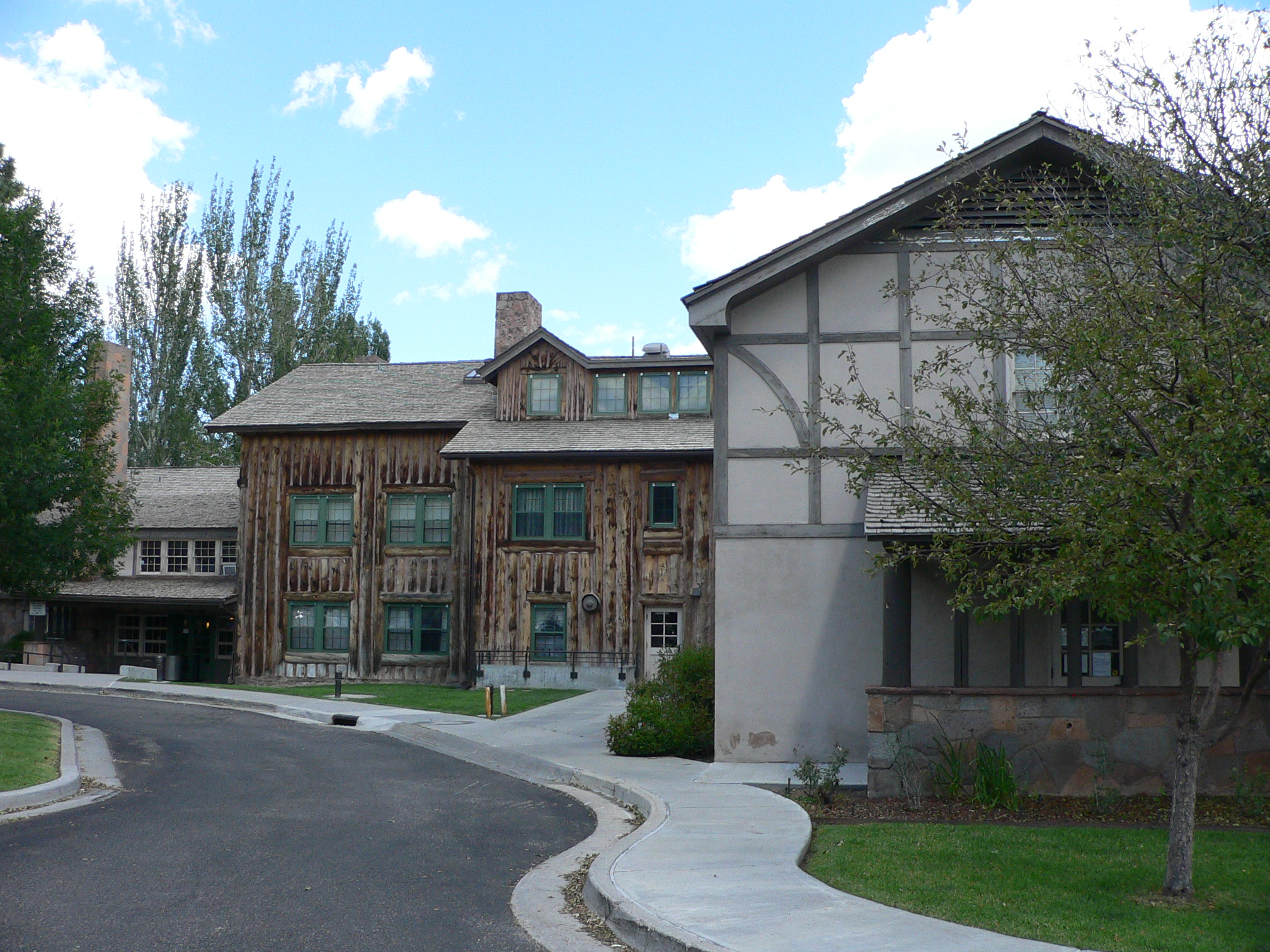
Los Alamos Ranch School
Gore Vidal, William S. Burroughs, and the future CEO of American Motors all had something in common: they attended a tiny boarding school perched on a mesa in northern New Mexico where graduation required earning Boy Scout First Class rank and every Saturday meant a mandatory horseback ride into the wilderness. The Los Alamos Ranch School educated no more than 46 boys in any given year, but its alumni roster reads like a who's who of mid-century American power and letters. Then, in November 1942, the U.S. Army showed up with a secret letter and the school ceased to exist, replaced by something that would change the world forever.
Scouts and Scholars on the Mesa
Ashley Pond Jr., a Detroit businessman with a passion for the outdoors, founded the Los Alamos Ranch School in 1917 on the Pajarito Plateau near San Ildefonso Pueblo. His vision was unusual: a college preparatory academy fused with the discipline and adventure of the Boy Scouts of America. Every student belonged to Troop 22, wore Scout uniforms and neckerchiefs, and lived a life that would make most modern teenagers balk. By 1939, the daily routine began with calisthenics in the yard at 6:45 a.m., rain or shine, snow or sun. Classes ran until 1 p.m., followed by athletics. One half-day each week went to campus maintenance. The school sat at roughly 7,300 feet elevation in the Jemez Mountains, surrounded by ponderosa pine and aspen forest, a landscape that made the rigorous outdoor program feel less like punishment and more like privilege.
Timber, Stone, and 770 Logs
The school's most striking building, Fuller Lodge, was designed by acclaimed New Mexico architect John Gaw Meem in 1928. Meem and school director A.J. Connell personally selected some 770 ponderosa pine and aspen logs for its construction, creating a rustic masterwork that still stands today. The lodge anchored a campus of stone and timber buildings tucked among the trees on the mesa's edge, with views stretching across the Rio Grande valley toward the Sangre de Cristo Mountains. The isolation was deliberate. Pond believed that removing boys from the comforts of city life and immersing them in the spare beauty of the high desert would forge character. The school's remote location on what was then a rough mesa road in Sandoval County would prove fateful for reasons Pond could never have imagined.
An Unlikely Alumni Roll Call
For a school that never enrolled more than 46 students at a time across its 25-year existence, the Los Alamos Ranch School produced a remarkable roster of graduates. Writer Gore Vidal spent time on the mesa, as did anthropologist Edward T. Hall, whose groundbreaking work on cross-cultural communication would later reshape how Americans understood personal space. Brothers Arthur and Robert Wood rose to lead Sears Roebuck as president and general counsel. Roy D. Chapin Jr. became CEO of American Motors Corporation. Stirling Colgate, who attended as a boy, returned to Los Alamos in 1975 as a nuclear physicist and spent the rest of his life there. William S. Burroughs and Bill Veeck, the iconoclast owner of the Chicago White Sox, also attended but did not graduate. Something about the combination of wild landscape, physical challenge, and intellectual rigor left a lasting mark on every boy who passed through.
The Letter That Ended Everything
In November 1942, representatives of the Manhattan Engineer District arrived at the school with an offer that was really an order. The U.S. Army needed a remote, secure location for Project Y, the top-secret effort to develop the first atomic bomb. The school's isolated mesa, accessible only by a single road and surrounded by federal land, was perfect. The school awarded its final diplomas in January 1943, and by February the Army had taken full control. Within months, scientists led by J. Robert Oppenheimer filled the former classrooms and dormitories. Fuller Lodge became a dining hall and gathering place for the Manhattan Project community. The boys' school vanished into classified silence, and the town of Los Alamos grew up around the laboratory that replaced it.
What Remains on the Mesa
Today, the school's legacy survives in the buildings that the Army repurposed and the town that grew around them. The former guest house is now the Los Alamos Historical Museum, with extensive displays on the school and its Boy Scout heritage. Fuller Lodge, Meem's masterpiece of log construction, stands open to visitors and hosts weddings and community events. The Los Alamos Art Center occupies the south wing along Central Avenue. Peggy Pond Church, daughter of founder Ashley Pond Jr. and a celebrated New Mexico poet, wrote about the school in her 1973 book When Los Alamos Was a Ranch School, preserving the memory of a place that existed for just a quarter century before history swept it away for something larger. The mesa that once echoed with bugle calls and hoofbeats now hums with the work of one of the world's premier research laboratories.
From the Air
Located at 35.88N, 106.30W on the Pajarito Plateau in the Jemez Mountains of northern New Mexico. The mesa-top site sits at approximately 7,300 feet elevation. Los Alamos County Airport (KLAM) is nearby. From the air, the town of Los Alamos is visible as a developed area on a series of finger-like mesas extending from the Jemez range. The original school buildings, including Fuller Lodge, are in the historic district near the center of town. The Sangre de Cristo Mountains rise to the east and the Rio Grande valley stretches below to the southeast.