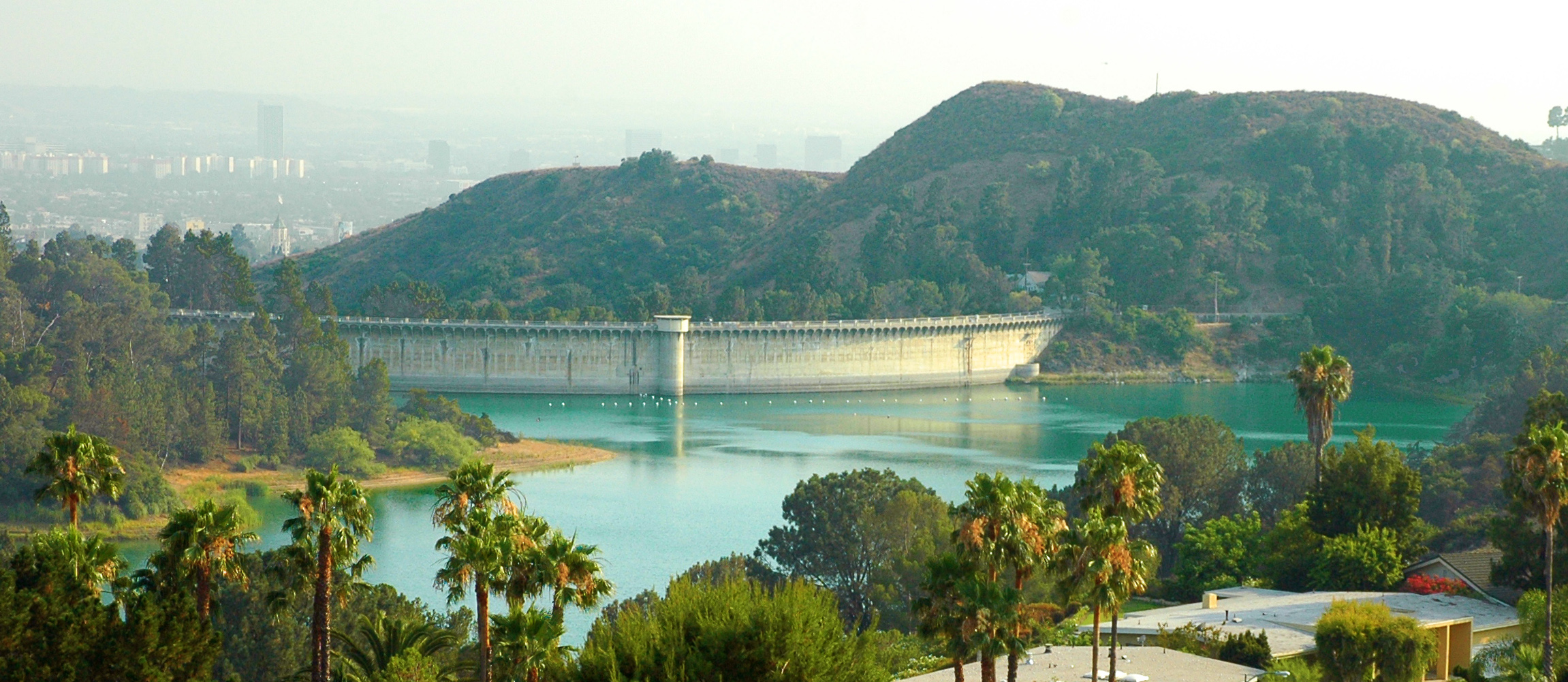
Los Angeles: The Sprawl That Invented the 20th Century
Los Angeles is less a city than an argument about what cities should be - a sprawl of 88 incorporated cities pretending to be one, connected by freeways that are always congested, sustained by water stolen from 200 miles away. The city that barely existed in 1900 became America's second-largest by mid-century, growing on a simple formula: sell the climate, build the movies, tear out the trains, and let everyone drive. The result is 500 square miles of urban development without an obvious center, where 'The Industry' means entertainment, where everyone has a script in their desk drawer, where the Santa Ana winds blow hot and crazy from the desert. Los Angeles invented car culture, suburban sprawl, and the celebrity industrial complex. The world has been imitating it ever since.
Hollywood
The movie industry moved to Hollywood in the 1910s for the weather - 300 sunny days a year for outdoor filming - and to escape Thomas Edison's patent enforcers in New Jersey. The studios that established there created the American century's dominant art form and export. The names became legend: Paramount, Warner Bros., Universal, MGM. The studio system controlled everything: the stars, the stories, the distribution. Television arrived in the 1950s; the studios adapted. Streaming arrived in the 2010s; they're adapting again. The physical Hollywood is grimier than visitors expect - the Walk of Fame sticky with gum, the tourists disappointed. But The Industry remains, generating $50 billion annually, still manufacturing dreams.
The Freeways
Los Angeles once had the world's largest streetcar system - over 1,000 miles of Pacific Electric Railway 'Red Cars' connecting the basin. General Motors, Standard Oil, and Firestone bought the system and dismantled it, replacing trains with buses that ran less frequently. The conspiracy theory writes itself; the reality is more complex - cars were already winning when the trains were torn out. What replaced them was the freeway system: the 101, the 405, the 10, the 5, arteries that are always clogged. Los Angeles traffic is legendary: hours lost daily, pollution trapped by the mountains, rush hour that extends from 7 AM to 7 PM. The Metro system is expanding; whether it can undo a century of car culture remains uncertain.
The Water
Los Angeles exists because William Mulholland stole water. The Los Angeles Aqueduct, completed in 1913, brought water 233 miles from the Owens Valley, turning a desert town into a metropolis and turning Owens Lake into a dust bowl. The Owens Valley residents dynamited the aqueduct in the 1920s; they lost anyway. The story inspired 'Chinatown.' Los Angeles still imports 85% of its water - from the Colorado River, from Northern California, from wherever it can. The drought cycles that define California life hit Los Angeles especially hard; the city has mandated water restrictions and pays residents to remove lawns. The city that water built now learns to live with less.
The Diversity
Los Angeles is America's most diverse major city - no racial majority, over 200 languages spoken, neighborhoods that feel like different countries. Koreatown is the largest Korean community outside Korea; Little Tokyo is the oldest Japanese American community; East LA is majority Latino; Glendale is majority Armenian. The diversity creates cultural fusion that defines LA style: Korean tacos, lowrider culture, the entertainment industry that puts the world on screen. The diversity also creates tension - the 1992 riots after the Rodney King verdict, the ongoing gentrification displacing longtime residents, the inequality visible in the contrast between Bel Air mansions and Skid Row encampments.
Visiting Los Angeles
Los Angeles is served by Los Angeles International Airport (LAX). A car is nearly essential; the Metro is expanding but doesn't reach everywhere. The Getty Center offers free admission and stunning views. The Griffith Observatory provides the classic Hollywood Sign panorama. Santa Monica Pier and Venice Beach offer oceanfront atmosphere. The Hollywood tourist zone is skippable; the studios offer better tours. Museum options include LACMA, the Broad, and the Huntington Library in Pasadena. The traffic is worst during morning and evening commutes; plan around it. The weather is best in fall and spring; 'June Gloom' brings morning clouds that may or may not burn off.
From the Air
Located at 34.05°N, 118.24°W in a basin bounded by the San Gabriel Mountains to the north and the Pacific Ocean to the west. From altitude, Los Angeles appears as continuous urban development stretching 50 miles in every direction - the freeway network visible as gray arteries, the downtown cluster of towers surprisingly small for such a large city. The Hollywood Sign is visible on Mount Lee; the Santa Monica Pier marks the coast. What appears from altitude as endless sprawl is America's second-largest metropolitan area - where the movies were invented, where the freeways replaced the trains, and where 13 million people chase the California dream.