Los Angeles Maritime Museum
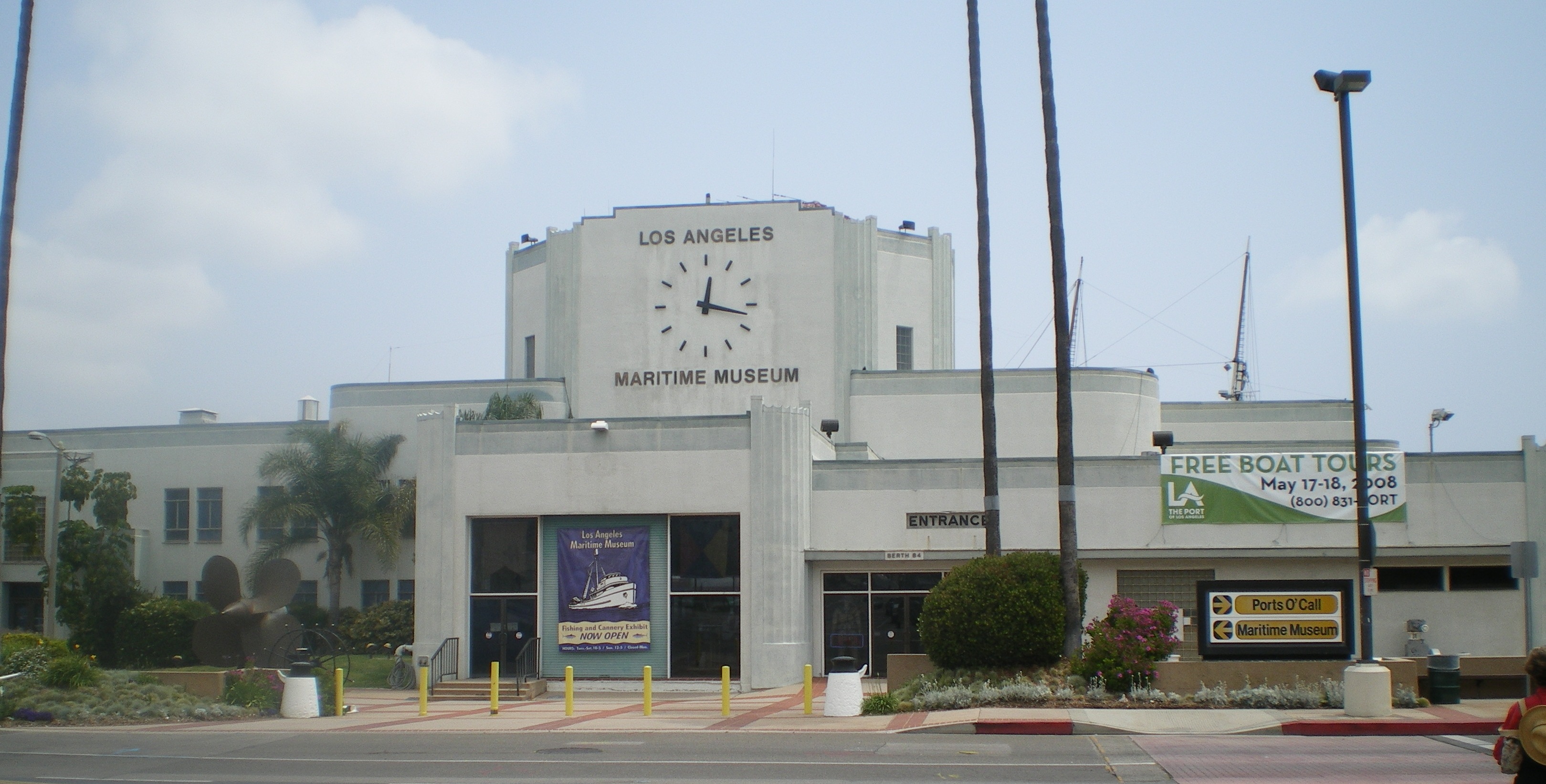
The clock tower still rises above the main channel of Los Angeles Harbor, though no ferries have docked here since 1963. When the Vincent Thomas Bridge opened that year, connecting San Pedro directly to Terminal Island, it rendered the Municipal Ferry Terminal obsolete overnight. The building sat empty for years, housing harbor department offices, until the community rallied to save it. Today, this Streamline Moderne masterpiece serves as the Los Angeles Maritime Museum - the largest maritime museum on the West Coast.
Art Deco on the Waterfront
The Municipal Ferry Terminal rose at Berth 84 in 1941, a product of the Works Project Administration and the vision of architect Derwood Lydell Irvin of the Los Angeles Harbor Department. Its Streamline Moderne design - all curves and horizontal lines, suggesting motion and progress - made it one of the harbor's most distinctive structures. The clock tower, the rounded corners, the sense of sleek efficiency: this was California optimism rendered in concrete and glass. For twenty-two years, ferries shuttled passengers and vehicles between San Pedro and Terminal Island, until a suspension bridge made the journey unnecessary.
From Terminal to Treasure
The museum opened in 1979, the result of widespread community efforts to preserve the historic building. Modernist architect James Pulliam designed the interior renovation, transforming ferry waiting areas into exhibition space while preserving the building's distinctive character. The San Pedro Municipal Ferry Building earned its place on the National Register of Historic Places and as a Los Angeles Historic-Cultural Monument. Today, the City of Los Angeles Department of Recreation and Parks operates the museum, welcoming visitors Tuesday through Sunday from 10 AM to 5 PM.
Ships in Miniature
The museum's Navy Hall displays some of its most impressive artifacts: large-scale ship models including a detailed replica of a U.S. Navy cruiser and the SS Poseidon model used in the 1972 disaster film The Poseidon Adventure. Upstairs, visitors find an armada in miniature - models of merchant ships like the Silverpalm, elegant square riggers, and sailboats of every description. A fully operational ham radio station still crackles with transmissions, connecting the museum to amateur radio operators worldwide. The commercial fishing exhibit chronicles San Pedro's once-thriving fishing industry, from the art of purse seining to the annual Fishermen's Fiesta to the bustling tuna canneries that once operated on nearby Terminal Island.
Living Fleet
The museum's collection extends beyond the building's walls to working vessels with remarkable histories. The tugboat Angels Gate, originally designated ST-695, was built in 1944 for the Army Transportation Service - one of a fleet designed for operations in the World War II European theater. The museum operates Angels Gate today, keeping alive the traditions of harbor seamanship. Docked nearby is the Ralph J. Scott, a historic fireboat that earned designation as a U.S. National Historic Landmark for its service protecting the port.
Gateway to the Harbor
From its position on the main channel, the museum offers views of one of America's busiest ports in constant motion. Container ships glide past, their decks stacked high with cargo from Asia and beyond. Tugboats maneuver massive vessels into berths. The working harbor surrounds this elegant reminder of an earlier era, when a ferry ride across the channel was part of daily life. The clock tower stands sentinel as it has since 1941, marking time in a port that never sleeps.
From the Air
Located at 33.74N, 118.28W on the main channel of Los Angeles Harbor in San Pedro. The distinctive Streamline Moderne building with its clock tower is visible at Berth 84. Best viewed at 1,500-2,000 feet. The nearby Vincent Thomas Bridge (green suspension bridge) provides an excellent visual reference. Nearby airports include Long Beach (KLGB) to the east and Torrance (KTOA) to the northwest.