Love Canal
In the 1890s, entrepreneur William Love began digging a canal near Niagara Falls to generate hydroelectric power. The project failed, leaving a partial ditch that the Hooker Chemical Company filled with 21,000 tons of toxic waste between 1942 and 1953. Then the company sold the land to the Niagara Falls school board for one dollar, with a deed clause warning of buried chemicals. The board built an elementary school on top of the dump. The city built a neighborhood around it. For twenty years, families lived over a chemical time bomb. Children played in fields where rusted barrels surfaced after rain. Basements filled with black sludge. The smell of chemicals permeated homes. Residents reported high rates of miscarriages, birth defects, and cancer. In 1978, journalist Michael Brown and activist Lois Gibbs exposed the contamination, triggering the evacuation of 800 families and creating a national scandal. Love Canal became synonymous with corporate negligence and government failure, leading directly to the Superfund law that holds polluters responsible for cleanup.
The Dump
Hooker Chemical used the abandoned canal as a disposal site for chemical waste from their Niagara Falls plant. Over eleven years, they buried pesticides, solvents, and dioxins in metal drums. When the site filled, they covered it with clay and sold it. The deed explicitly warned of 'chemical wastes' and released Hooker from liability. But the school board ignored the warnings. The 99th Street School opened in 1955, directly over the dump. Roads and sewers cut through the clay cap. Homes went up on former dump edges. Hooker engineers warned that construction would disturb the containment, but no one listened. The chemicals, supposedly sealed, began to migrate.
The Sickness
Residents noticed problems for years before anyone connected them. Chemicals surfaced in backyards. Trees and gardens died. The air smelled strange. Children came home from school with chemical burns. Pets lost their fur. Then came the health reports: unusually high rates of miscarriage, stillbirth, and birth defects. Children with epilepsy and learning disabilities. Adults with liver damage and rare cancers. When the New York State Health Department finally investigated in 1978, they found toxic chemicals in the air and soil throughout the neighborhood. The basement of one home contained 82 different chemicals. Officials declared a health emergency and evacuated pregnant women and young children.
Lois Gibbs
Lois Gibbs was a 27-year-old housewife with no activist experience when she learned that her son's school sat on a chemical dump. Her son had developed epilepsy and other health problems since starting school. When officials refused to transfer him, she began going door to door, documenting health problems and rallying neighbors. The Love Canal Homeowners Association she founded organized protests, testified before Congress, and refused to let the story die. When state officials initially limited evacuation to homes directly over the dump, Gibbs and her neighbors demanded more. They briefly held two EPA officials hostage. In 1980, President Carter declared a federal emergency and ordered the relocation of all 900 families.
The Aftermath
Love Canal transformed American environmental law. Congress passed the Comprehensive Environmental Response, Compensation, and Liability Act of 1980 - known as Superfund - creating a system to clean up toxic sites and hold polluters financially responsible. The EPA established the principle that companies could be liable for contamination decades after disposal. Hooker's parent company ultimately paid $129 million in cleanup costs and settlements. The contaminated area was fenced off and capped with clay. The 99th Street School was demolished. In the 1990s, after cleanup, some homes were renovated and resold - controversially - as affordable housing. Lois Gibbs went on to found the Center for Health, Environment and Justice, continuing to advocate for communities facing contamination.
Visiting Love Canal
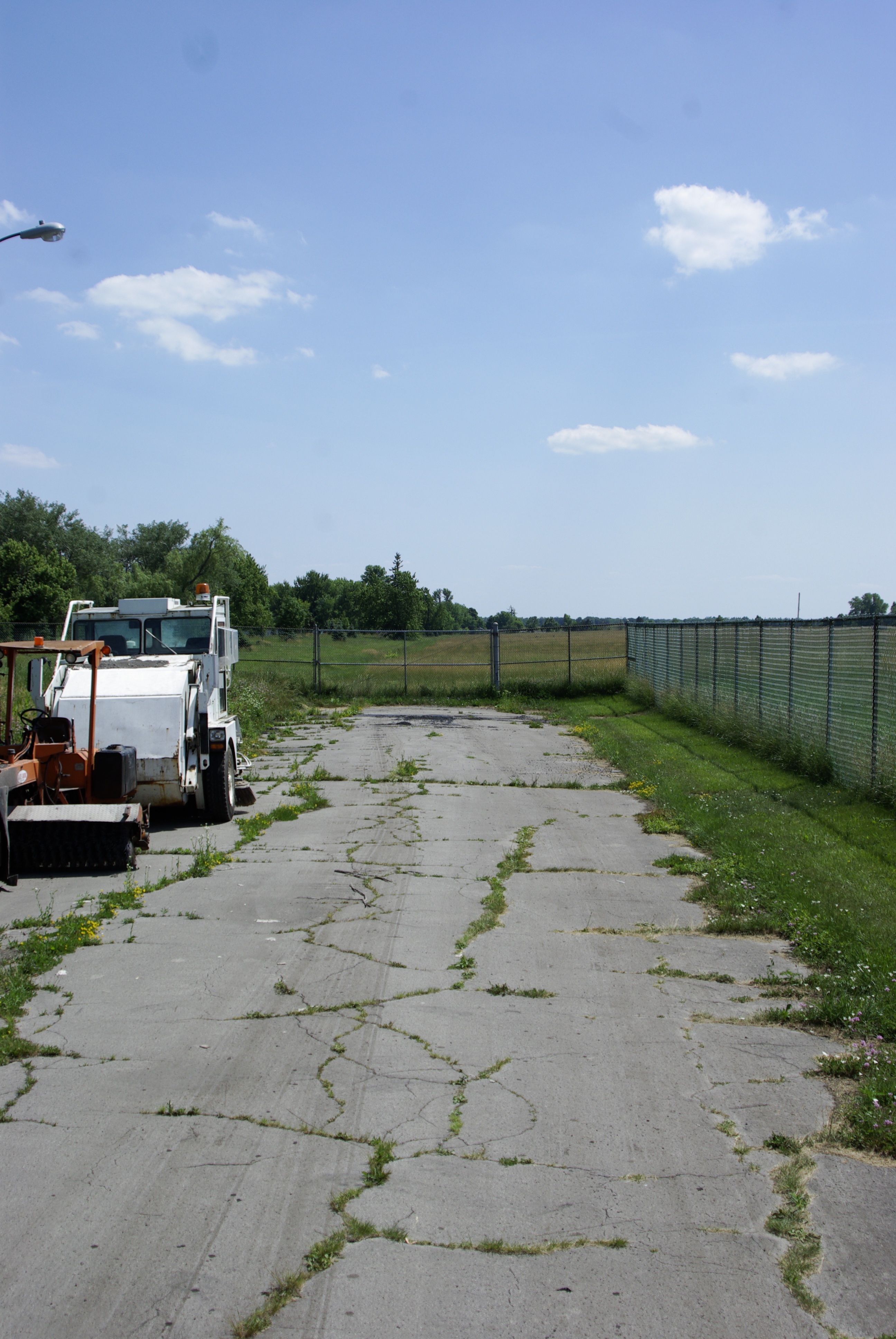
Love Canal lies in the city of Niagara Falls, New York, about three miles east of the famous waterfalls. The original dump site remains fenced and monitored, marked by a metal containment cap and signs warning against trespass. The 99th Street School is gone. Some surrounding blocks have been demolished; others, controversially, have been resold as homes in a development called Black Creek Village. The Love Canal museum, operated by the EPA, tells the story through photographs and documents. For those interested in environmental history, the site represents a turning point - the place where Americans learned that the chemicals of industrial prosperity could poison their children. Niagara Falls International Airport (IAG) is 6 miles northeast; Buffalo Niagara International Airport (BUF) is 20 miles south.
From the Air
Located at 43.08°N, 78.95°W in Niagara Falls, New York, about 3 miles east of the famous waterfalls. From altitude, the capped containment area is visible as an open green space surrounded by residential streets. The Niagara River flows to the west. The remediated area is distinguishable from surrounding neighborhoods by its lack of buildings.