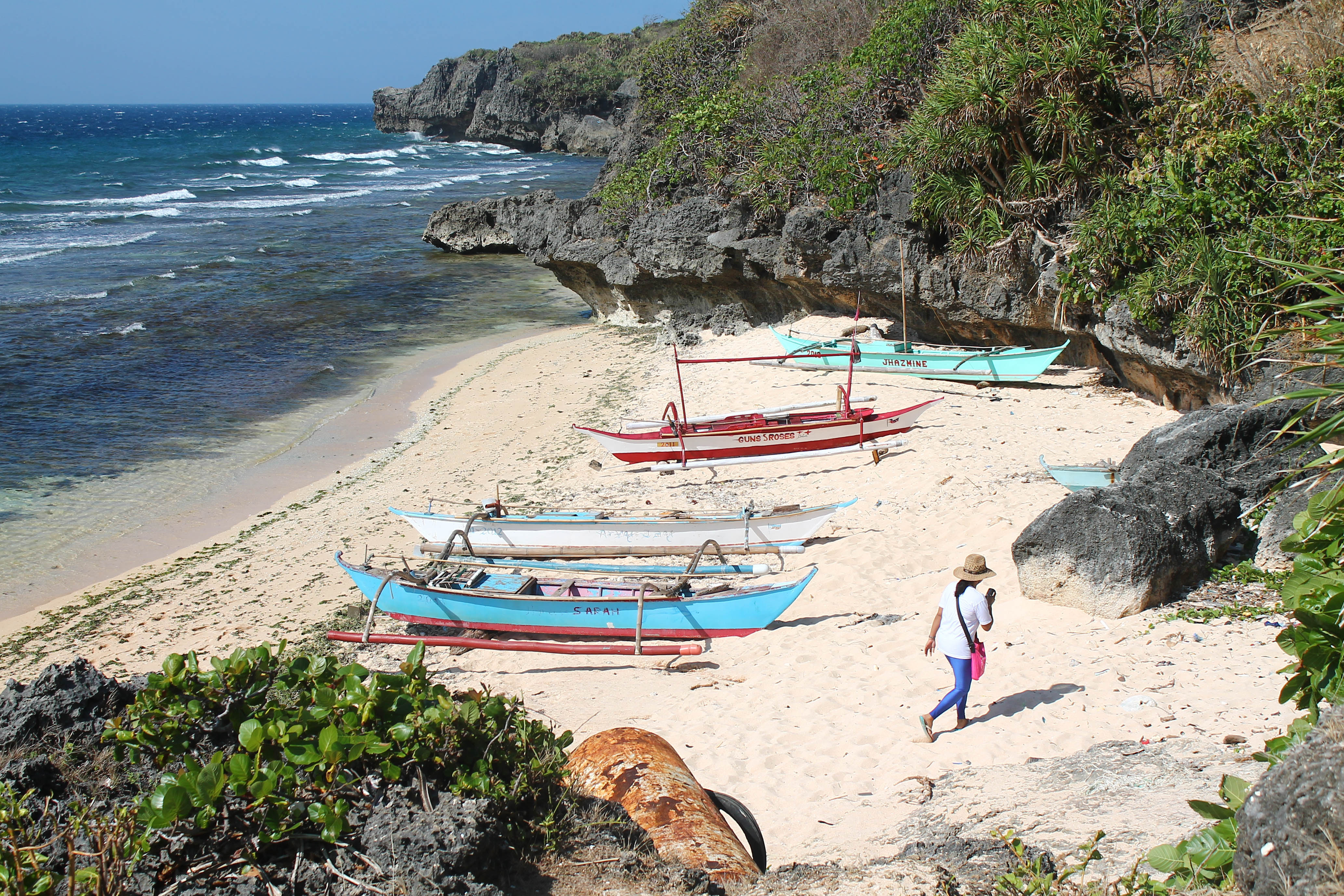
Lubang Island
In March 1974, a Japanese explorer named Norio Suzuki traveled to a small island 117 kilometers southwest of Manila with an improbable mission: to find a soldier who refused to believe his war was over. Hiroo Onoda, a Japanese army intelligence officer, had been hiding in the jungles of Lubang Island for nearly three decades, conducting guerrilla raids against local farmers and police long after Japan's surrender. The island that held him captive was barely 250 square kilometers, yet its dense forests and rugged terrain had concealed him since 1945. Lubang Island's story is defined by that extraordinary standoff between one man's conviction and reality, but the island itself has a longer, stranger history -- one written in the DNA of creatures found nowhere else and in the ruins of a Spanish fortress overlooking a quiet harbor.
The Soldier Who Wouldn't Surrender
Onoda arrived on Lubang in 1944 with orders to disrupt enemy operations and never surrender. He took those orders literally. After the war ended in August 1945, he and three fellow holdouts retreated into the mountainous jungle interior, dismissing leaflets dropped from aircraft as enemy propaganda. Over the following decades, one companion surrendered in 1950. Another was killed by a search party in 1954, and the third died in a shootout with Philippine police in 1972. Onoda continued alone, surviving on stolen rice and bananas, occasionally firing on farmers he believed to be enemy combatants. His guerrilla campaign killed at least 30 people. Only when his former commanding officer, Major Yoshimi Taniguchi, traveled to Lubang and personally relieved him of duty did Onoda finally emerge from the jungle, still wearing his tattered uniform and carrying a functioning rifle. He was the last significant Japanese holdout of the war.
An Archipelago Apart
The Lubang Group consists of seven islands strung northwest to southeast: Cabra, with its lighthouse at the northern tip; Lubang itself, the largest at over 25 kilometers long; Ambil and Golo to the southeast; and the smaller islets of Talinas, Mandaui, and Malavatuan. Separated from the nearest major landmass by deep channels, the group sits where the South China Sea meets the Verde Island Passage, one of the most biodiverse marine corridors on Earth. That isolation has shaped everything about the islands. The waters teem with coral species, while the forests shelter creatures that evolution crafted for this place alone. German scientist Carl Semper climbed the island's volcanic peak in the late nineteenth century, finding no evidence of historical eruptions but plenty of evidence that the terrain had been left to its own devices for a very long time.
Life Found Nowhere Else
Isolation is evolution's workshop, and Lubang demonstrates this with startling precision. The Lubang forest mouse exists only here. The Lubang scaly-toed gecko and the Lubang slender skink are both endemic, described by science and then found to occupy a single archipelago on the planet. Philippine cobras and king cobras share the forest floor with warty pigs whose genetics may constitute a distinct population still awaiting formal classification. The birdlife is vivid: oriental dwarf kingfishers flash through the understory, purple-throated sunbirds work the flowering trees, and rufous paradise flycatchers trail their long tails through the canopy. But this biodiversity is under siege. Habitat loss and hunting with noose traps and trigger-set bullets have pushed many species into the remaining patches of remote forest, concentrating a fragile world into an ever-shrinking space.
Centuries of Passing Flags
Long before Onoda's war, Lubang attracted attention from colonial powers drawn to its strategic position guarding the western approaches to Manila Bay. The Spanish built the San Vicente Bastion on the western point of Tilik Port's entrance, a stone fortification that watched over the harbor where galleons could shelter. When the United States annexed the Philippines following the Spanish-American War in 1898, the islands changed hands again. Tilik Port remains the principal settlement's lifeline, connecting Lubang's fishermen, rice farmers, and garlic growers to the markets of Batangas and Manila. Today, the islands' fine white-sand coastlines are drawing a different kind of visitor -- tourists seeking beaches untouched by the development that has transformed much of the Philippine coast.
Between Two Worlds
Lubang occupies a liminal space in the Philippine imagination. It is close enough to Manila to reach in a few hours by boat from Calatagan, yet remote enough that a man hid in its jungles for a generation without being found. Its story has been told in the feature film Onoda: 10,000 Nights in the Jungle in 2021, a short film called Onoda's War in 2016, and in Werner Herzog's novel The Twilight World. But the island resists reduction to a single narrative. Walk past the San Vicente Bastion and the story is colonial. Dive the waters of the Verde Island Passage and it becomes ecological. Talk to the fishermen mending nets at Tilik Port and it is simply home. The jungle where Onoda hid is still there, dense and humid, keeping whatever secrets remain.
From the Air
Lubang Island sits at approximately 13.77N, 120.20E, roughly 117 km southwest of Manila. The island is clearly visible from altitude as a distinct elongated landmass separated from Mindoro by open water. Cabra Island and its lighthouse mark the northern approach. Nearest major airport is Ninoy Aquino International (RPLL) in Manila. The island has a small airstrip. The Verde Island Passage runs to the southeast, and the South China Sea stretches to the west. Best viewed at 5,000-10,000 feet for the full archipelago layout.