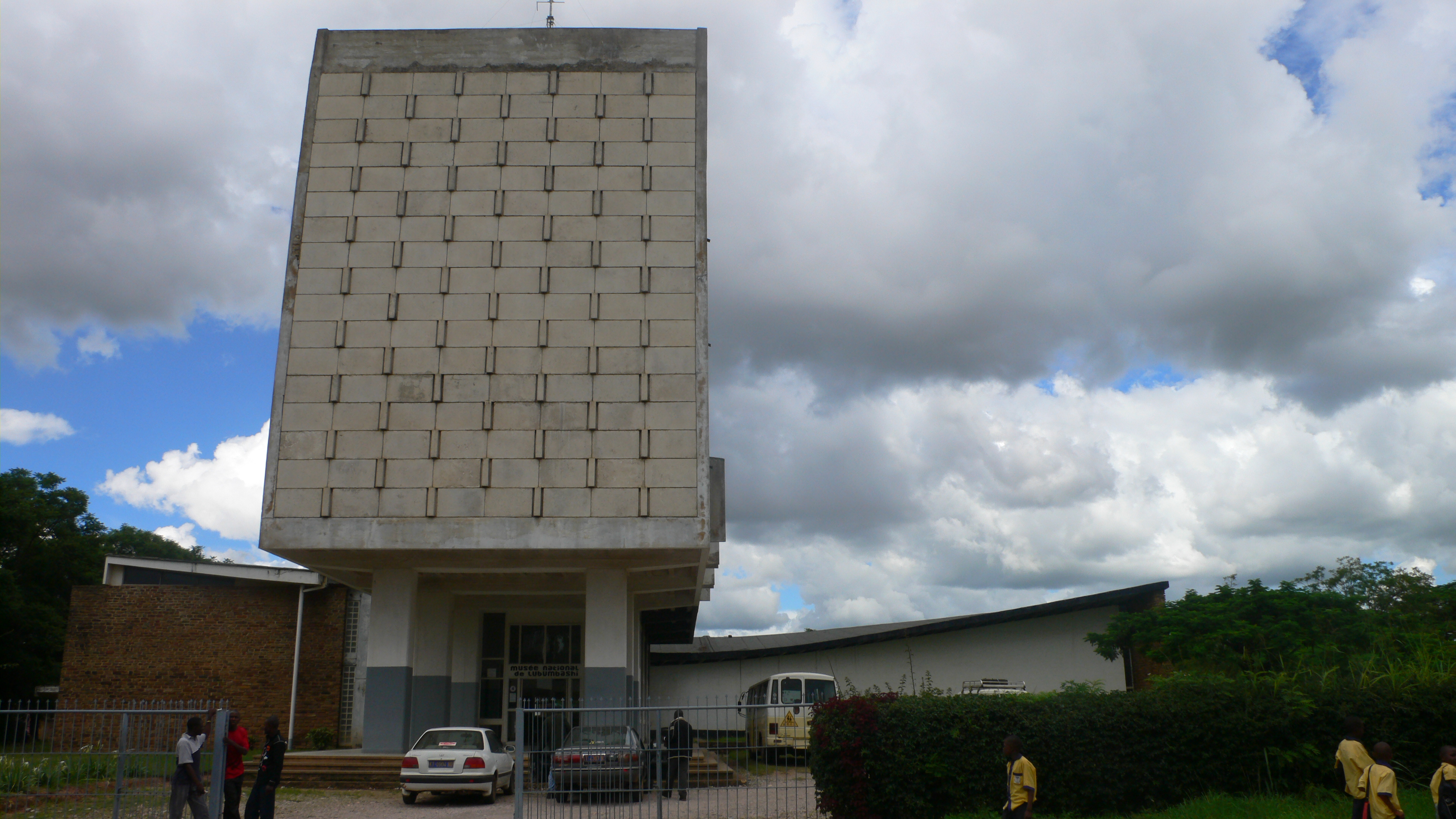
Lubumbashi
Songs in Lubumbashi rarely stay in one language. A verse might begin in Swahili, shift to Lingala, drop into Kiluba, surface in French, and borrow a phrase in English before the chorus. This code-switching is not confusion -- it is identity. Lubumbashi is the Democratic Republic of Congo's second city, the mining capital of Katanga Province, and a place where people from across the country's vast interior have converged for over a century to work the copper and cobalt beneath its red earth. Every language they brought with them stuck.
Elisabethville's Shadow
The city was founded in 1910 as Elisabethville, a colonial creation of the Belgian Congo. It served as the capital of Katanga Province, and its colonial-era infrastructure still marks the landscape: the University of Lubumbashi, founded in 1955, remains the city's largest institution of higher education. The zoo, created during the colonial period, deteriorated during years of war but has been rehabilitated by AZLU, a non-profit organization, and restocked with lions, monkeys, crocodiles, and ostriches. The Institut Francais, in the heart of the city, continues to anchor French cultural influence. But the name Elisabethville was shed after independence, and the city's character today owes far more to the waves of Congolese who migrated here for mining employment than to Belgian planners. They brought Kiluba, Chokwe, Bemba, and Kisanga, layering them over the Kiswahili that had already established itself as the lingua franca.
The Mining Capital
Lubumbashi's economy runs on what lies underground. The Democratic Republic of Congo produces more than 3 percent of the world's copper and half its cobalt, and most of that extraction is based in Katanga. The city hosts the headquarters of Trust Merchant Bank, one of the country's largest financial institutions, and serves as the operational base for many of the DRC's biggest mining companies. Rail lines connect Lubumbashi to the Cape to Cairo Railway network, linking the city to Ilebo, Kindu, Tenke, Sakania, and Ndola across the Zambian border. From Tenke, connections reach Kolwezi and the Angolan port of Lobito via the Benguela railway. Lubumbashi International Airport provides modern air service. The infrastructure exists because the copper demands it.
Mazembe and the Beautiful Game
Football in Lubumbashi carries a history that mirrors the country's. Until 1960, Congolese football was segregated. The whites-only Ligue de Football du Katanga, founded in 1911, organized its first official championship in 1925. Simultaneously, blacks-only regional tournaments operated in parallel. In 1950, the African football association in Elisabethville had over 30 affiliated clubs competing across four leagues and three divisions. Independence unified the competitions, and the traditionally black clubs immediately dominated. TP Mazembe, the city's most celebrated club, has won five CAF Champions League titles and reached the FIFA Club World Cup final, where they lost 3-0 to Internazionale. The club's chairman, Moise Katumbi Chapwe, served as governor of Katanga Province. FC Saint-Eloi Lupopo, which won the local league 25 times through 2003, and CS Don Bosco round out a football culture that functions as civic religion.
A City That Keeps Arriving
The Biennale of Lubumbashi, held every two years, showcases artists from across the region. Its artistic director, Sandrine Colard, captured the city's essence in a 2019 interview: 'The Congo is a country that is perpetually in the future. All of these different periods coalescing in one city is something I wanted to address.' The observation applies beyond art. Lubumbashi's most famous musician, Jean-Bosco Mwenda, produced songs that have become classics, endlessly remixed by younger artists who blend Soukous with international urban styles. NBA player Bismack Biyombo, rapper Baloji, and singer Lous and the Yakuza all trace their roots here. Nollywood films from Nigeria play alongside Hollywood productions at Cine Betamax, the city's surviving movie theater, which also hosts football screenings, concerts, and Christian meetings. Every cultural current flows through Lubumbashi, and everything that arrives gets folded into the mix.
Katanga's Restless Heart
Lubumbashi's political history is as layered as its culture. The province seceded in 1960, forming the independent state of Katanga before losing its sovereignty in 1963. The autonomist impulse never fully disappeared. In 1997, Laurent-Desire Kabila chose Lubumbashi as the city from which to declare himself president after the AFDL's capture of the city ended Mobutu Sese Seko's dictatorship. The city has weathered militia seizures, mass prison outbreaks, and the persistent tensions that come with being a city whose mineral wealth attracts competing interests from across the globe. Belgian, French, and British international schools operate here, each serving a community of expatriates drawn by the same resource that drew the first colonial prospectors. Lubumbashi endures because the copper endures, but the city long ago became something more complicated than a mining camp.
From the Air
Located at 11.66S, 27.48E. Lubumbashi is the DRC's second-largest city, visible from altitude as a major urban area near the Zambian border in southeastern Congo. Lubumbashi International Airport (FZQA/FBM) provides the primary air access. The city sits at approximately 1,230 meters elevation on a plateau. Look for the university campus, the railway junction, and the mining infrastructure that surrounds the city. Ndola, Zambia (FLND) is roughly 300 km to the southeast.