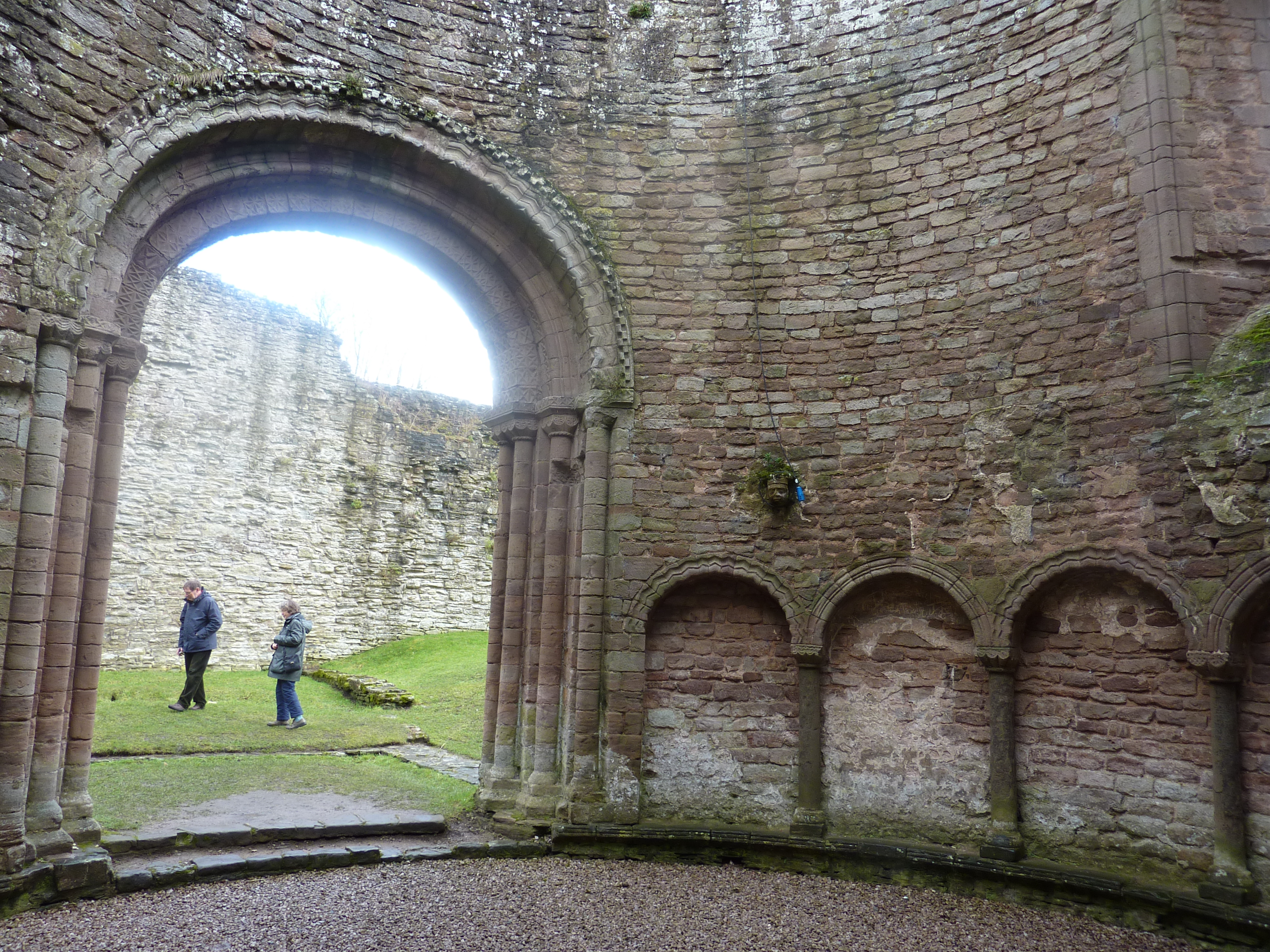
Ludlow Castle
In 1634, John Milton's masque Comus received its first performance in the Great Hall of Ludlow Castle, staged for John Egerton, Earl of Bridgewater, who served as president of the Council of the Marches. It is a strange image: one of the greatest works of English literature debuting inside a military fortress on the Welsh border, in a room where, a century earlier, Bishop Rowland Lee had sentenced criminals to death with cheerful efficiency. But that was Ludlow Castle -- a place that spent eight centuries shifting between roles, from Norman stronghold to administrative capital to Royalist redoubt, accumulating layers of history as easily as it accumulated coats of arms on its Great Hall walls.
A Castle for the Border
Ludlow Castle was built to hold a frontier. The Welsh Marches -- the borderlands between England and Wales -- were among the most contested territories in medieval Britain, and castles like Ludlow served as the instruments of English authority in a landscape that resisted it. The castle's Norman origins date to the late 11th century, when it was erected as one of a chain of fortifications controlling the approach from Wales. Over the following centuries, it passed through the hands of the de Lacy, Mortimer, and York families, each leaving architectural additions that expanded the fortress into a complex of walls, towers, halls, and chapels. By the time the Council of the Marches was established at Ludlow in the early 16th century, the castle had evolved from a military installation into something closer to a seat of government.
Lee's Iron Hand
The Council of the Marches gave Ludlow Castle a new purpose: governing Wales and the border counties on behalf of the English Crown. Bishop Rowland Lee, who served as president from 1534, used the council's judicial powers with ruthless enthusiasm, executing local criminals and using the fines and confiscated goods to fund repairs to the castle itself. He repaired roofs with lead stripped from a dissolved Carmelite friary in the town and later claimed the work would have cost the Crown around 500 pounds if it had been paid for directly. Later presidents were less bloodthirsty, preferring the pillory, whipping, or imprisonment. Elizabeth I appointed Sir Henry Sidney as president in 1560, and his restoration of the castle was both sympathetic and ambitious -- he added family apartments, converted the 14th-century chapel into a courthouse, installed a real tennis court, and began the tradition of decorating the Great Hall with heraldic arms.
Crown, War, and Abandonment
The future Charles I was declared Prince of Wales at Ludlow Castle by James I in 1616, and the castle was designated his principal residence in Wales. But the Council of the Marches was losing its authority. By 1641, Parliament had stripped it of judicial powers, and when the English Civil War broke out the following year, Ludlow declared for the king. A Royalist garrison fortified the castle with artillery from nearby Bringewood Forge, but as the war turned against Charles, the garrison was drawn down to reinforce field armies. The castle fell to Parliamentary forces after a siege, and its furnishings -- which had been luxurious by 17th-century standards -- were sold off in the town in 1650. The weapons were sent to Hereford in 1653, and the garrison was disbanded entirely two years later.
Ruins with a View
After the Council of the Marches was formally abolished in 1689, Ludlow Castle lost its institutional purpose and began its long decline into picturesque ruin. The roof fell in, walls crumbled, and the castle joined the ranks of those romantic British ruins that attracted artists and poets in the 18th and 19th centuries. Today it stands as a Grade I listed building and scheduled monument, its Norman keep, Great Hall, and round chapel still substantial enough to convey the scale of what this place once was. The annual Ludlow Festival uses the castle as a performance venue, staging Shakespeare and other plays in the inner bailey -- an echo, deliberate or not, of that first performance of Comus in 1634, when poetry and power shared the same stone walls. The town of Ludlow itself, visible below the castle's ramparts, remains one of the finest examples of a medieval planned town in England.
From the Air
Located at 52.367N, 2.723W in Shropshire, on a promontory above the confluence of the River Teme and River Corve. The castle ruins are clearly visible from altitude, set above the medieval grid of Ludlow town. Nearest airports: EGBO (Wolverhampton Halfpenny Green, 20nm NE), EGBS (Shobdon, 15nm W). Best viewed at 1,500-3,000 ft AGL.