Ludlow Massacre Site
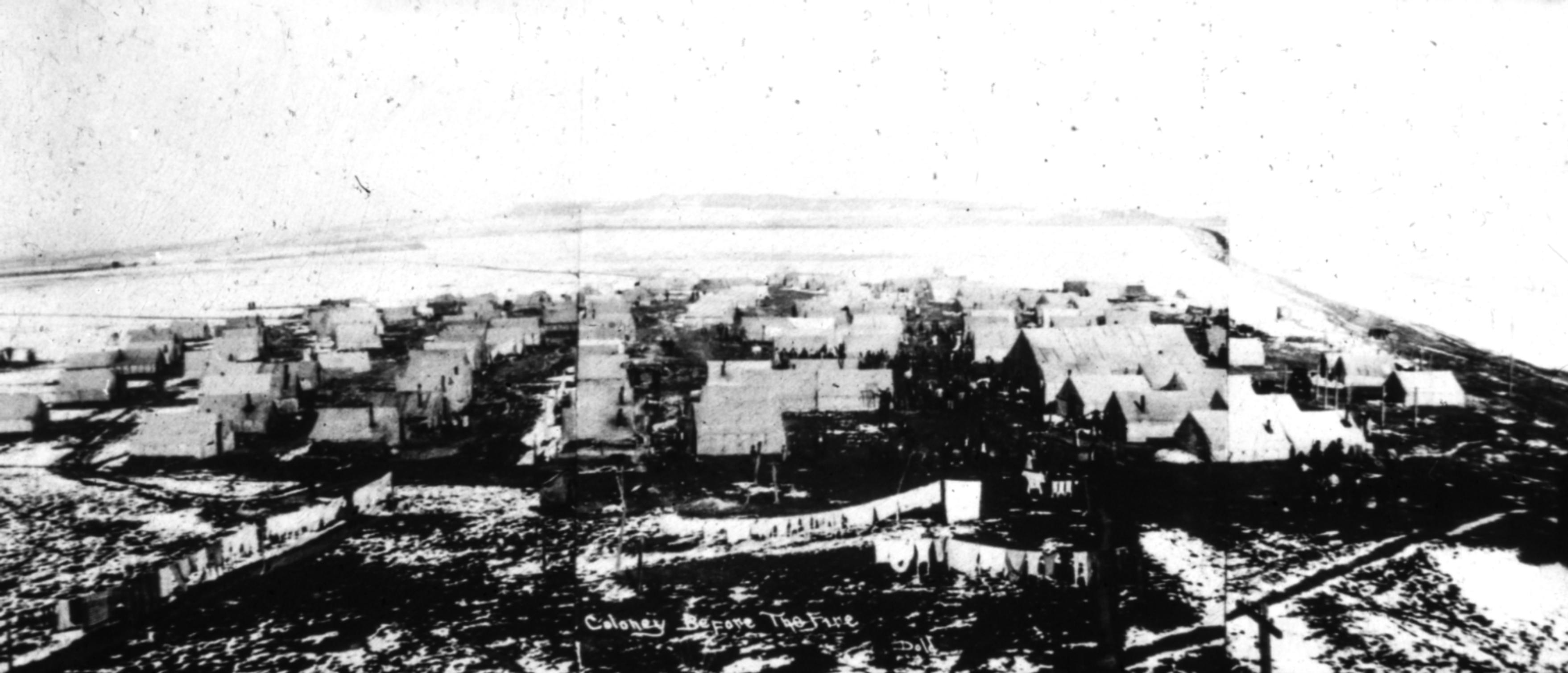
On April 20, 1914, Colorado National Guard troops and private guards employed by the Colorado Fuel and Iron Company attacked a tent colony of striking coal miners and their families at Ludlow, Colorado. The attack killed approximately 21 people, including 11 children and 2 women who suffocated in a pit beneath a burning tent. The Ludlow Massacre, as it became known, triggered ten days of open warfare across the Colorado coalfields. Miners armed themselves and attacked mine properties; the Colorado National Guard and federal troops eventually restored order. The strike was broken, but the massacre shocked the nation. The Rockefeller family, which controlled Colorado Fuel and Iron, faced intense criticism. The tragedy accelerated reforms in labor relations and contributed to the establishment of the U.S. Department of Labor. At Ludlow today, a monument marks the site where children died for their parents' right to organize.
The Strike
Coal miners in southern Colorado worked in conditions that resembled feudalism. They lived in company towns, bought from company stores, were paid in company scrip. Unions were forbidden. Safety regulations were ignored; Colorado's coal mines were among the deadliest in America. In September 1913, the United Mine Workers called a strike against Colorado Fuel and Iron, the Rockefeller-controlled company that dominated the region. When miners were evicted from company housing, they moved their families into tent colonies on the plains outside the mining towns. The largest colony was at Ludlow, where about 1,200 strikers and family members lived through the winter of 1913-14. The Colorado National Guard, whose officers included company employees, watched the colonies with increasing hostility.
The Attack
On April 20, 1914 - Greek Easter - shooting broke out between the militia and the Ludlow colony. The exact sequence remains disputed, but by afternoon, National Guard troops and company guards were firing into the tent colony with rifles and a machine gun. Miners returned fire from positions in the surrounding hills. Families huddled in pits dug beneath their tents for protection. By nightfall, guardsmen entered the colony and set the tents ablaze. The next morning, a telephone lineman discovered the bodies of 11 children and 2 women in a pit beneath a burned tent - they had suffocated in their shelter. Three union leaders and a child had been shot. Two women and the bystanders were also dead.
The War
News of the massacre spread through the coalfields. Miners armed themselves with rifles, dynamite, and stolen weapons. For ten days, open warfare raged across southern Colorado. Miners attacked mine properties, burned buildings, and fought guardsmen and company guards. At least 50 people died in the violence - some estimates are much higher. The strike had become an insurrection. Governor Ammons asked President Wilson for federal troops. On April 30, the U.S. Army arrived and restored order. The strike continued until December 1914, when it was finally broken. The miners had lost, but the violence had changed everything. The Rockefeller name, once synonymous with American success, became associated with the murder of children.
The Aftermath
John D. Rockefeller Jr. was summoned before Congress to explain how his company had come to kill children. He hired public relations pioneer Ivy Lee to manage the family's image - one of the first corporate PR campaigns. He also hired labor relations expert Mackenzie King, later Prime Minister of Canada, to develop a 'company union' system that would give workers limited voice without actual union power. The massacre contributed to labor reforms including the establishment of the U.S. Department of Labor and investigations into mine safety. But meaningful union recognition in the Colorado coalfields wouldn't come until the New Deal. The United Mine Workers erected a monument at Ludlow in 1918, dedicated to the 'men, women and children who lost their lives in freedom's cause.'
Visiting Ludlow
The Ludlow Massacre site is located on the plains of southeastern Colorado, about 18 miles north of Trinidad and 175 miles south of Denver. A small monument and memorial park mark the location of the tent colony. The granite monument, erected by the UMWA in 1918, includes a statue of a miner and his family. A pit beneath the monument represents the hole where women and children died. The annual Ludlow Memorial Service, held each June, draws labor activists and descendants of the victims. The surrounding landscape is essentially unchanged: short-grass prairie and distant mesas. Trinidad, the nearest town, has a small museum with Ludlow artifacts. The isolation of the site drives home how remote these mining communities were - and how little help could reach them when violence erupted. Colorado Springs Airport (COS) is 100 miles north.
From the Air
Located at 37.34°N, 104.58°W on the plains of Las Animas County, Colorado, about 18 miles north of Trinidad. From altitude, the Ludlow site appears as a small monument and park in otherwise empty short-grass prairie. The Spanish Peaks are visible to the west. The coal mines that caused the conflict were scattered through the surrounding hills and canyons. Interstate 25 passes nearby.