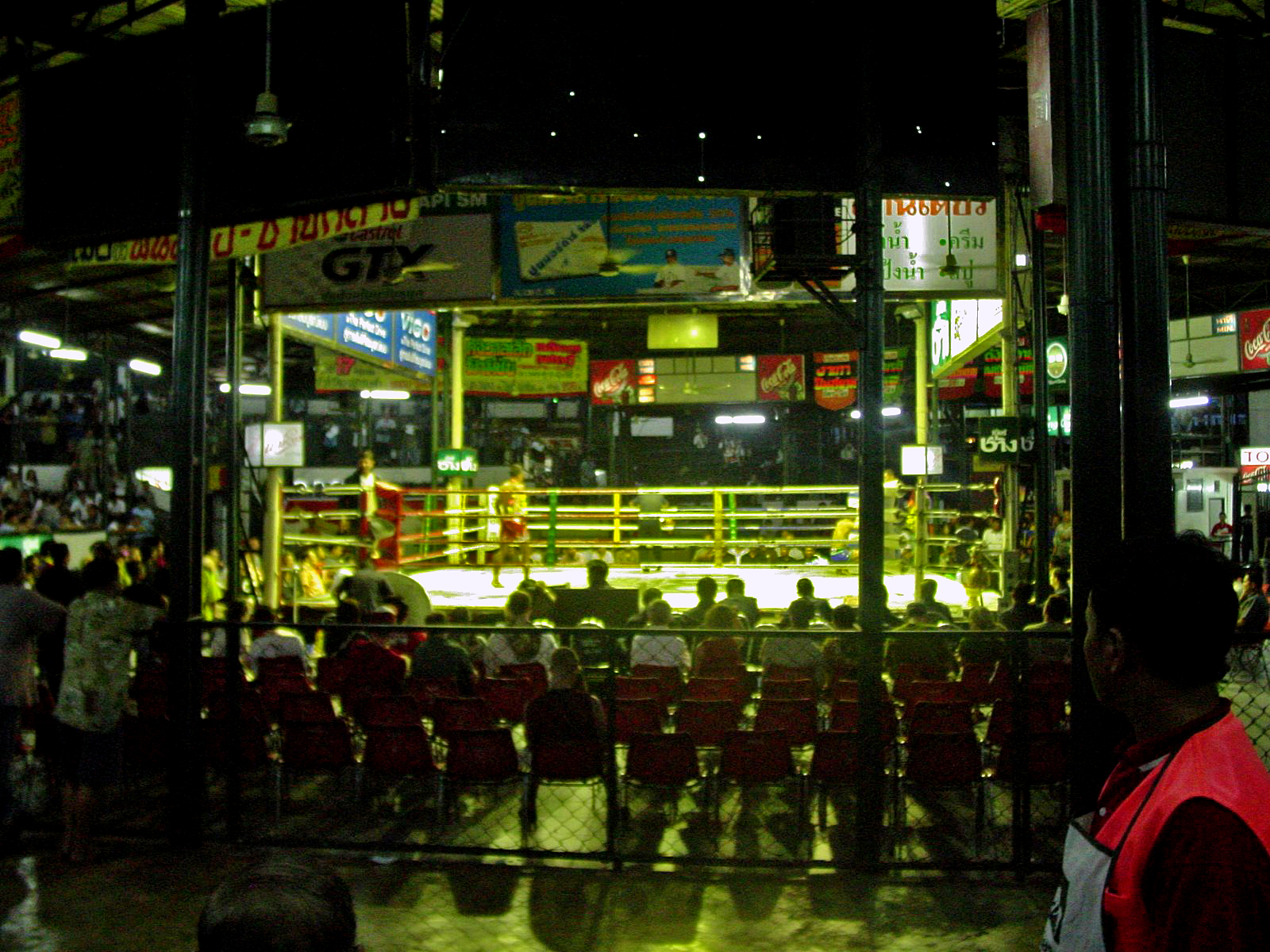
Lumpinee Boxing Stadium
Dieselnoi Chor Thanasukarn held the Lumpinee lightweight title for four years in the early 1980s. He did not lose it. He ran out of opponents. No one in his weight class would fight him, so the champion was forced to retire undefeated, a distinction that says as much about the stadium as the fighter. Lumpinee is the place where Muay Thai careers are made or ended, where a championship belt carries weight that transcends the sport, and where the line between athletic competition and national identity blurs into something the Thai military has guarded since the arena opened on 8 December 1956.
The Army's Arena
General Praphas Charusathien drove the construction of Lumpinee Stadium, making it the second national Muay Thai venue after Rajadamnern Stadium. From the beginning, the Royal Thai Army has operated Lumpinee through its Army Welfare Department, and all proceeds from fights fund various army departments. The board of directors consists entirely of army officers. Eleven promoters handle the matchmaking, booking fighters under rules shared with Rajadamnern: boxers must weigh more than 100 pounds, be at least 15 years old, and the weight difference between opponents cannot exceed five pounds. For decades, women were barred from the ring entirely -- not just from fighting but from entering the ring at all. The military's grip on the stadium is not merely administrative. It reflects a deeper entanglement between Muay Thai and Thai national identity, one in which the army considers itself a custodian.
Six Foreigners and a Belt
Championship titles at Lumpinee run from mini flyweight at 105 pounds to super welterweight at 154 pounds, and winning one is among the hardest achievements in combat sports. Only six non-Thai fighters have managed it. French-Algerian fighter Morad Sari broke the barrier first, claiming the super lightweight title in 1999. France's Damien Alamos won the same division in 2012 and became the first foreigner to defend it. Greece's Rafi Bohic took the welterweight belt in 2017 and defended it four times. Belgian-Moroccan Youssef Boughanem won middleweight in 2018, Japan's Nadaka Yoshinari took mini flyweight in 2019, and France's Jimmy Vienot earned the middleweight crown that same year. The Dutchman Ramon Dekkers, perhaps the most celebrated foreign Muay Thai fighter in history, competed regularly at Lumpinee but never won the stadium's belt. The exclusivity is the point: a Lumpinee championship is not a promotional title but a measure of skill tested against the deepest talent pool in the world.
Breaking Its Own Rules
In 2021, facing talk of privatization or conversion to a museum, Lumpinee's management announced sweeping changes. The stadium would allow women to fight, host mixed martial arts, and ban gambling to attract broader audiences. On 13 November 2021, Lumpinee held its first female fight card, with Sanaejan Sor.Jor.Tongprajin defeating Buakaw Mor.Kor.Chor.Chaiyaphum by decision for the WBC Muaythai mini flyweight championship and Lumpinee's inaugural women's title. Two months later, on 16 January 2022, the stadium hosted its first MMA event under Fairtex Fight Promotion. By August 2022, ONE Championship began staging events at Lumpinee, though nearly all fights followed Muay Thai rules. Each change would have been unthinkable a decade earlier, and together they mark the most significant shift in the stadium's character since its founding.
The New Stadium on Ram Inthra Road
The Lumpinee that fighters enter today is not the original building. The stadium relocated to Ram Inthra Road, holding its first fight in the new venue on 11 February 2014 and officially opening on 28 February 2014. The new arena holds up to 5,000 spectators and hosts bouts on Tuesdays, Fridays, and Saturdays, with fights typically starting around 6 PM. The move preserved the name and the prestige while upgrading the physical plant. Lumpinee's story took a darker turn in March 2020, when boxing matches held on 6 March despite a government shutdown order issued three days earlier turned the stadium into a COVID-19 super-spreader site. The chief of the Army Welfare Department, who had been at the stadium, was among those infected. The incident laid bare the risks of the army's autonomous control -- a reminder that the institution guarding the sport's traditions does not always serve the public interest.
From the Air
Lumpinee Boxing Stadium is located at approximately 13.73N, 100.55E in Bangkok's Pathum Wan district (original site). The new stadium on Ram Inthra Road is in northern Bangkok. Don Mueang International Airport (VTBD/DMK) is approximately 15 km north. Suvarnabhumi Airport (VTBS/BKK) is about 30 km southeast. The stadium is within the dense urban core and not individually visible from altitude, but the Ram Inthra Road corridor provides a visual reference.