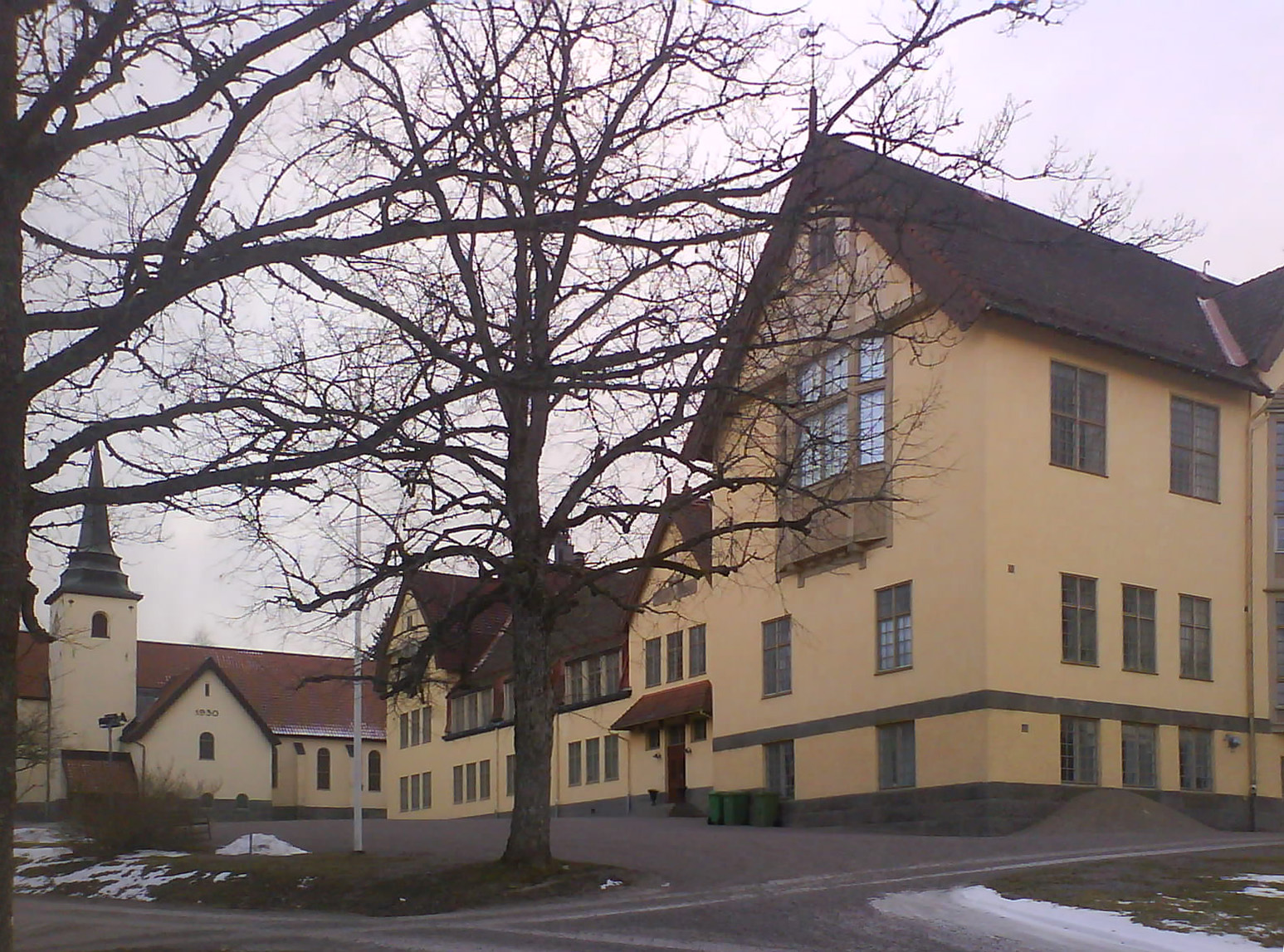
Lundsbergs Boarding School
The annual tuition at Lundsberg costs 454,000 Swedish kronor. For that sum, students receive a classical English-style education in the forests of Värmland, complete with dormitory houses bearing names like Forest Hill and Royal Gransäter, a private chapel with stained glass donated by Swedish princes, and a motto borrowed from the Romans: Mens sana in corpore sano. A healthy mind in a healthy body. But the phrase has taken on darker meanings here. In 2013, inspectors shut down the school after discovering older students had been burning younger ones with hot irons. Lundsberg represents both the pinnacle of Swedish elite education and its most troubling contradictions.
Forging Leaders in the Wilderness
Businessman William Olsson founded Lundsberg on January 30, 1896, in the Parish of Storfors, north of Kristinehamn. He drew inspiration from English boarding schools like Eton and Harrow, envisioning an institution that would mold Sweden's future leaders through religious studies and Spartan discipline. The school began in Lundsberg's Herrgård, an old manor house, before expanding as enrollment grew. Architect Erik Lallerstedt designed the main building between 1906 and 1907. Crown Prince Gustaf Adolf officially opened the sports field in 1923. Today approximately 200 students attend, housed in six dormitories, three for boys and three for girls, each with its own colors, traditions, and rivalries.
The Royal Connection
Gransäter dormitory earned the nickname 'Royal Gransäter' because of its most famous residents. Prince Gustaf Adolf lived there from 1918 to 1924, later becoming King Gustaf VI Adolf. His brother Sigvard Bernadotte attended during the same period. When the school's church was completed in 1930, all the Swedish princes who had graduated donated a stained glass window designed by Sigvard himself. The church, built from donations under architect Bror Almquist's plans, features a green marble altar and connects directly to the main school building. Prince Carl Philip continued the royal tradition in more recent years, joining a roster of alumni that includes cryptographer Boris Hagelin, supercar designer Christian von Koenigsegg, and humanitarian pilot Carl Gustaf von Rosen.
Competition and Character
Sport permeates every aspect of Lundsberg life. The school competes in SIPSI, a league of Swedish boarding and private schools including rivals Sigtunaskolan Humanistiska Läroverket, Grennaskolan, and Enskilda gymnasiet. In 2010, Lundsberg and Sigtuna inaugurated the Gant Rowing Race, adding another chapter to their long rivalry. House competitions run continuously throughout the year, with students representing Forest Hill's black and yellow, Björke's red and white, or Gransäter's white and black. Music and theater complement athletics, with both student and staff choirs performing in the school church. Alumni actors Johan Rabaeus and Sven Lindberg launched their careers on the Lundsberg stage.
When Tradition Becomes Torment
In 2011, anonymous calls to the media and school inspectors alleged systematic bullying at Lundsberg. The investigation revealed hazing rituals in which older students burned younger ones with hot irons. On August 28, 2013, the Swedish Schools Inspectorate ordered immediate closure. Headmaster Staffan Hörnberg was dismissed that evening, and the entire governing board resigned. The school eventually reopened under new leadership and stricter oversight, but the damage to its reputation proved lasting. In late 2025, four students were convicted of assaulting classmates, with prosecutors noting they would have sought prison sentences had the perpetrators been legal adults. The incidents exposed tensions between the school's traditions of self-governance and the duty of care owed to its young charges.
Privilege and Its Price
Lundsberg remains one of only three elite boarding schools in Sweden. The state subsidizes a portion of the cost, but parents pay the remainder, ensuring the student body remains drawn largely from wealthy families. Critics see it as a breeding ground for class privilege, an anachronism in egalitarian Sweden. Defenders argue the school produces leaders who serve the nation in business, government, and the arts. The Wallenberg banking dynasty, the Bernadotte royal family, and prominent industrialists have all sent their children here. Whether Lundsberg represents the best of Swedish education or its most problematic legacy depends largely on who you ask. The school stands in its forest clearing, as it has for over a century, forming students in its particular image of excellence.
From the Air
Located at 59.50N, 14.16E in the forests of Värmland, between the towns of Kristinehamn and Storfors. The campus is visible from 2,000-4,000 feet as a cluster of historic buildings including the distinctive main building and church. Nearest airports: Karlstad Airport (ESOK) approximately 50 km south. The surrounding landscape features dense coniferous forest and lakes typical of central Sweden.