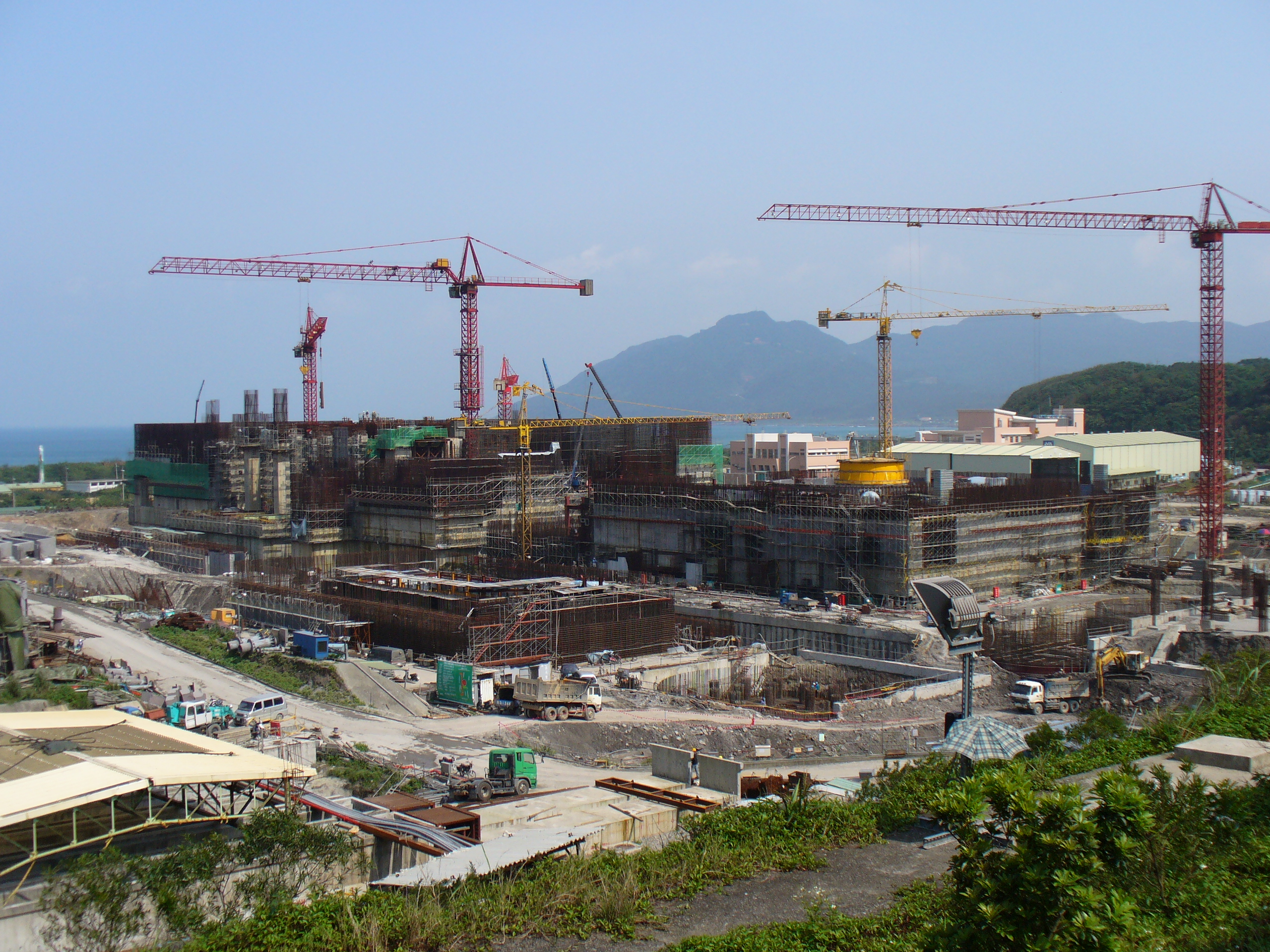
Lungmen Nuclear Power Plant
The fuel rods are gone. Shipped back to the United States, crate by crate, from a nuclear power plant that was finished but never switched on. The Lungmen Nuclear Power Plant sits on Taiwan's northeast coast near Gongliao, its two Advanced Boiling Water Reactors representing over four decades of planning, construction, cancellation, resumption, referendum, mothballing, and - most likely - permanent abandonment. The price tag exceeded US$7.5 billion. The electricity generated: zero.
First proposed in 1978, Lungmen was designed to be the first Generation III reactor built outside Japan. Taiwan Power Company selected the ABWR design in 1996, broke ground in 1999, and promptly collided with every obstacle a democracy can produce: earthquakes, elections, legislative brawls, competing referendums with contradictory wording, and a national argument about energy policy that has now outlasted an entire generation of engineers.
Too Many Contractors, Too Many Cooks
The project's structural flaw was managerial, not nuclear. Japan's first four ABWR reactors were completed in four to five years each, built under unified contracts. Taipower chose a different approach: General Electric designed the reactors, Mitsubishi Heavy Industries supplied the turbines and generators, Stone and Webster handled plant design, and a constellation of Taiwanese and international subcontractors handled the rest. No single firm bore overall responsibility. The result was predictable - schedule delays, cost overruns, and coordination failures that compounded with every passing year. When Taipower cancelled its contract with Stone and Webster in 2007, the dispute dragged through litigation until 2011. The Atomic Energy Council fined Taipower twice - in 2008 and 2011 - for implementing design changes without obtaining prior approval from General Electric. Taipower defended the changes as necessary to maintain schedule, and GE eventually approved 97 percent of them. But 'eventually' is not a word that belongs in nuclear engineering.
Canceled, Restarted, Canceled Again
The 921 earthquake in 1999 prompted legislators to inspect the construction site, where they found rusty rebar and concerns about seawater seepage into the foundation. In March 2000, Chen Shui-bian won the presidency on an anti-nuclear platform, and by October his premier, Chang Chun-hsiung, suspended construction when the plant was somewhere between 10 and 30 percent complete. Contractors sat idle for 111 days. The delay cascaded into a 576-day setback to the commercial operations timeline. Then the order was reversed. Construction resumed in February 2001 after the cancellation was ruled to have exceeded executive authority. Activist protests greeted every reactor vessel delivery. In 2010, aboriginal artifacts were discovered at the construction site, adding archaeological objections to the political and environmental ones already piled high. The temporary government cancellation alone pushed the project cost to more than US$7.5 billion by 2009.
The Referendum That Ate Itself
After the 2011 Fukushima disaster intensified anti-nuclear sentiment worldwide, Taiwan's debate over Lungmen entered a surreal phase of dueling referendums. The ruling Kuomintang proposed one question; the opposition DPP called the turnout threshold impossible to meet in a non-presidential year and physically barricaded the legislative chamber to prevent a vote. KMT legislators attempted to break through. The referendum was withdrawn. Former Vice President Annette Lu launched a local referendum that gathered 50,000 signatures before the Executive Yuan rejected it as a national-level issue. A professor at National Taiwan University, Kao Cheng-yan, crafted a cleverly worded competing referendum designed so that low turnout would produce a binding 'no' to the plant. That referendum collected over 120,000 signatures before the Executive Yuan's Review Committee rejected it in August 2014, citing contradictory language - the stated reason opposed nuclear power while the question asked voters to approve a reactor test run.
Mothballed in the Mist
By October 2014, Unit 1 had passed all 126 required safety tests - cooling, shutdown, containment, control, and power generation systems all certified operational. The reactor worked. It simply was not allowed to run. The government ordered both units sealed: Unit 1 mothballed, Unit 2's construction frozen. Of 126 tested systems, 80 remained in operation, 14 required periodic checks, and 32 went into low-humidity storage. Maintaining the dormant plant cost an estimated 1.3 billion New Taiwan Dollars per year. In 2018, Taipower began the irreversible step of shipping unused fuel rods back to the United States. A December 2021 referendum narrowly rejected resuming construction. Taipower estimated it would take at least six years to restart commercial operations even if approval came tomorrow, given fuel removal, component obsolescence, and the need for fresh startup testing. The plant sits on the coast, engineered to withstand a 0.4G earthquake, designed to cool itself passively for 72 hours during a blackout, and built to produce 2,600 megawatts of carbon-free electricity. It produces nothing but maintenance bills and political arguments.
From the Air
Located at 25.04°N, 121.92°E on Taiwan's northeast coast near Gongliao, New Taipei City. The plant occupies a coastal site visible from altitude as a large industrial complex with distinctive reactor containment structures on a promontory. The site includes a purpose-built wharf for heavy component delivery. Look for the twin reactor buildings and associated industrial infrastructure against the green mountainous coastline. Taiwan Taoyuan International Airport (RCTP/TPE) is approximately 85km to the southwest. Songshan Airport (RCSS/TSA) is about 45km west. The terrain is mountainous, and the coast is rugged with limited flat ground - the plant was carved into a narrow strip between mountains and ocean.