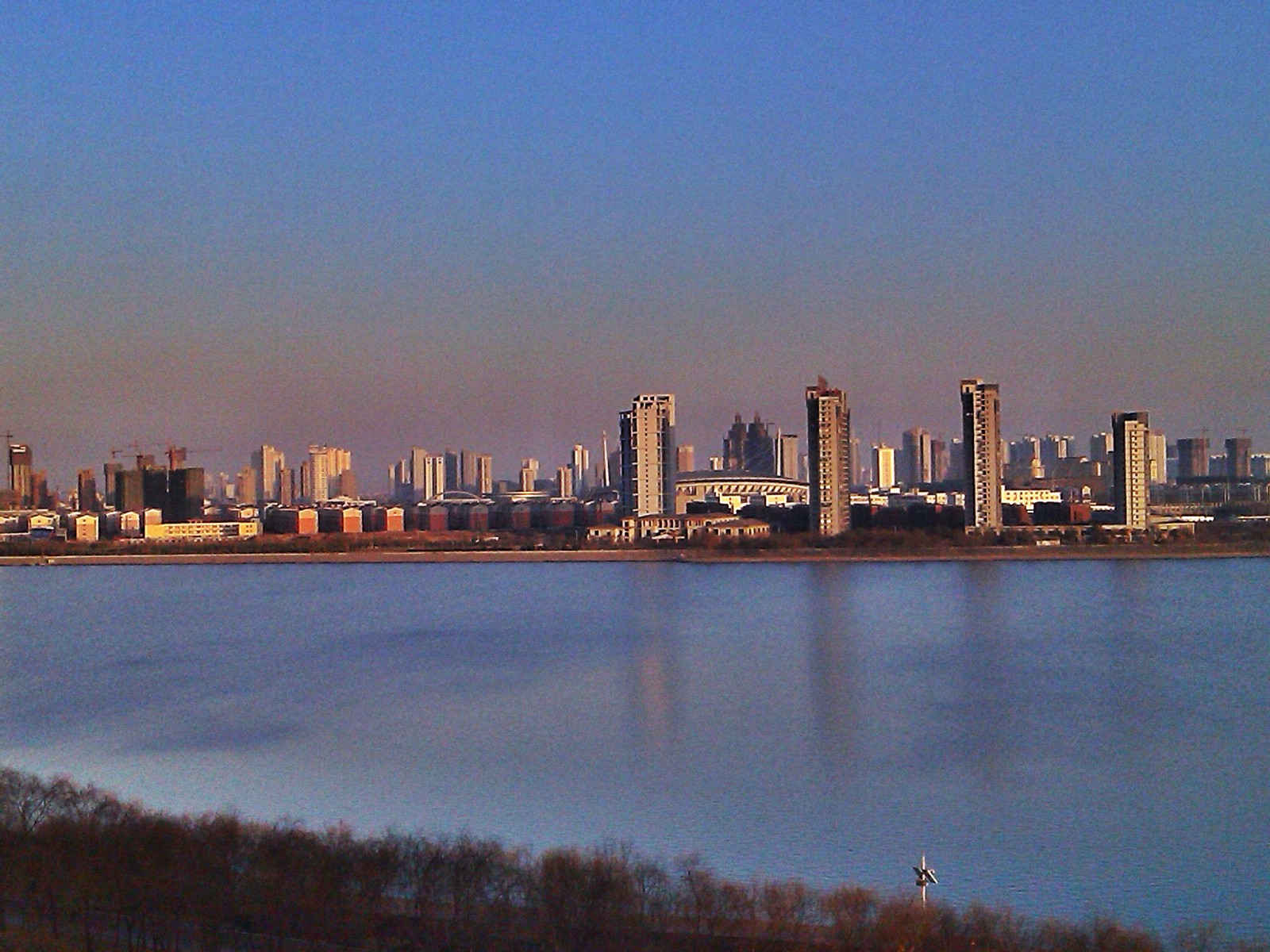
Luo River (Henan)
By the standards of China's great waterways, the Luo River is modest -- 420 kilometers from its source on the southeast flank of Mount Hua in Shaanxi province to its confluence with the Yellow River at Gongyi. It would barely merit a footnote in a catalog of Asian rivers. But geography is not the point. The Luo flows through what may be the most archaeologically dense corridor in all of China, a stretch of terrain where civilization after civilization built, collapsed, and built again over the course of millennia.
The River That Ran Through History
The cities along the Luo read like a table of contents for Chinese history. Luoyang, which served as capital for thirteen dynasties, sits on its banks. Yanshi, where the Erlitou archaeological site has yielded evidence of what may be the Xia dynasty -- the earliest dynasty recorded in Chinese tradition -- lies at the junction where the Luo's main tributary, the Yi River, joins the main channel. The combined waterway, called the Yiluo River from that point, flows onward to Gongyi, where it empties into the Yellow River. In between are Lushi, Luoning, and Yiyang, each with its own layers of historical significance. The Luo was never the largest river in the region, but it was the one around which power consistently organized itself.
Source and Course
The Luo rises in the mountains of Shaanxi, on the southeast side of Mount Hua -- itself one of the Five Sacred Peaks of China. From there it flows eastward into Henan province, threading through valleys and across plains before reaching the Yellow River. The terrain it crosses shifts from mountainous uplands in the west to the flat alluvial expanses of the North China Plain in the east. This gradient gave the river strategic importance: armies and trade goods moving between the mountain-sheltered western capitals and the open eastern plains had to cross or follow the Luo valley. Control of the river corridor meant control of communication between China's interior and its heartland.
Myths Written in Water
Chinese mathematical tradition holds that the Lo Shu Square -- a three-by-three magic square in which every row, column, and diagonal sums to fifteen -- was revealed on the back of a turtle emerging from the Luo River. Whether myth or metaphor, the story connects the river to the deep roots of Chinese numerology and cosmology. The Peiligang culture, one of the earliest Neolithic cultures in northern China, flourished in this region as well. The Luo's waters nourished civilizations long before the first dynasty was established, and the evidence of those pre-dynastic communities continues to surface from the soil along its banks. From Neolithic settlements to imperial capitals, the river's story is the story of the land it shaped.
From the Air
The Luo River flows east through Henan province, joining the Yellow River at Gongyi. It is visible from altitude as a winding waterway passing through Luoyang (34.62N, 112.45E approximate midpoint) and joining the Yellow River near Gongyi. Nearest major airport is Zhengzhou Xinzheng International (ZHCC/CGO), approximately 60 km southeast of the confluence. Luoyang Beijiao Airport (ZHLY) sits along the river's course. The river serves as a useful navigation reference when following the Yellow River valley. Best observed at 5,000-10,000 feet where its course through the terrain is clearly visible.