Luodong Forest Railway
The locals called it the Bong Bong Train. The nickname came from the sound its small locomotives made as they rattled along 36.4 kilometers of narrow-gauge track between the mountains and the sea -- a percussive, rhythmic clanging that announced the railway's presence long before the train itself appeared around the bend. For 55 years, the Luodong Forest Railway connected the timber operations on Taiping Mountain to the town of Luodong in Yilan County, Taiwan. Then one typhoon too many took it away.
Timber Down the Mountain
The railway opened on January 27, 1924, built to haul timber from the forests of Taiping Mountain down to the lowlands. It was an extension of the Taiping Mountain Forest Railway, and its narrow gauge -- just 762 millimeters -- suited the tight mountain curves and steep grades the route demanded. Goods service came first. Passenger transport followed in May 1926, with ten stations along a route that threaded through seven tunnels and crossed 17 to 22 bridges. A single journey lasted roughly two hours and fifty minutes, the train winding through subtropical forest and across river gorges at a pace that let passengers absorb the landscape.
Diesel and Decline
In 1970, a new station opened at Lin-Tailong, north of Luodong. The following year, Chinese-made diesel railcars replaced the older rolling stock, improving passenger comfort while cutting costs. But the railway's fortunes were already turning. After 1976, the volume of forest produce shipped by rail declined steadily as logging restrictions took hold and roads improved. Buses and trucks offered faster, more flexible transport. The narrow-gauge line, romantic as it was, could not compete with asphalt.
Bridges of Wood
The railway's vulnerability was structural. Many of its bridges were built from wood -- inexpensive to construct but exposed to the full force of Taiwan's typhoon seasons. Floodwaters battered the spans repeatedly, and each repair strained an already thin budget. The combination of declining freight, eroding passenger numbers, and infrastructure that demanded constant attention made the calculus simple. On August 1, 1979, after 55 years of service, the Luodong Forest Railway was decommissioned. The Bong Bong Train fell silent.
Heritage Reborn
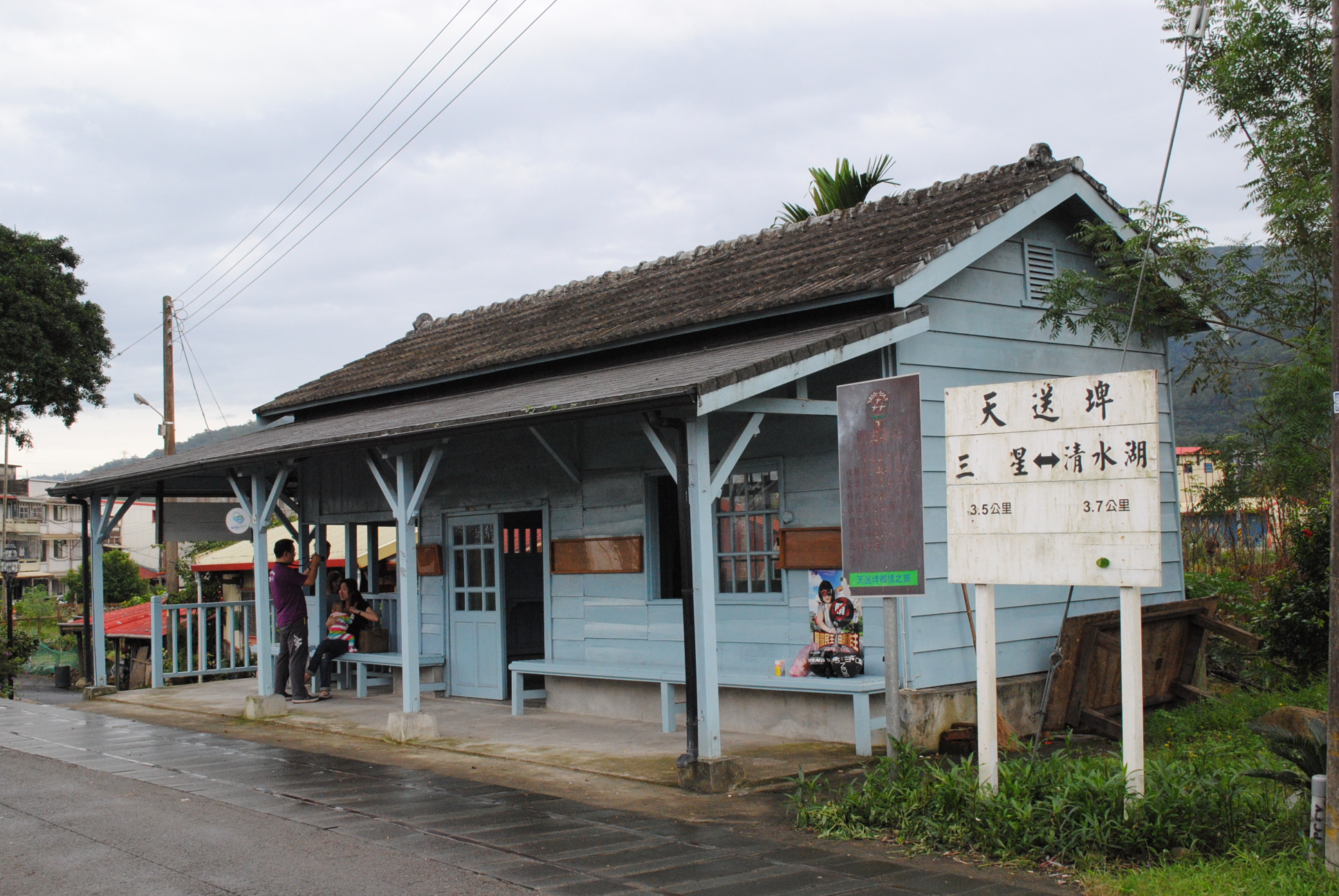
Silence, however, was not the final chapter. The memory of the railway lingered in Yilan County, and efforts to revive a portion of it gained momentum in the 2010s. New tracks were laid on both sides of the road at Tien-sung-pi station, and new rolling stock manufactured in the historic style was successfully tested. A 3.9-kilometer section was planned for heritage train operations. In August 2019, then-minister Wu Tze-cheng announced that the railway would be rebuilt in two phases at a total cost of NT$8 million. The Luodong Forestry Culture Park, built around the old railway terminus, now preserves the locomotives, turntables, and station buildings as a museum of the logging era.
Echoes on the Tracks
The Bong Bong Train was never famous outside Yilan County. It was a working railway, built to move wood, and it did that job without fanfare for more than half a century. But its narrow-gauge tracks carved a line through the mountains that connected a remote timber industry to the wider world, and its rhythmic clatter became the soundtrack of a community. Today, visitors to the Luodong Forestry Culture Park can walk the old rail bed, examine the turntable at Tien-sung-pi, and imagine what it sounded like when the Bong Bong Train came down the mountain.
From the Air
Coordinates: 24.66N, 121.62E. The former railway route runs from the mountains southwest of Luodong town in Yilan County down to the coastal plain. From the air, look for the Luodong Forestry Culture Park near the town center. Nearby airports: no major airport immediately adjacent; RCSS (Songshan Airport, Taipei) is ~60 km west. The Yilan plain and surrounding mountains are best viewed at 3,000-5,000 feet.