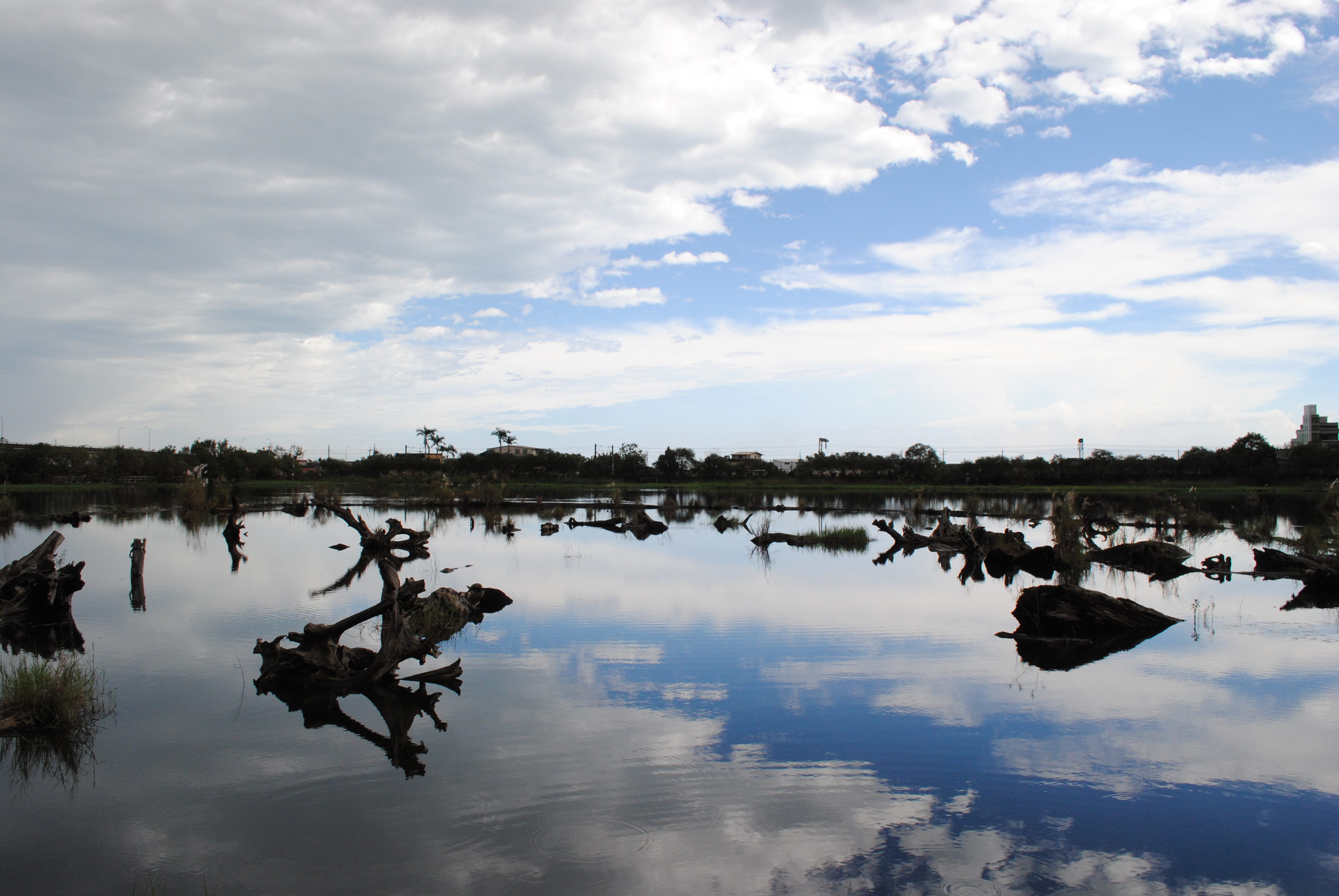
Luodong Forestry Culture Park
The logs used to come down the mountain on rails. Beginning in 1921, a repurposed sugar railway carried timber from the Taiping Forest Area through Luodong Township to the Lanyang River, where the wood could be floated to market. For nearly eight decades, the sound of that railway defined this corner of Yilan County - the grinding of wheels, the crack of stacked logs shifting, the deep smell of fresh-cut camphor and cypress that hung over the town like weather.
When the forestry industry declined in the 1980s, the railway fell quiet. The timber ponds grew still. Buildings that had buzzed with commerce settled into rust and silence. But Luodong did not demolish its forestry past. It preserved it - transforming sixteen hectares of industrial infrastructure into a culture park that opened in 2009, a place where the ghosts of Taiwan's mountain logging era are treated not as relics but as neighbors.
Rails Through the Sugar Fields
In 1905, during the Japanese colonial period, the site that would become Luodong Forestry Culture Park was designated a major timber production area under the Luodong Branch of the Taiping Forest Area. The Japanese Forestry Agency managed the operation, felling trees high in the mountains and transporting them down to the plains. At first, the logs traveled by river - floated down the Lanyang River in the tradition of timber drives worldwide. But rivers are unreliable. In 1921, the agency purchased the Taiwan Sugar Railway from the local sugar factory and repurposed it as the Luodong Forest Railway, giving the timber a faster, more predictable route to market. The conversion tells a small story about colonial priorities: sugar was valuable, but timber was more valuable still. The railway that once carried sweetness now carried wood.
The Long Decline
Taiwan's forestry industry did not end in a single event. It dwindled. In 1982, the government adjusted its forestry policies, curtailing logging in response to environmental concerns and shifting economics. Production from the Luodong area began to fall. Young workers drifted away. The timber ponds, once crowded with floating logs being sorted and stored, emptied out. Between 1994 and 2001, urban planners conducting the Third Luodong Township review recognized what remained - the railway infrastructure, the Japanese-era buildings, the ponds - and designated the area a special forestry industry culture site. It was an act of foresight: rather than clear the land for development, they chose to protect it. In 2004, the Forestry Bureau announced plans for a culture park, and the Council for Cultural Affairs listed the remaining artifacts and structures as historical assets. The park opened to the public in 2009 and was designated a cultural landscape in 2012.
Timber Ponds and Bamboo Rails
The park spans sixteen hectares, organized around the timber ponds that were once the operational heart of the forestry complex. These shallow pools, where logs were floated to prevent cracking and insect damage during storage, now serve as reflective centerpieces for the park's landscape. Water lilies have colonized their surfaces. Dragonflies patrol above them in summer. The functional has become the ornamental, though the ponds' original purpose remains legible in their shape and depth. Surrounding the ponds, the park divides into distinct areas: an art district where exhibitions rotate through repurposed industrial buildings, an artifact exhibition hall documenting the forestry era, a bamboo railway station that recalls the transport network, and a primitive habitat area where native vegetation has been allowed to reclaim former industrial ground. A storage pool preserves the infrastructure of log management. Walking the grounds, the transition from industry to culture is visible everywhere - concrete foundations softened by moss, rail ties embedded in garden paths, the careful preservation of structures that were never built to be beautiful but have become so through age and attention.
A Short Walk from the Trains
Luodong Forestry Culture Park sits just north of Luodong Station on the Taiwan Railway, close enough that visitors arriving by train can walk to the entrance. This proximity is not accidental - the park exists precisely because Luodong was a railway town, a place where lines converged to move resources from mountain to market. The station still serves that connective function, though now it delivers tourists rather than timber. The park offers something increasingly rare in Taiwan's rapidly modernizing landscape: a place where industrial heritage has been preserved in situ, where the buildings stand where they were built and the ponds hold water where logs once floated. It is not a reconstruction or a replica. It is the real thing, adapted for a new century, sitting quietly in the rain that falls almost constantly on the Yilan plain.
From the Air
Located at 24.68°N, 121.77°E in Luodong Township, Yilan County, northeastern Taiwan. The 16-hectare park is visible from moderate altitude as a green space with distinctive rectangular timber ponds, situated just north of Luodong railway station. The Lanyang River, historically used for log transport, flows nearby to the north. The Xueshan Range rises dramatically to the west. Taipei Songshan Airport (RCSS/TSA) is approximately 55km to the northwest, and Taiwan Taoyuan International Airport (RCTP/TPE) is about 85km west. The park sits in the broad Yilan Plain, which is easily identifiable from altitude as the flat agricultural area between the mountains and the Pacific coast.