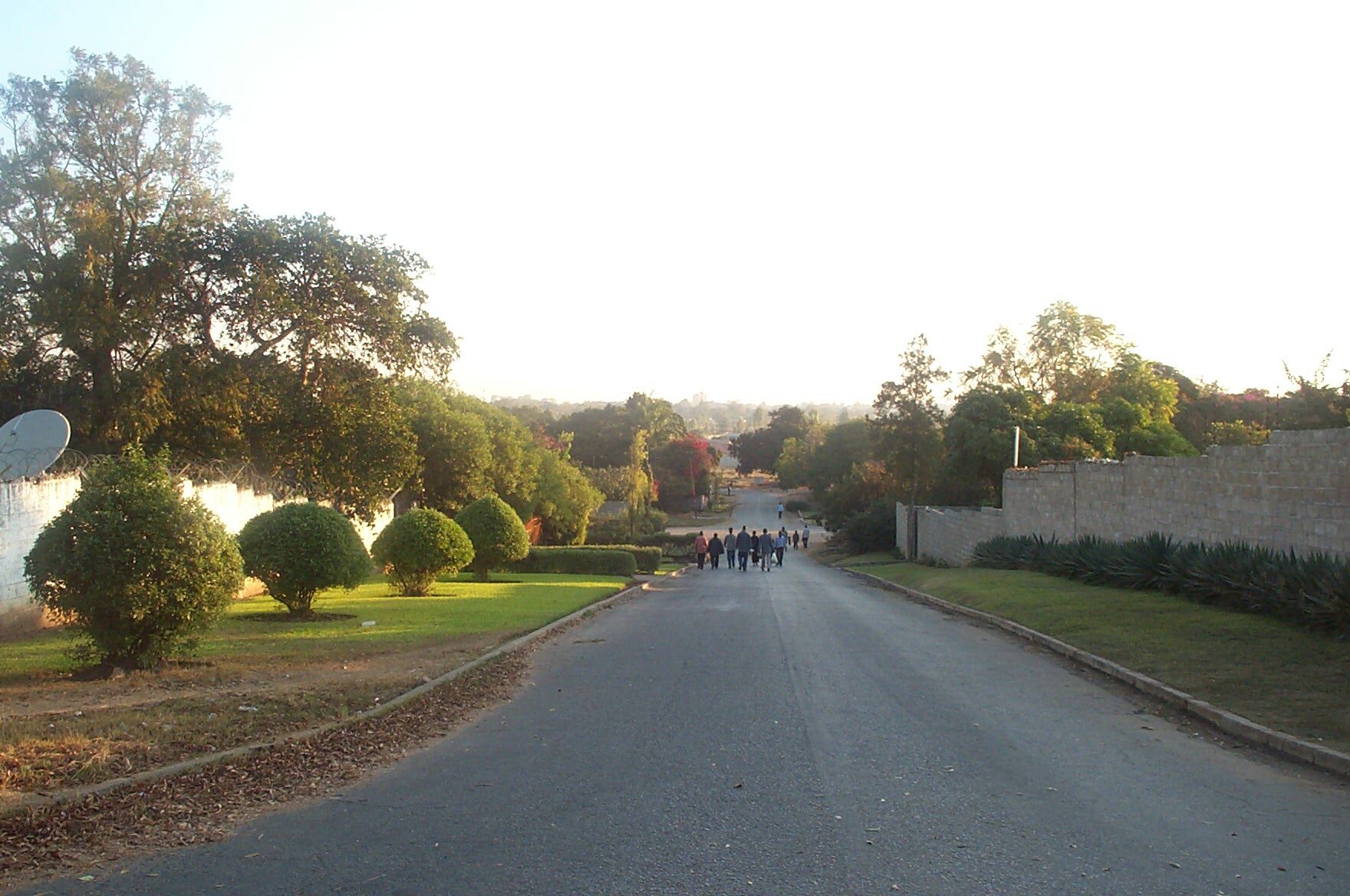
Lusaka
The conductors lean out of minibus windows and shout where they are going. Passengers squeeze aboard and the vehicle lurches into traffic before the door is fully closed. This is how Lusaka moves -- not with the sleek transit systems of wealthier capitals, but with a fleet of Toyota minibuses and sky-blue taxis weaving through roundabouts and unpaved shortcuts. Home to approximately 2.7 million people -- roughly one in six Zambians -- Lusaka is the country's seat of government, its commercial engine, and a city that rewards anyone willing to look past its lack of conventional tourist attractions.
Crossroads of a Continent
Lusaka's position at the center of Zambia makes it an inevitable hub. Every arterial road in the country converges here. Buses run south to Livingstone in seven hours, east to Chipata and the Malawian border in nine, and west to Mongu through Kafue National Park. The TAZARA railway, built with Chinese assistance in the 1970s, connects Kapiri Mposhi -- 162 kilometers north of Lusaka -- to Dar es Salaam, Tanzania, covering 1,860 kilometers on a schedule of two departures per week. International flights arrive from Johannesburg, Nairobi, Addis Ababa, Dubai, and Istanbul, though a note of caution: the EU Air Safety Committee has refused permission for Zambian-based airlines to operate services in Europe since 2009, following an ICAO audit that identified shortcomings in the country's civil aviation oversight. The city's Kenneth Kaunda International Airport handles the traffic of a nation that sits, geographically and commercially, at the hinge point of southern and central Africa.
Markets and Malls
Lusaka's commercial life exists in two parallel worlds. The first is the city's traditional markets, where the Lusaka City Market -- east of the main downtown area -- offers the most vivid experience. Vendors sell everything from fresh produce to fabrics, and in the indoor section, music sellers will burn MP3s from their enormous African collections onto your flash drive for a few kwacha. Lusaka sits next to countries with powerful musical traditions -- Congo and Zimbabwe especially -- and the market reflects that. The Dutch Reformed Church Market, held on the last Saturday of each month, adds curios, art, and handicrafts made by people with disabilities to the mix. The second world is the shopping mall, a relatively recent arrival. EastPark Mall and the Arcades represent the gradual "mall-isation" that is replacing independent restaurants with South African chain outlets -- a shift that some residents lament even as they appreciate the parking and air conditioning.
Eating Well on Cairo Road
Lusaka is not a gourmet destination in the conventional sense, but it has a more diverse food scene than most visitors expect. Indian cuisine is something of a local specialty. Dil, in the Ibex Hill area about fifteen minutes from the city center, serves what regulars describe as some of the best Indian food on the continent. Chinese fare is available at Dong Fang in Long Acres. The Taj Pamodzi hotel offers crocodile kebabs on the grill alongside vegetarian options influenced by its Indian ownership. For something lighter, Kilimanjaro cafe at Manda Hill serves sandwiches and coffee. Chindo Road is the closest thing the city has to a restaurant strip. The upmarket Intercontinental Hotel does poolside buffets for those willing to pay international hotel prices, though service can be unhurried. Independent places still outnumber chain restaurants, but the balance is shifting as each new mall opens.
Navigating After Dark
Lusaka's reputation for crime is exaggerated compared to cities like Nairobi, Johannesburg, or Lagos, but common sense applies. Walking at night carries real hazards beyond crime: missing manhole covers and uncovered drains are a genuine threat, and a flashlight is recommended equipment. The nightlife, for those inclined, is scattered across the city. Chez Ntemba plays Congolese rumba until the last person leaves. The Polo Grill offers outdoor seating overlooking the Lusaka Polo Club. Northmead Shopping Centre hosts an array of bars, some open around the clock. Zambians, as locals will tell you, love to drink. For visitors with a day or two to spare beyond the city, South Luangwa National Park and Victoria Falls at Livingstone are the most popular excursions. Siavonga, on Lake Kariba, is only two and a half hours away -- close enough for a weekend that feels like another world entirely.
From the Air
Lusaka is centered at approximately 15.42°S, 28.28°E on the Zambian plateau at an elevation of roughly 1,280 meters (4,200 feet) above sea level. Kenneth Kaunda International Airport (FLKK) is the primary field, located east of the city center, handling both domestic and international traffic. From 5,000 feet AGL, the city's sprawl is visible across relatively flat terrain, with the downtown commercial district and major roundabouts providing visual reference. The climate is subtropical with distinct wet and dry seasons; visibility is generally good in the dry season (May-October) but reduced by haze and thunderstorms in the wet season.