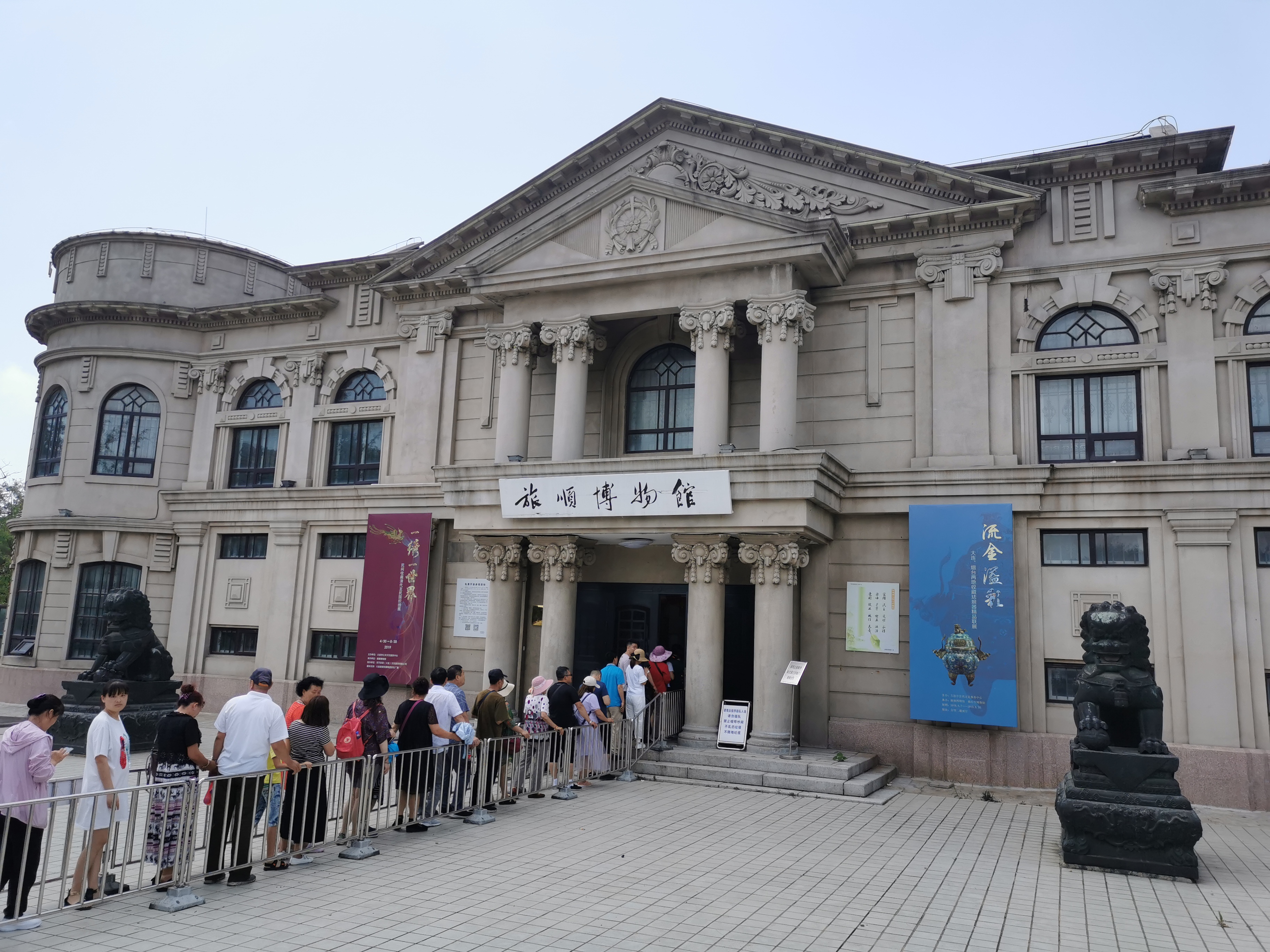
Lushun Museum
Somewhere in the galleries of the Lushun Museum, mummies from the deserts of Central Asia lie preserved behind glass in a port city on the coast of northeast China. They were collected by Otani Kozui, a Japanese Buddhist monk and aristocrat, during expeditions between 1901 and 1910 -- then deposited in a museum that Japan established in 1915 on Chinese soil it had won from Russia in war. The mummies have outlasted every government that has administered the building they rest in.
A Museum That Changed Owners
The institution that became the Lushun Museum opened in November 1915 as the Products Exhibition Hall, a modest showcase for the Kwantung Leased Territory that Japan controlled after defeating Russia in 1905. By 1917 it had been renamed the Guandong Capital's Manchurian and Mongolian Products Exhibition Hall, reflecting Japan's expanding ambitions on the Asian mainland. In 1934 it became simply the Lushun Museum. After Japan's defeat in World War II, the Soviet Union administered the facility and renamed it the Lushun Eastern Culture Museum before returning it to China in January 1951. The Chinese government reconfigured it as the Lushun Museum of History and Culture in 1952. The museum closed during the Cultural Revolution but reopened in May 1972, having survived one of the most destructive periods in Chinese cultural history.
Otani's Desert Treasures
The museum's most famous holdings trace back to Otani Kozui, head of the Nishi Honganji branch of Jodo Shinshu Buddhism and an unlikely explorer. Between 1901 and 1910, Otani organized three expeditions into Central Asia, traversing the Silk Road routes through what is now western China and collecting manuscripts, textiles, sculptures, and mummies from sites along the ancient trade corridors. These expeditions predated many of the better-known European archaeological campaigns in the region. The mummies, preserved by the extreme aridity of the Taklamakan Desert, ended up in Lushunkou through the networks of Japanese colonial administration. Today they remain among the museum's signature attractions, an incongruous connection between a Chinese port city on the Bohai Sea and the oasis towns of inner Asia.
A National Treasure Reborn
In 1999, the museum embarked on a comprehensive renovation, merging half of the adjacent botanical garden, zoo, and surrounding park to expand the grounds to 150,000 square meters. A branch facility opened in April 2001 with permanent exhibits on ancient civilization in Dalian and a collection of foreign cultural relics. The investments paid off: in May 2008, the State Administration of Cultural Heritage designated the Lushun Museum as a first-batch State-level Museum, one of China's highest institutional honors for cultural repositories. In 2014, it was named a Science and Technology Popularization Base by Liaoning Province. The designation reflects a museum that has transformed from a colonial-era curiosity cabinet into a serious institution of scholarship. Its 150,000-square-meter campus now tells a layered story -- of Silk Road civilizations, of imperial competition, of the city's passage through Chinese, Russian, Japanese, Soviet, and again Chinese hands.
From the Air
Located at 38.81N, 121.23E in the western part of Lushunkou District, Dalian. The museum campus is identifiable from altitude as a large green space in the urban fabric. Dalian Zhoushuizi International Airport (ZYTL) is approximately 38 km northeast. The Lushun harbor lies nearby to the south. Best viewed at 2,000-4,000 ft to appreciate the museum grounds in relation to the surrounding port city.