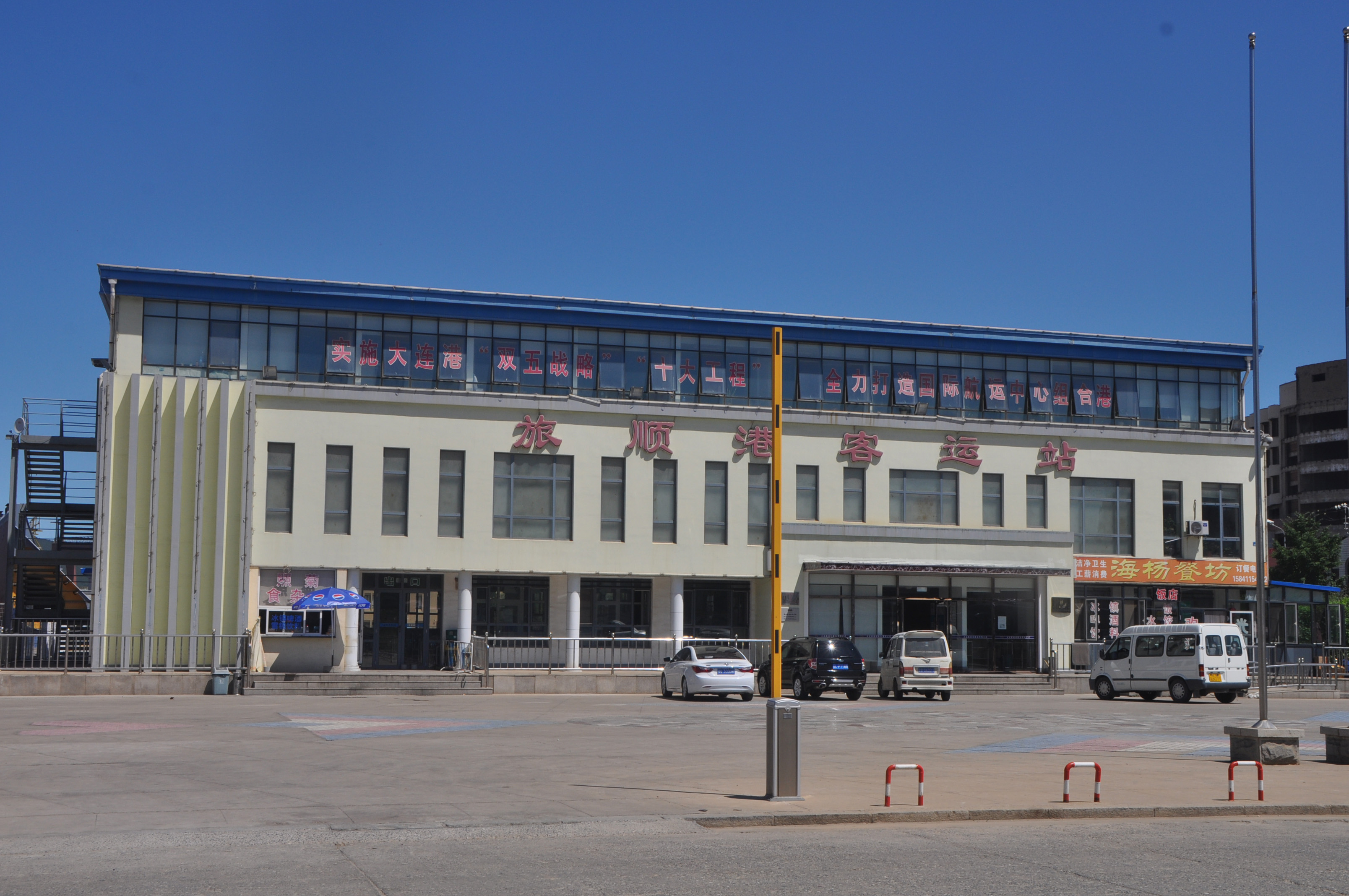
Lushun Port
In 1371, the future Yongle Emperor sent envoys to survey a harbor at the southern tip of the Liaodong Peninsula. Because the voyage was calm and comfortable -- lu shunli in Chinese -- he ordered the place named Lushunkou, the bay of calm travels. It is one of history's more ironic place names. Over the following six centuries, this harbor would be besieged, massacred, bombarded, blockaded, mined, and fought over by five nations. Control of it changed hands six times in the first half of the twentieth century alone.
Lion's Jaw
The harbor's strategic value was recognized long before modern navies existed. Settlements date to the Jin Dynasty, when the area was called Mashijin. Under the Tang Dynasty it became Doulizhen, and under the Mongol Yuan Dynasty it was Shizikou -- Lion's Jaw -- supposedly named for a statue near the military port. The Western name Port Arthur has its own disputed origins. One account credits a British Royal Navy lieutenant named William Arthur, who repaired his vessel in the bay in August 1860. Another version claims the settlement was renamed for Prince Arthur, Queen Victoria's ten-year-old son. Whatever its source, the English name was adopted by Russia and the European powers, and Port Arthur became the name by which the world knew this harbor during the wars that made it famous.
The Fortress That Everyone Wanted
Construction of a modern naval base began in the 1880s under statesman Li Hongzhang. German Major Constantin von Gunneken supervised the fortifications, and by 1889 Lushun housed the Beiyang Fleet's main repair facilities -- a 400-foot dock for battleships and a smaller one for destroyers. Japan captured the port in November 1894 during the First Sino-Japanese War and carried out a massacre that killed thousands. The 1895 Treaty of Shimonoseki ceded the port to Japan, but Russia, France, and Germany forced Japan to give it back in the Triple Intervention. Russia then coerced a lease from China in 1898 -- after bribing Li Hongzhang 500,000 rubles and Chang Yinghuan 250,000. The Tsar intended Port Arthur as the Russian Pacific Fleet's second major base alongside Vladivostok. Fortress construction began in 1901, but only about 20 percent was complete when the Russo-Japanese War erupted in 1904.
Eleven Months of Siege
The Russo-Japanese War began at Port Arthur on the night of 27 January 1904, when Japanese ships torpedoed Russian warships without a declaration of war. The siege that followed lasted eleven months. General Nogi Maresuke's army, supported by Admiral Togo's navy, hammered the fortress with modern 280mm howitzers. The garrison held out until 2 January 1905, when General Anatoly Stessel surrendered against the wishes of the military council and the soldiers still fighting. It was the 329th day of war. The 1905 Treaty of Portsmouth transferred the lease to Japan, which governed the port -- now called Ryojun -- until 1945. In 1932, the city formally joined the puppet state of Manchukuo, though Japan retained actual control.
The Last Handoffs
Soviet troops landed at Lushun on 22 August 1945, clearing it of Japanese forces. Stalin considered the resulting Sino-Soviet lease treaty unequal and offered to return the port to China, but Mao Zedong asked him to delay -- fearing a Soviet withdrawal would weaken the Chinese Communist Party's position in Manchuria. The Soviets finally departed in May 1955, completing the transfer that returned this harbor to Chinese sovereignty for the first time in sixty years. Today, the People's Liberation Army Navy operates the Liaonan Shipyard here, in continuous use since 1883. The New Lushun Port handles commercial traffic, connected to Dalian by rail and to Shandong province by the Bohai Train Ferry. The bay of calm travels has, at last, found something approaching calm.
From the Air
Located at 38.78N, 121.25E at the very tip of the Liaodong Peninsula. The natural harbor is strikingly visible from altitude -- a narrow entrance opening into a sheltered inner basin that looks almost like a lake. The military port area remains restricted. Dalian Zhoushuizi International Airport (ZYTL) is approximately 35 km northeast. The Bohai Sea stretches west, with the Yellow Sea to the southeast. Best observed at 3,000-6,000 ft.