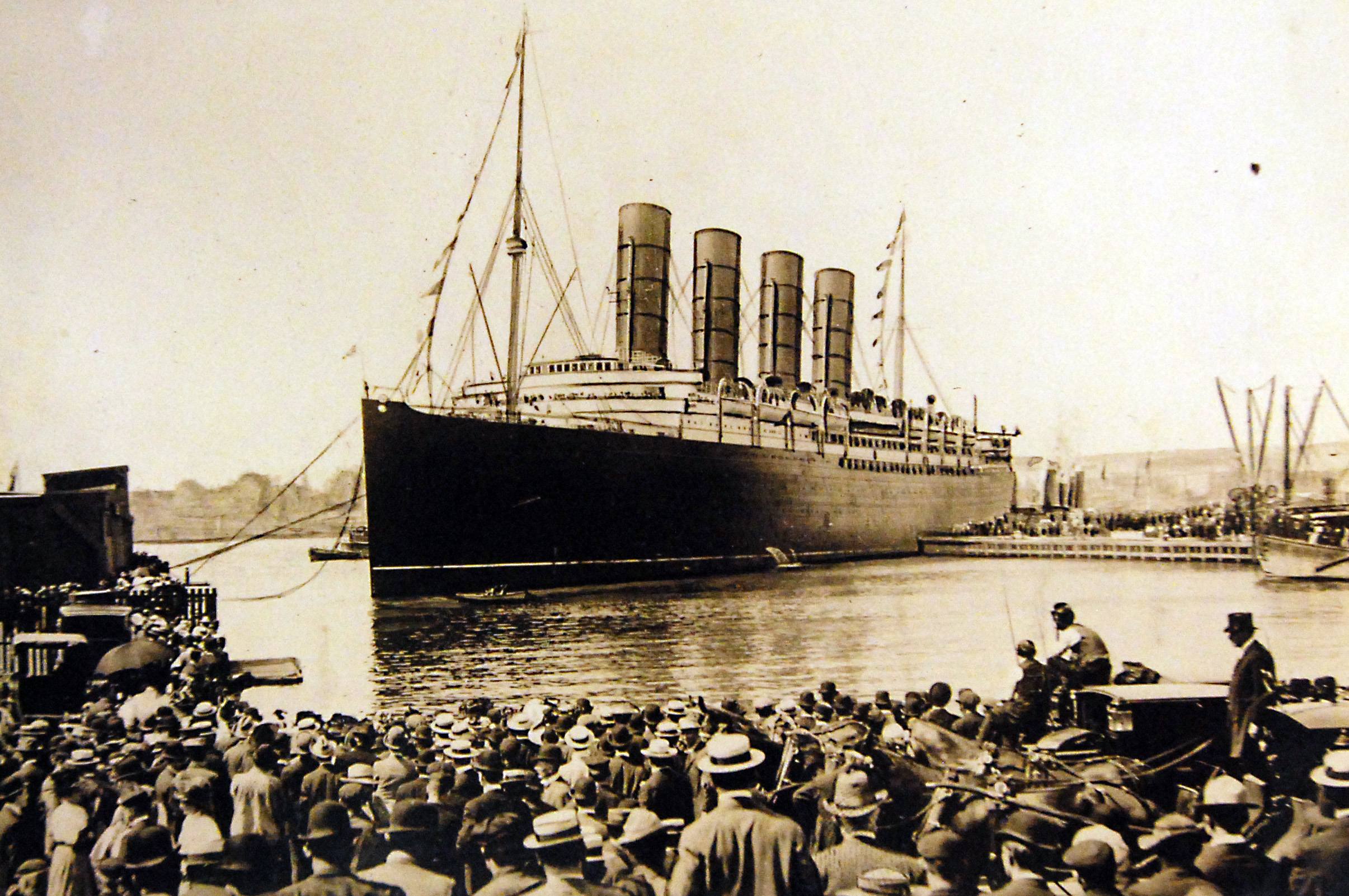
The Sinking of the Lusitania: The Torpedo That Changed the War
On May 7, 1915, the German submarine U-20 fired a single torpedo at the RMS Lusitania, the pride of the Cunard Line, as she sailed toward Liverpool. The torpedo struck the starboard side. Eighteen minutes later, the great ship was gone, taking 1,198 people to the bottom - including 128 American citizens. Germany celebrated. Britain mourned. America raged. The sinking of the Lusitania became one of the most consequential attacks of World War I, turning American public opinion against Germany and paving the way for U.S. entry into the war two years later. A single torpedo helped decide the fate of nations.
The Ship
RMS Lusitania was a floating palace. Launched in 1906, she was briefly the world's largest ship and holder of the Blue Riband for fastest Atlantic crossing. Her four steam turbines could push her at 25 knots - fast enough, Cunard believed, to outrun any submarine. She carried nearly 2,000 passengers in Edwardian luxury: first-class dining rooms, libraries, elevators, and electric lights.
By 1915, the Lusitania was running regular passenger service between New York and Liverpool despite the war. The German Embassy published warnings in American newspapers that vessels entering the war zone around Britain were liable to destruction. Most passengers dismissed the threat. They trusted British naval power and the Lusitania's speed.
The Warning
On May 1, 1915, the Lusitania departed New York with 1,959 people aboard. That same morning, the German Embassy's warning appeared next to Cunard's advertisement in New York papers: 'Travellers intending to embark on the Atlantic voyage are reminded that a state of war exists... vessels flying the flag of Great Britain are liable to destruction.'
The warning was ignored. The Lusitania was too fast, too famous, too civilized to attack. She wasn't a warship. She carried passengers - women, children, Americans. Surely the Germans wouldn't dare. Captain William Turner maintained course for Liverpool, sailing into waters where U-boats were known to operate.
The Attack
At 2:10 PM on May 7, U-20's commander, Kapitänleutnant Walther Schwieger, spotted the Lusitania through his periscope. He fired a single torpedo from 700 meters. It struck below the bridge. Then came a second explosion - larger than the first - that ripped the ship open. Whether it was coal dust, steam, or hidden munitions has been debated ever since.
The Lusitania listed so severely that lifeboats on one side couldn't be launched. Passengers scrambled for the boats that remained. In the chaos, many drowned. The water was cold. The ship was sinking fast. At 2:28 PM, just 18 minutes after the torpedo hit, the Lusitania slipped beneath the waves, 11 miles off the Old Head of Kinsale.
The Dead
Of 1,959 people aboard, 1,198 died - 761 passengers and 437 crew. Among the dead were 128 American citizens, including millionaire Alfred Vanderbilt, who reportedly gave his life jacket to a young mother and went down with the ship. Nearly 100 children perished. Entire families were wiped out.
Bodies washed ashore for weeks. Mass graves were dug at Queenstown (now Cobh). Survivors told stories of the ship's final moments - the chaos, the screaming, the suction pulling people down as the great liner sank. The world was horrified. This wasn't war. This was murder.
The Consequences
Germany initially celebrated the sinking as a legitimate act of war - the Lusitania had been carrying munitions for Britain (later confirmed by divers). But international outrage, especially in America, forced Germany to restrict U-boat warfare. President Wilson demanded accountability. American public opinion shifted decisively against Germany.
Two years later, when Germany resumed unrestricted submarine warfare, Wilson asked Congress for a declaration of war. The Lusitania was not the only reason America entered World War I, but it was a powerful one. 'Remember the Lusitania!' became a recruiting slogan. The wreck still lies in 300 feet of water off Ireland's coast - a war grave, slowly dissolving, still keeping her secrets.
From the Air
The Lusitania sank 11 miles south of the Old Head of Kinsale (51.63N, 8.52W) off County Cork, Ireland. Cork Airport (EICK) is 20km northeast. Shannon Airport (EINN) is 120km northwest. The wreck lies in approximately 93 meters of water. The Irish coast is rugged with cliffs. Weather is maritime temperate - often cloudy and windy.