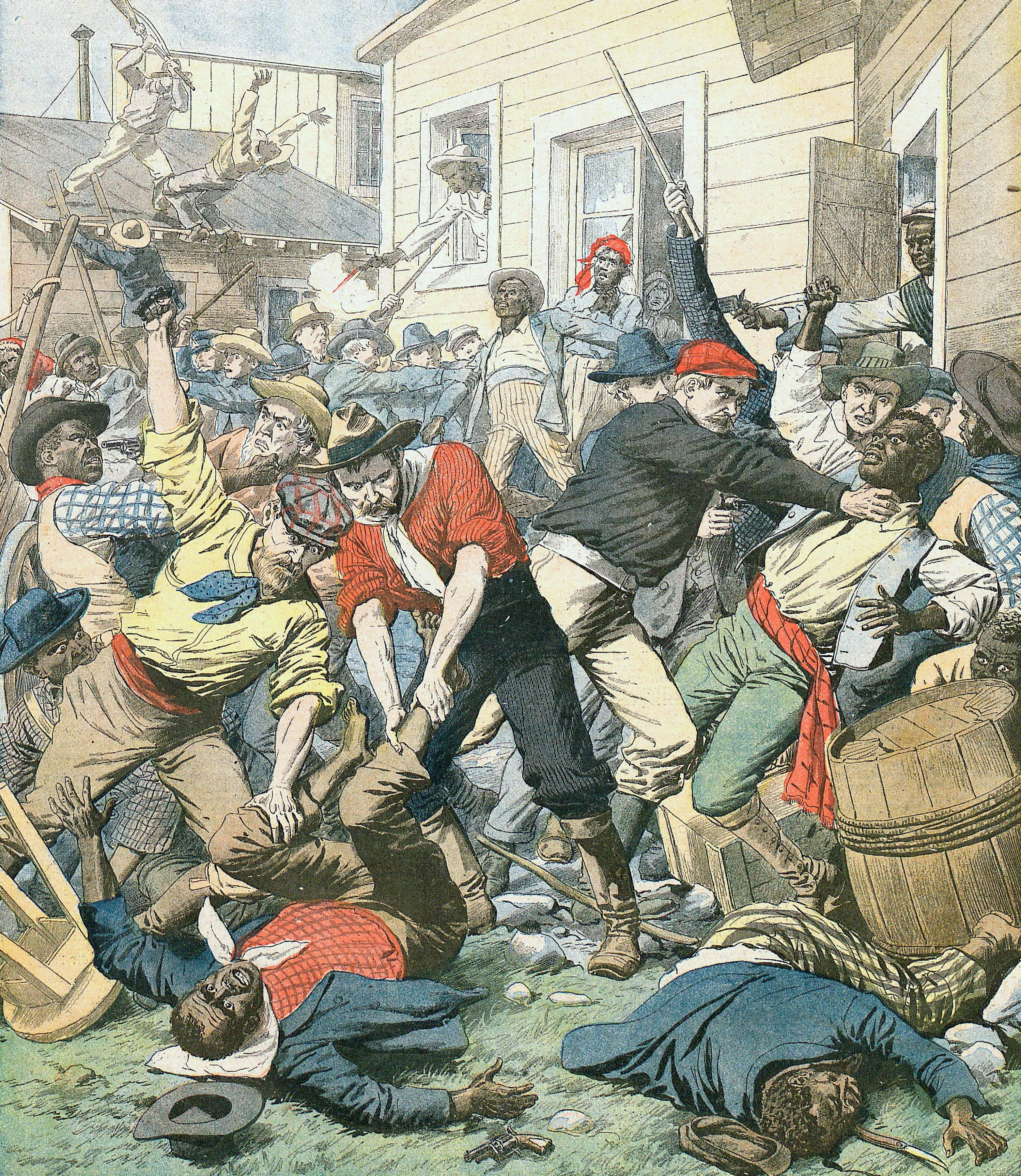
Lynching of Sam Hose
W.E.B. Du Bois was walking down Mitchell Street in Atlanta on April 23, 1899, carrying a carefully composed letter to the editor of the Atlanta Constitution. He intended to present a reasoned, scholarly argument against racial violence. Then someone told him that Sam Hose had just been burned alive in Newnan -- and that the man's charred knuckles were on display in a grocery store window farther down the same street. Du Bois turned around. He never delivered that letter. Instead, the encounter shattered his belief that calm scholarship alone could fight injustice. "One could not be a calm, cool, and detached scientist while Negroes were lynched, murdered, and starved," he later wrote. The lynching of Sam Hose did not just destroy one man. It transformed the trajectory of American civil rights.
A Dispute Over Wages
Sam Hose was born Samuel Thomas Wilkes around 1875. Described by those who knew him as friendly and intelligent, he was unusual among Black men in the nineteenth-century South in that he had learned to read and write. In the spring of 1899, Hose was working as a laborer for Alfred Cranford, a white farmer in Coweta County, Georgia. On April 12, a dispute arose -- Hose had asked for an advance on his wages to visit his ill mother. Cranford refused and, according to later investigations, confronted Hose while armed. Hose struck Cranford with an ax in what subsequent inquiry determined was self-defense. But the white press immediately fabricated charges of rape against Cranford's wife, Mattie. A later investigation by a white detective, separate from the one organized by journalist Ida B. Wells-Barnett, confirmed that Mattie Cranford told investigators Hose had never entered the house and had acted in self-defense.
Sunday Afternoon in Newnan
On April 23, 1899, Hose was captured in Marshallville and transported by train toward Coweta County. A mob seized him from the train at gunpoint in Newnan. What followed was a public spectacle of extraordinary cruelty witnessed by an estimated 2,000 people on a Sunday afternoon. Members of the mob used knives to sever Hose's ears, fingers, and genitals. The skin from his face was removed. He was then doused with kerosene, chained to a pine tree, and set on fire while still alive. Afterward, spectators fought over his remains, claiming pieces of bone and organ as souvenirs. The lynching was covered as international news -- the Newnan Times-Herald would later note that "anything to do with Sam Hose was a front-page story." The brutality shocked even some white observers and became a rallying point for the nascent anti-lynching movement.
The Scholar Who Turned Around
No single event more profoundly redirected American intellectual life than what Du Bois witnessed that day on Mitchell Street. At the time, Du Bois was a professor at Atlanta University, committed to the idea that rigorous sociological research could combat racism through reason. The sight of human remains displayed as trophies in a storefront shattered that conviction. Du Bois pivoted from academic study to direct activism, eventually co-founding the NAACP and becoming the most influential Black intellectual of the twentieth century. Meanwhile, Ida B. Wells-Barnett used the Hose case as ammunition in her ongoing national campaign against lynching, deploying the facts that investigations had uncovered to dismantle the false narrative of rape that had been used to justify the mob's actions.
Reckoning in Coweta County
For more than a century, the story of Sam Hose remained Newnan's unspoken history. In 1999, the Georgia Historical Society erected a historical marker at the site -- the first marker in Georgia, and one of the first in the country, to document a lynching. More recently, the reconciliation group Come to the Table worked to organize a memorial service. When activist Rich Rusk spoke to the Newnan Times-Herald about the effort, he expected the story to run deep inside the paper. Instead, it landed on the front page. Not everyone welcomed the reckoning. Letters to the editor called Hose a criminal who "got what he deserved" and compared honoring him to honoring serial killers. Rusk drove to Newnan to argue that most white residents knew only a deeply biased version of events. The tension between remembering and forgetting plays out in this small Georgia community to this day, a mirror of America's broader struggle with the legacy of racial terror.
From the Air
Located at 33.392N, 84.802W in Coweta County, Georgia, roughly 35 miles southwest of downtown Atlanta. The town of Newnan lies in the rolling piedmont of west-central Georgia. From altitude, the area appears as a mix of suburban development and agricultural land between the Chattahoochee River to the north and the open countryside to the south. The nearest airport is Newnan Coweta County Airport (KCCG), approximately 3 nm to the west. Hartsfield-Jackson Atlanta International Airport (KATL) is about 30 nm northeast. The historical marker commemorating the lynching is located in the Newnan area.