Motsuji
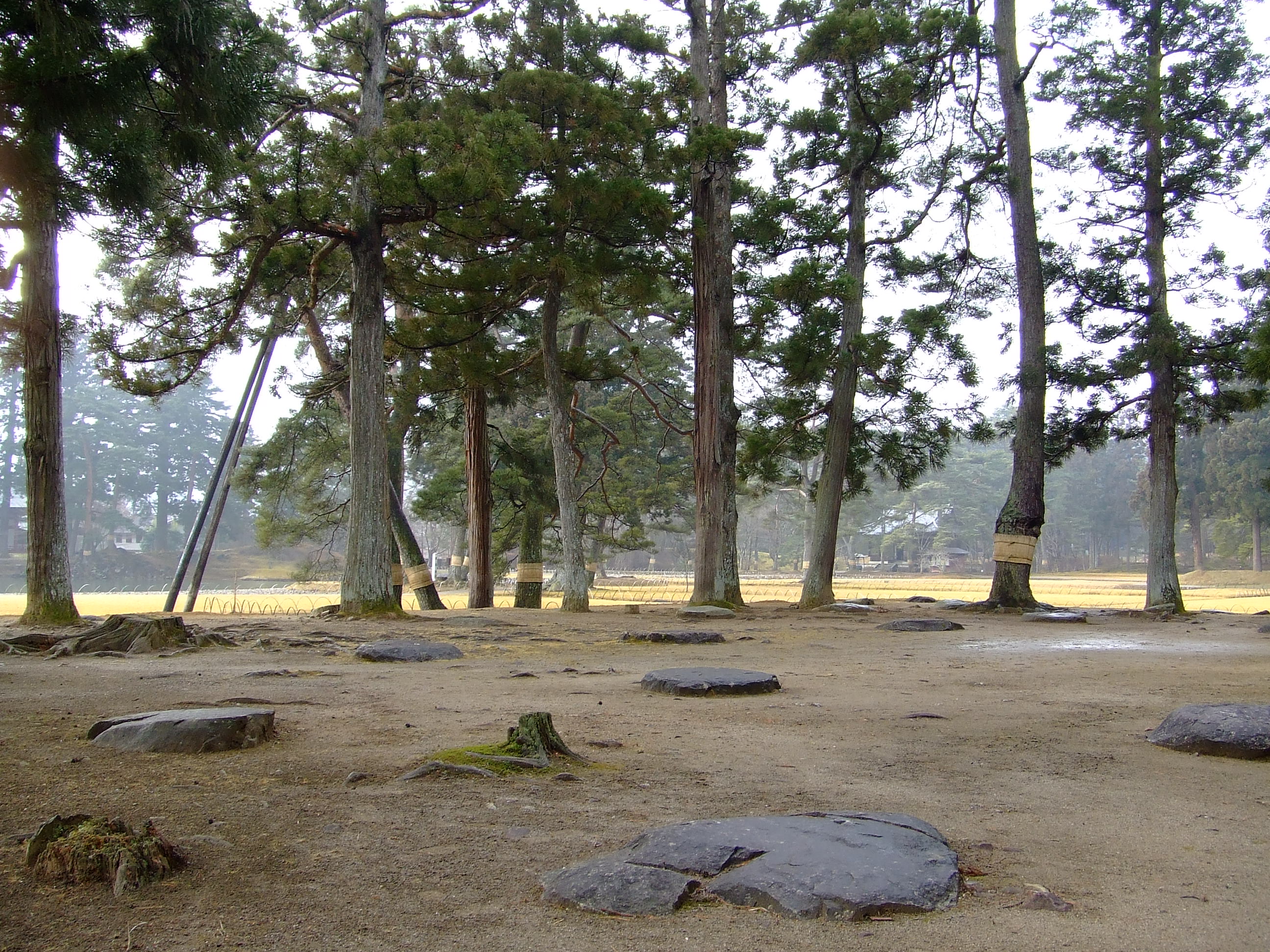
Forty buildings, 500 chapels for meditation, halls sheathed in gold and silver and precious wood -- and every last one of them burned to the ground by 1226. What survives at Motsuji is not the architecture that once rivaled Kyoto, but the garden. The Oizumi-ga-ike pond reflects the same sky it reflected eight centuries ago, its islands and peninsulas arranged according to an 11th-century treatise on garden making whose principles still hold. Motsuji, a Tendai Buddhist temple in the town of Hiraizumi in southern Iwate Prefecture, earned UNESCO World Heritage status in 2011 not for what stands here now, but for what the landscape remembers.
A Frontier Monastery
The monk Ennin, known posthumously as Jikaku Daishi, founded Motsuji in 850 on what was then a genuine frontier. To the south lay Yamato Japan with its court culture and Buddhist institutions. To the north stretched the territory of the Emishi, the indigenous people of the Tohoku region of northern Honshu. Hiraizumi sat at the boundary between these worlds, and for three centuries it would develop a culture that absorbed influences from both -- a sophistication that would astonish later visitors expecting to find only wilderness. The temple Ennin established was a foothold for Tendai Buddhism on the edge of the known world.
The Fujiwara Golden Age
In the mid-12th century, Fujiwara no Motohira, the second lord of the Northern Fujiwara clan, transformed Motsuji into something extraordinary. He built a temple called Enryu-ji whose main hall contained a monumental statue of Yakushi Nyorai, the Buddha of Healing, flanked by statues of the Twelve Divine Generals sculpted by the master Unkei with crystal eyes -- an innovation at the time. The hall blazed with color: precious wood, gold, silver, and jewels decorated every surface. Lecture halls, a circumambulation hall, a two-story main gate, a bell tower, and a sutra repository surrounded it. Once Enryu-ji was finished, Motohira ordered an almost exact copy built beside it, called Kasho-ji. He did not live to see it completed; that task fell to his son Hidehira. At its peak, Motsuji's 40 buildings and up to 500 subsidiary chapels rivaled nearby Chuson-ji in splendor.
The Garden That Outlived Everything
After the Northern Fujiwara clan fell to Minamoto no Yoritomo in 1189, Hiraizumi's buildings burned one by one -- through conflict, through accident, through neglect. By 1226, nothing stood. The temple was rebuilt during the Edo period, but the current structures sit on different foundations and bear no relation to the originals. What does survive is the Pure Land garden. The large pond with its two islands, four peninsulas, and carefully composed shoreline of beaches and rugged rocks remains preserved much as it appeared 800 years ago. Its designer, unknown by name, clearly knew the Sakuteiki, the 11th-century treatise on garden construction. Cherry trees, irises, lotus, bush clover, and maples ring the water, each marking a different season. The garden was designed as a physical manifestation of the Buddhist Pure Land paradise -- heaven made visible on earth.
Seasons of Ceremony
Motsuji is no museum piece. Throughout the year, festivals bring the grounds to life in ways that connect directly to the Fujiwara era. The Ennen no Mai, a sacred dance preserved from medieval times, is performed during both the Spring Fujiwara Festival in early May and the Autumn Fujiwara Festival in November. The Ayame Matsuri, or Iris Festival, runs from late June into July when the garden's irises bloom in dense purple carpets along the pond's edge. August brings the Daimonji Matsuri, a bonfire festival marking the end of Obon, when the spirits of the dead return home. The temple holds dual status as a Special Place of Scenic Beauty and a Special National Historic Site -- a rare double designation recognizing both its aesthetic perfection and its historical significance.
From the Air
Located at 38.99N, 141.11E in the Hiraizumi area of southern Iwate Prefecture, Japan. The temple grounds and Pure Land garden are visible as a distinctive green space with a large central pond amid the small town. The Kitakami River runs nearby to the east. Nearest airport: Iwate Hanamaki Airport (RJSI), approximately 30nm to the north-northwest. Approach from the east along the Kitakami River valley for the best perspective. The broader Hiraizumi area contains several related UNESCO World Heritage sites including Chuson-ji, visible on the nearby hillside. Expect variable mountain weather; clear autumn days offer the best visibility across the Tohoku interior.