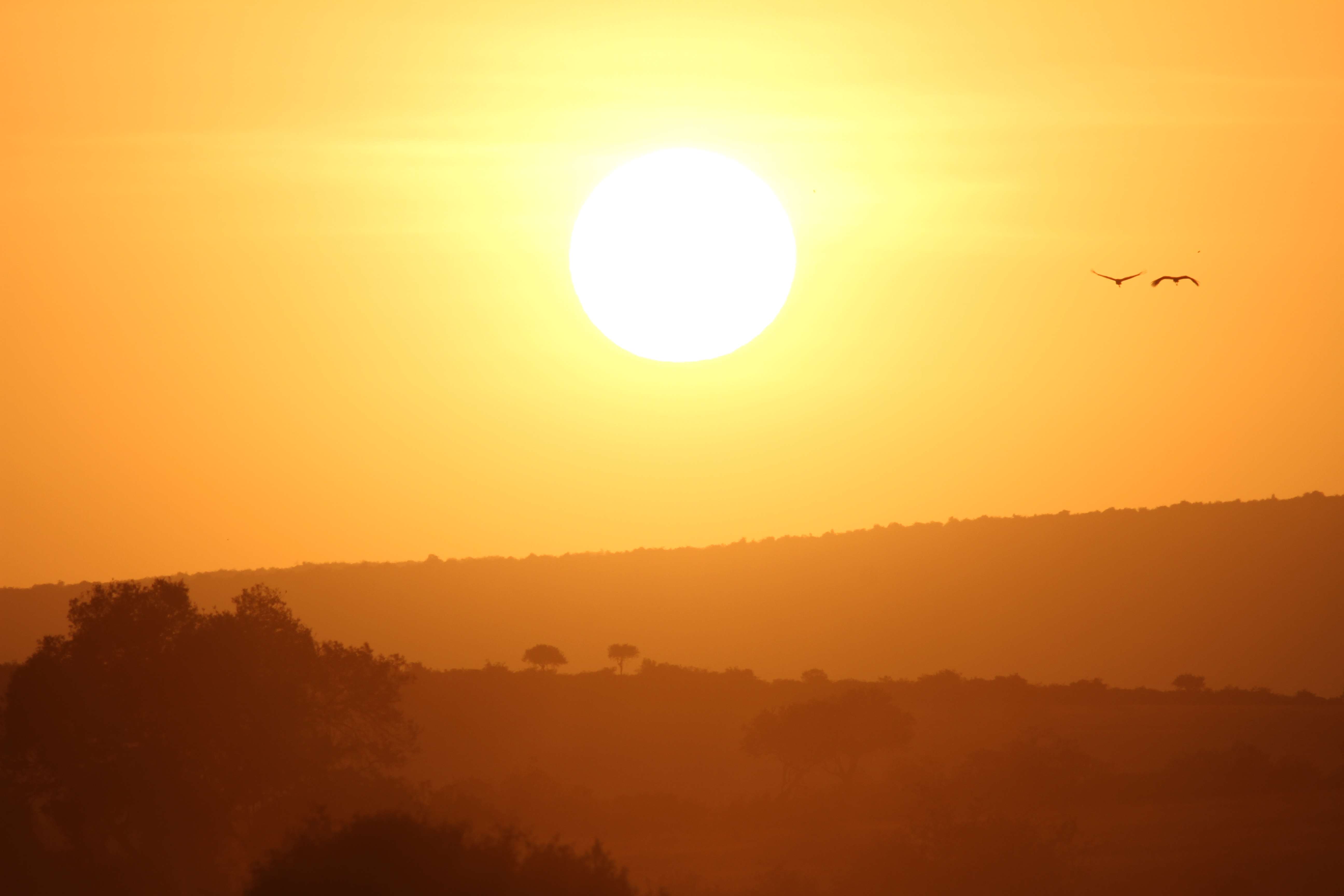
Maasai Mara National Reserve
Every July, the Mara River turns into a bottleneck of life and death. Over a million wildebeest, driven by ancient instinct and drying grass, pour northward from Tanzania's Serengeti and slam into the riverbanks of the Maasai Mara. The water is brown, fast, and full of Nile crocodiles that have been waiting for exactly this moment. Thousands of animals plunge in anyway. Some drown. Some are taken. Most make it across. This spectacle -- the Great Migration -- is what draws the cameras and the tourists, but the Maasai Mara was extraordinary long before anyone thought to watch.
Land of the Maasai
The reserve takes its name from the Maasai people, who have grazed cattle across these grasslands since at least the 17th century, and from the Mara River that bisects it. Arrowheads and pottery dating back 2,000 years confirm far older human presence. Formally established in 1961, the reserve covers 1,510 square kilometers of southwestern Kenya and is administered by local county councils -- Narok County manages the eastern two-thirds, while the Mara Conservancy oversees the western Mara Triangle on behalf of Trans-Mara County Council. That split matters. The Mara Triangle has tighter vehicle controls, fewer lodges, regular ranger patrols, and markedly less poaching. For visitors who want wildlife viewing without a traffic jam of safari vehicles around every lion sighting, the Triangle is the reserve's best-kept secret.
The Big Nine and Beyond
Most African reserves promise the Big Five -- lion, leopard, elephant, rhino, and buffalo. The Maasai Mara raises the stakes to the Big Nine, adding cheetah, giraffe, zebra, and hippo, all regularly spotted in a single day's game drive. Lions are especially abundant here and have grown accustomed enough to vehicles that they hunt, nap, and nurse cubs within meters of idling Land Cruisers. Cheetahs sprint across the open plains in pursuit of Thomson's gazelle, and leopards drape themselves in the sausage trees along the Mara River. In the river itself, hippos crowd together in wallows while crocodiles bask on the banks, conserving energy for the migration crossings. Over 50 species of birds of prey patrol the skies, from martial eagles to lappet-faced vultures. The density of predator-prey interactions here is among the highest on the continent.
Four Landscapes in One Reserve
The Mara's terrain is not uniform savanna. Sandy soil and low scrub characterize the eastern section, giving way to the Siria Escarpment -- a dramatic cliff face that forms the reserve's western wall and drops hundreds of meters to the plains below. Along the Mara River, gallery forests of fig and warburgia trees create dense woodland corridors where leopards hunt and elephants browse. The largest portion is open grassland dotted with scattered bushes, the classic East African vista that served as the backdrop for the 1985 film Out of Africa. Elevation ranges from 1,500 to 2,200 meters above sea level, giving the Mara a milder, wetter climate than equatorial latitude alone would suggest. Daytime temperatures peak around 30 degrees Celsius in December and January, dropping to comfortable mid-twenties during the dry months of July through October -- the prime visiting season.
The River Crossing
The Great Migration is not a single event but a rolling, months-long procession. Wildebeest herds begin arriving from the Serengeti sometime between July and early August, following the rain-fed grass. The crossings at the Mara River are the migration's most dramatic and dangerous chapters. Herds mass on the riverbank, sometimes for hours, before the first animals commit to the water. Once one goes, thousands follow in a chaotic rush of hooves and spray. Crocodiles take their toll, and the steep, muddy banks claim others. But the numbers are overwhelming -- an estimated 1.5 million wildebeest, accompanied by hundreds of thousands of zebra and Thomson's gazelle, cycle through the ecosystem annually. By mid-September most herds have crossed, and the Mara's resident predators are well fed. The carcasses of animals that did not survive the crossing nourish the river's ecosystem for months afterward.
Arriving by Air or Endurance
Getting to the Mara is part of the experience. Scheduled flights from Nairobi's Wilson Airport take about 30 minutes and land on small bush airstrips scattered across the reserve. By road from Nairobi, the journey takes five hours in the dry season and up to seven when the rains turn unpaved sections to mud. Most visitors arrive via safari packages that handle logistics, and the best advice is simple: do not try to see too many parks in one trip. The Mara rewards patience. Spend three or four days, take morning and afternoon game drives, and let the reserve reveal itself at its own pace. At night, from an unfenced tented camp, the sounds come free -- hyenas whooping across the plains, lions grunting in the darkness, and the rustle of zebra grazing just beyond the canvas.
From the Air
The Maasai Mara National Reserve is centered at approximately 1.49°S, 35.14°E in southwestern Kenya, near the Tanzanian border. From 5,000-8,000 feet AGL, the reserve's open grasslands and the dark line of the Mara River are clearly visible, with the Siria Escarpment forming a dramatic cliff along the western boundary. Multiple small airstrips serve the reserve, including Keekorok (HKMR), Mara Serena, and Olkiombo. Nairobi Wilson Airport (HKNW) is the primary departure point, approximately 130 nm to the east. The terrain is rolling grassland at 1,500-2,200 meters elevation. Weather is generally clear during the dry season (July-October) with afternoon convective buildup possible. The rainy seasons (March-May, November) bring reduced visibility and muddy conditions.