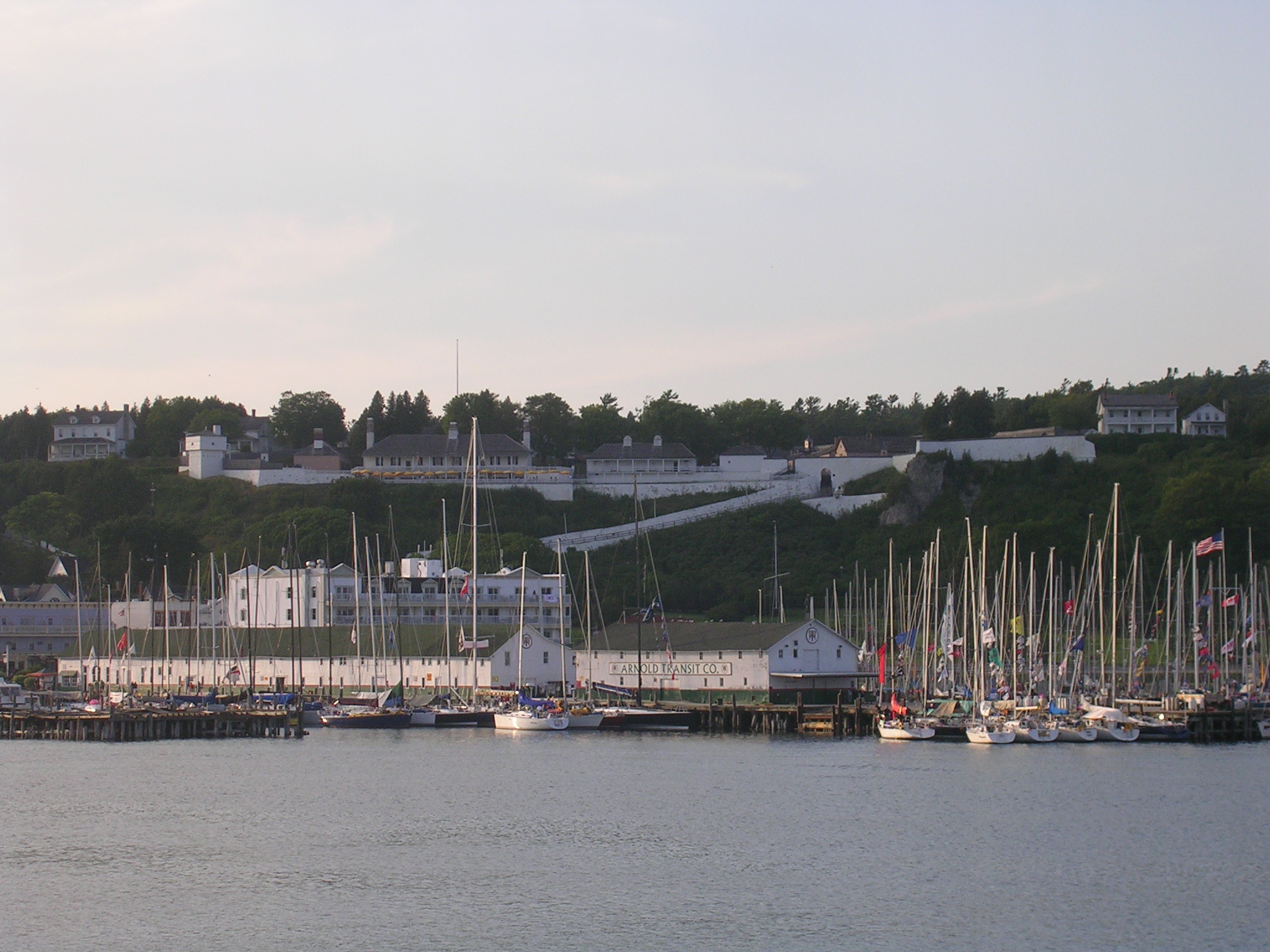
Mackinac Island
Mackinac Island sits in the straits between Lake Michigan and Lake Huron, a 3.8-square-mile refuge where the automobile never arrived. Motor vehicles have been banned since 1898, when the noise and smell disturbed horses and summer residents successfully petitioned for prohibition. The ban stuck. Today, the island operates on horses, bicycles, and feet. Ferries unload tourists into a Victorian streetscape of white clapboard hotels, fudge shops (the island is America's fudge capital), and clip-clopping carriages. The Grand Hotel, with the world's longest porch, presides over the scene. It's theme-park-perfect, but the theme is real: Mackinac was a summer resort for wealthy Midwesterners in the Gilded Age, and has simply never changed. The absence of cars creates not just atmosphere but sound - or rather, its absence. Mackinac is the quiet at the heart of the modern world.
The History
Mackinac has always been strategic. The island controlled the straits connecting the Great Lakes; whoever held it controlled the fur trade. The French built a fort in the 1670s; the British took it in 1761; the Americans seized it in 1796, lost it to the British in 1812, and regained it in 1815. Fort Mackinac, perched on limestone bluffs above the harbor, was one of America's last frontier posts. But as the military importance faded, tourism grew. Cool summer breezes, beautiful scenery, and steamship access made Mackinac a resort destination by the 1870s. Wealthy Chicago and Detroit families built summer cottages; the Grand Hotel opened in 1887.
The Ban
The automobile arrived on Mackinac Island briefly in 1898. The horses panicked. Summer residents complained. The village council banned 'horseless carriages' from the island. Three exceptions exist: emergency vehicles, service vehicles during restricted hours, and snowmobiles in winter when the horses are stabled. Otherwise, the ban has held for over 125 years. The island's 500 year-round residents get around by bicycle, horse, and foot. The 600 horses on the island outnumber cars by infinity. The ban created Mackinac's character - without it, the island would have modernized like everywhere else.
The Grand Hotel
The Grand Hotel opened in 1887, built by railroad and steamship companies to attract tourists. Its front porch stretches 660 feet - the longest in the world. The hotel maintains strict Victorian standards: jackets required for men after 6 PM, no blue jeans in the main dining room. The 1980 film 'Somewhere in Time,' starring Christopher Reeve and Jane Seymour, was filmed here and created a cult following. The hotel charges a fee just to walk on the porch if you're not a guest. It's expensive, exclusive, and unapologetically old-fashioned - exactly what a certain type of traveler wants.
The Fudge
Mackinac Island is America's fudge capital, producing an estimated 10,000 pounds daily during tourist season. The first fudge shop opened in 1887; now there are more than a dozen, and the smell of cooking fudge permeates downtown. Shops let visitors watch the process: the boiling, the pouring onto marble slabs, the folding and working until the texture is right. 'Fudgie' is the local term for tourists, often said affectionately, sometimes not. The fudge industry developed because it solved a tourist need: a souvenir you could eat, made locally, with a spectacle of production. Mackinac without fudge would be like Mackinac with cars - possible, but wrong.
Visiting Mackinac Island
Mackinac Island is accessible only by ferry (from Mackinaw City or St. Ignace) or small aircraft. No cars allowed - if you need a car, leave it on the mainland. The island is small enough to bicycle in a few hours; bike rentals are abundant. Horse-drawn carriage tours provide island history. Fort Mackinac, on the bluffs, offers military history and views. The Grand Hotel welcomes non-guests for the porch (for a fee) and expensive dining. Fudge shops line Main Street. Accommodations range from the Grand to modest B&Bs; book early for summer weekends. The island is crowded midday when ferries arrive; stay overnight for the evening quiet. Pellston Regional Airport (PLN) is the nearest commercial airport. The island essentially closes in winter.
From the Air
Located at 45.85°N, 84.62°W in the Straits of Mackinac between Lake Michigan and Lake Huron. From altitude, the island appears as a small, forested landmass with limestone cliffs, surrounded by blue water. Fort Mackinac is visible on the bluffs above the small harbor. The Grand Hotel's massive white facade stands out. The Mackinac Bridge, connecting Michigan's upper and lower peninsulas, is visible five miles to the southwest. No roads accommodate cars - paths and trails crisscross the interior. The ferry docks at the southern harbor.