Madeline Island
The Ojibwe call it Mooningwanekaaning. A traditional Anishinaabeg story says that the Great Spirit Gitche Manitou told the people to travel west until they found the place where "food grows upon the water." They traveled until they reached the wild rice marshes of Chequamegon Bay, on the southern shore of Lake Superior, and there they stopped. Madeline Island became the spiritual center of the Lake Superior Chippewa -- a role it has never fully relinquished, even as French fur traders, Jesuit missionaries, American industrialists, and Midwestern vacationers each claimed the island for their own purposes. Fourteen miles long and three miles wide, it is the only one of the twenty-two Apostle Islands open to commercial development and private ownership, excluded from the Apostle Islands National Lakeshore by design.
The Woman Who Named an Island
The island bears the name of Madeleine Cadotte, known in Ojibwe as Ikwesewe, daughter of the chief White Crane. In the early nineteenth century she married Michel Cadotte, a fur trader who ran John Jacob Astor's American Fur Company post at La Pointe, established in 1808. Their marriage was more than a personal union: it was a diplomatic and economic alliance, one of many between European traders and high-ranking Ojibwe women that made the fur trade function. Women like Madeleine created goodwill, facilitated negotiations, and provided access to indigenous trading networks. The Cadottes became the most prominent couple on the island. Similar partnerships shaped the trading communities at Mackinac Island and Sault Ste. Marie. Madeleine's name on the maps is a rare acknowledgment that the fur trade ran on relationships as much as on beaver pelts.
Three Flags Over La Pointe
French fur traders established a fort at La Pointe in 1693, and for 150 years the island served as an outpost for French, British, and American commercial interests. Before 1830, Astor had built a monopoly on the American fur trade, made his fortune, and pivoted to New York real estate -- leaving places like Madeline Island to manage the decline of an industry that had defined them. When the fur trade collapsed, the island reinvented itself through logging, commercial fishing, and brownstone quarrying. Apostle Island brownstone was quarried and shipped south to construct the first Milwaukee County Courthouse. Around 1665, Jesuit Father Claude Allouez and Father Jacques Marquette had arrived to establish a mission to the Ojibwe, and a Protestant mission known as "The Old Mission" followed in 1832. The present La Pointe post office occupies half of the original Old Mission dining room, adapted as a hotel in 1900.
The Ice Road Marked by Christmas Trees
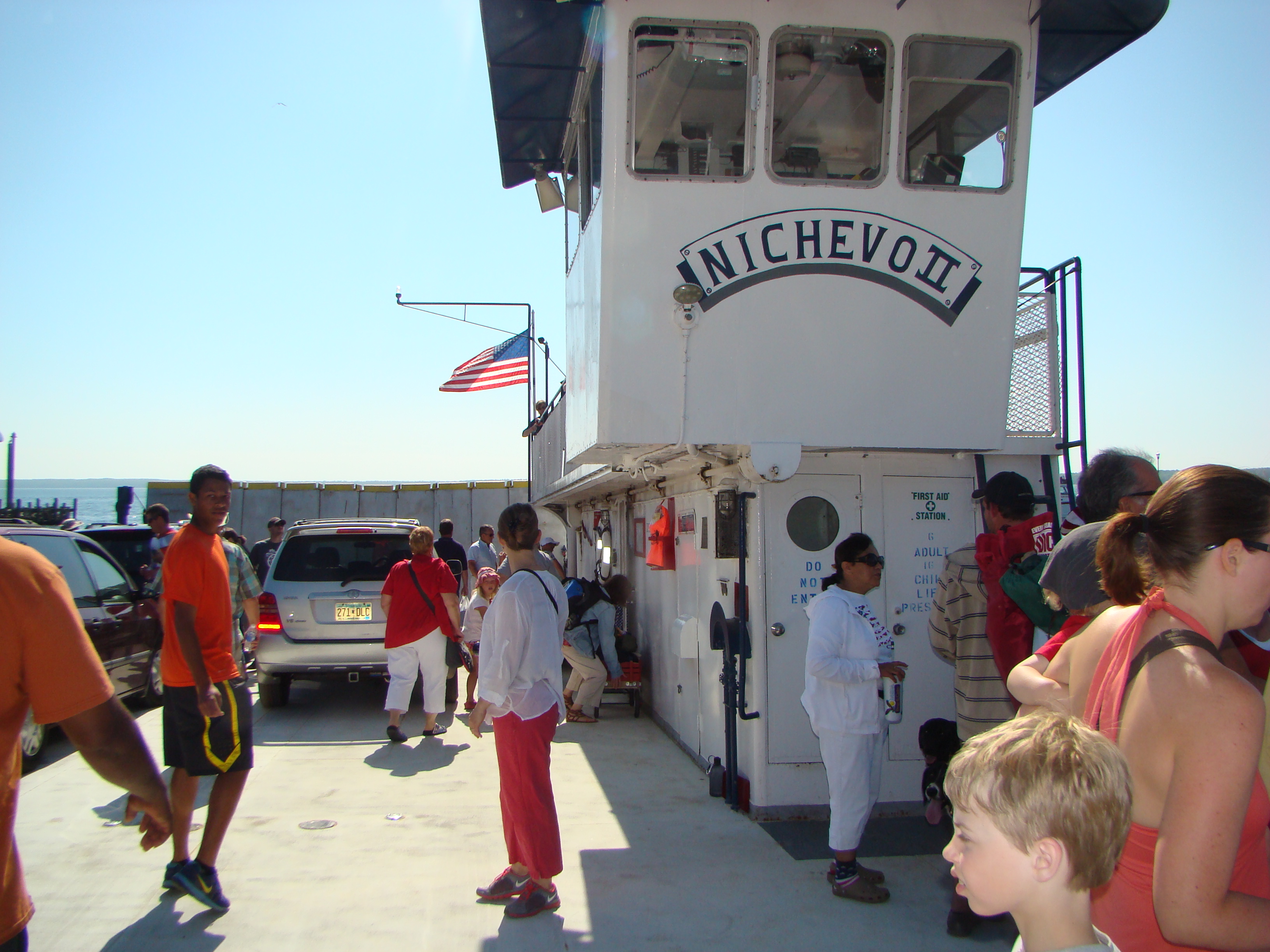
Getting to Madeline Island requires a negotiation with Lake Superior itself. In summer, ferries run from Bayfield across the two-mile channel. But each winter, the lake begins to freeze, and eventually the ice grows too thick for boats. When conditions allow, an ice road opens to vehicle traffic -- an officially designated extension of County Highway H, traditionally marked by Christmas trees planted in the frozen surface as lane guides. If the ice is too thin for cars but too thick for ferries, the island enters a liminal period when access depends on aircraft, snowmobiles, and a wind sled -- essentially an airboat that skims across the uncertain surface. The island's airport, Major Gilbert Field, becomes a lifeline. Children attend school on the island only through fifth grade; older students ferry or fly to Bayfield.
Sacred Ground, Summer Playground
On the eastern end of the island sits an exclave of the Bad River Indian Reservation, a reminder that this land holds deep spiritual significance for the Ojibwe people. The La Pointe Indian Cemetery, established in 1835 at the site of the first permanent Catholic mission, lies next to the modern boat marina. The Ojibwe National Prayer Pole and Memorial Park shelters sacred trees surrounding a pond, honoring the relationship between the Ojibwe and their island homeland. Yet Madeline Island is also a summer resort. Since the mid-twentieth century, tourism has been its primary industry. Visitors from Minneapolis, Milwaukee, and Chicago arrive to hike, kayak along cliff-face sea caves, and play a Robert Trent Jones-designed golf course with double greens. Big Bay State Park offers sixty campsites on the south shore, where bald eagles nest in tall pines and a lagoon ecosystem harbors wildlife. The island holds these identities simultaneously -- sacred center and vacation destination -- without apparent contradiction.
From the Air
Located at 46.816°N, 90.689°W in Lake Superior, Ashland County, Wisconsin. Madeline Island is the largest of the Apostle Islands, measuring 14 miles long by 3 miles wide. Major Gilbert Field Airport (4R5) serves the island with a turf runway. From 3,000-5,000 feet AGL, the island's elongated shape is clearly visible, with the community of La Pointe on the southwestern tip and Big Bay State Park on the south-central shore. The Bayfield peninsula and mainland are visible to the south across a narrow channel. John F. Kennedy Memorial Airport (KBFW) in nearby Bayfield, WI is the closest paved-runway alternative. In winter, the ice road between Bayfield and the island may be visible as a marked line across the frozen lake surface.