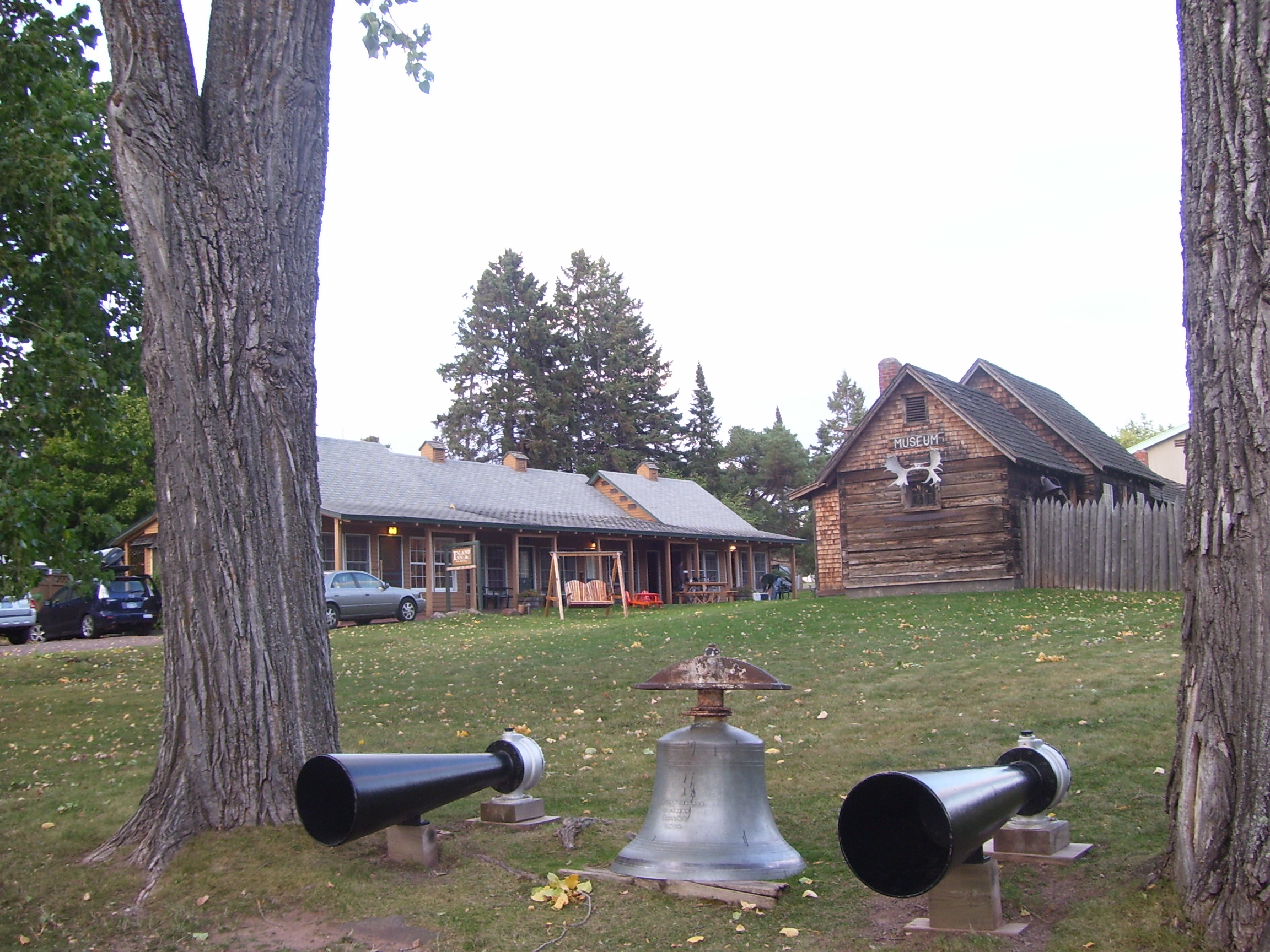
Madeline Island Museum
The building that holds the story was once part of the story itself. Madeline Island Museum's main structure served as a warehouse for the American Fur Company, the enterprise that made John Jacob Astor the richest man in America by turning beaver pelts into top hats for European gentlemen. When Leo and Bella Capser began organizing a museum here in 1955, they did not need to look far for materials. The island had been accumulating history for centuries -- Ojibwe settlements predating European contact, a French trading post established in 1693, Jesuit missions, and the commercial machinery of the fur trade. The Capsers stitched together pieces of the island's own past to house that past: walls from the American Fur Company post, timbers from the old La Pointe jail. The museum opened on June 15, 1958, a building literally constructed from its own subject matter.
Where the Fur Trade Found Its Center
Madeline Island sits in Lake Superior among the Apostle Islands, a cluster of 22 islands off the northern tip of Wisconsin. It is the only island in the group not included in the Apostle Islands National Lakeshore, which means it is the only one where people live, run businesses, and preserve their own history on their own terms. The Ojibwe considered Madeline Island a spiritual center -- the final stopping place in a migration that oral tradition traces from the Atlantic coast, guided by Gichi Manidoo to find the food that grows on water: wild rice. French fur traders arrived in the 17th century, establishing a post at La Pointe that became one of the most important trading hubs on the Great Lakes. By the 19th century, the American Fur Company had set up operations here, and the island sat at the intersection of Indigenous, French, and American economies.
A Museum Assembled from Itself
Leo and Bella Capser were longtime summer residents who understood that Madeline Island's significance was being lost to time. In 1955, they began rallying other islanders to collect artifacts and build a museum. The community's response was remarkable: residents donated objects that had been sitting in attics and sheds for generations -- trade goods, tools, documents, fragments of daily life spanning centuries. The building itself was a collaborative act of preservation. Workers combined structural elements from several historic island buildings into a single wooden structure. A section of the old La Pointe jail found new purpose as museum wall. Timbers from the American Fur Company warehouse gave the main hall its bones. When the museum opened in 1958, it was both a container for history and a physical artifact of it. A decade later, in 1968, the Capsers transferred operations to the Wisconsin Historical Society, which has operated the museum ever since.
Four Centuries Under Two Roofs
Today the museum spans two buildings: the original 1950s structure and the Casper Center, an exhibit hall added in the 1990s. The exhibits trace four interconnected narratives. First, the Ojibwe story -- their deep roots on the island and their spiritual connection to it as a terminal point of a centuries-long migration. Second, the fur trade, which drew French voyageurs and eventually American industrialists to this remote shoreline. Third, the missionary presence, as Jesuits and later Protestant missionaries used Madeline Island as a base for spreading Christianity across the western Great Lakes. Fourth, the maritime history of Lake Superior itself, a body of water so vast and powerful that it shapes everything around it. Roughly twelve thousand visitors make the crossing each year, arriving by boat or aboard the Madeline Island Ferry to walk through rooms where fur once dried and prisoners once sat.
An Island Apart
Reaching Madeline Island requires intention. There is no bridge, no causeway. The Madeline Island Ferry carries visitors across the channel from Bayfield, a scenic harbor town on the mainland. In winter, when the lake freezes thick enough, an ice road connects the two. This separation has preserved something. While the other Apostle Islands became federal lakeshore -- protected but also depopulated -- Madeline Island kept its community. La Pointe, the unincorporated village where the museum sits, traces its roots to that 1693 French trading post, making it one of the oldest continuously inhabited European settlements in the upper Midwest. The museum anchors this community's sense of itself, a place where the threads of Ojibwe tradition, French commerce, and American expansion are held together under roofs built from the very structures those histories produced.
From the Air
Located at 46.7806°N, 90.7881°W on Madeline Island, the largest of Wisconsin's Apostle Islands in Lake Superior. The island is clearly visible from altitude, sitting about 2 miles off the Bayfield Peninsula. The Apostle Islands chain extends northeast into the lake. Nearest airport is John F. Kennedy Memorial Airport (KBFW) in Ashland, Wisconsin, approximately 20 nm to the southwest. Bayfield's harbor and the Madeline Island Ferry route are visible landmarks. The museum sits in the village of La Pointe on the island's southwestern shore. Best viewed from 3,000-5,000 feet to appreciate the island's position within the archipelago and its relationship to the mainland.