Madurodam
Madurodam is almost always introduced as the cheerful miniature city - the place where Dutch families bring their children to watch tiny ships move in tiny harbors and a tiny Schiphol Airport service its tiny planes. The cheerfulness is real, and so are the children. But the park's name belongs to a young man who was beaten to death at Dachau in February 1945, and the funds that built it came from his parents, who had lost everything else and decided to put their son's name on something other than a headstone. George Maduro was 28 when he died. His father and mother spent the rest of their lives ensuring that the Netherlands he had defended would remember him as a city - small, cared for, full of people moving through their ordinary days.
Who George Maduro Was
George Maduro was born in 1916 on Curacao, into a prominent Sephardic Jewish family of Caribbean Dutch merchants and lawyers. He studied law in the Netherlands, and when the German invasion came in May 1940, he was a young lieutenant in the Dutch cavalry. During the five-day Battle of the Netherlands, Maduro led an action against a German position in Rijswijk that briefly recaptured the area near The Hague - one of the few clear Dutch military successes of that lost campaign. After the Dutch surrender, he refused to stop fighting. He joined the resistance, was arrested at least twice, escaped, and tried to reach England via France. He was caught in Belgium and imprisoned in Saarbrücken, and then transferred to Dachau, where he died of typhus on 8 February 1945, three months before the camp was liberated. In 1946, the Netherlands posthumously awarded him the Military Order of William, the country's highest and oldest military decoration. Both of his parents survived the war. They had been deported separately - his mother to Ravensbruck. Their son had not survived. They had money, having protected enough family assets through the war, and they began looking for what to do with the rest of their lives.
The Idea From a Sanatorium
The idea came not from the Maduros themselves but from a Hague woman named Bep Boon-van der Starp. She sat on the board of a foundation supporting the Dutch Students Sanatorium, where university students with tuberculosis could be treated and continue their studies. The sanatorium needed money. Boon-van der Starp had heard about Bekonscot, a small miniature village in Beaconsfield, England, that quietly donated most of its profits to a London hospital each year. She thought the Netherlands could do something similar, and bigger. She approached George Maduro's parents. They agreed, on one condition: the park would be named for their son. The architect S. J. Bouma was hired and sent to Beaconsfield to study how a miniature city could work. He came back with a sketch and a slogan in Dutch: Het stadje met de glimlach, the little city with the smile. The smile was Madurodam's idea of itself from the beginning. The grief underneath it was the parents'.
A Mayor Aged Fourteen
On 2 July 1952, Princess Beatrix - then a fourteen-year-old future queen - was appointed mayor of Madurodam. She was given a formal tour of her town. When Beatrix became Queen of the Netherlands in 1980, she relinquished the title, and a new tradition replaced her. Every year since, the youth city council - made up of students at The Hague schools - elects one of its members to serve as mayor of Madurodam. The same youth council also sits on the park's disbursement committee, deciding where to send the money raised. Net proceeds from Madurodam go entirely to charities benefiting young people in the Netherlands. The structure is unusual: a children's attraction, governed in part by children, that exists to send its profits back into other children's lives. It was the precise opposite of the world that had killed George Maduro - and probably what his parents, who had no other son, intended.
The Park Itself
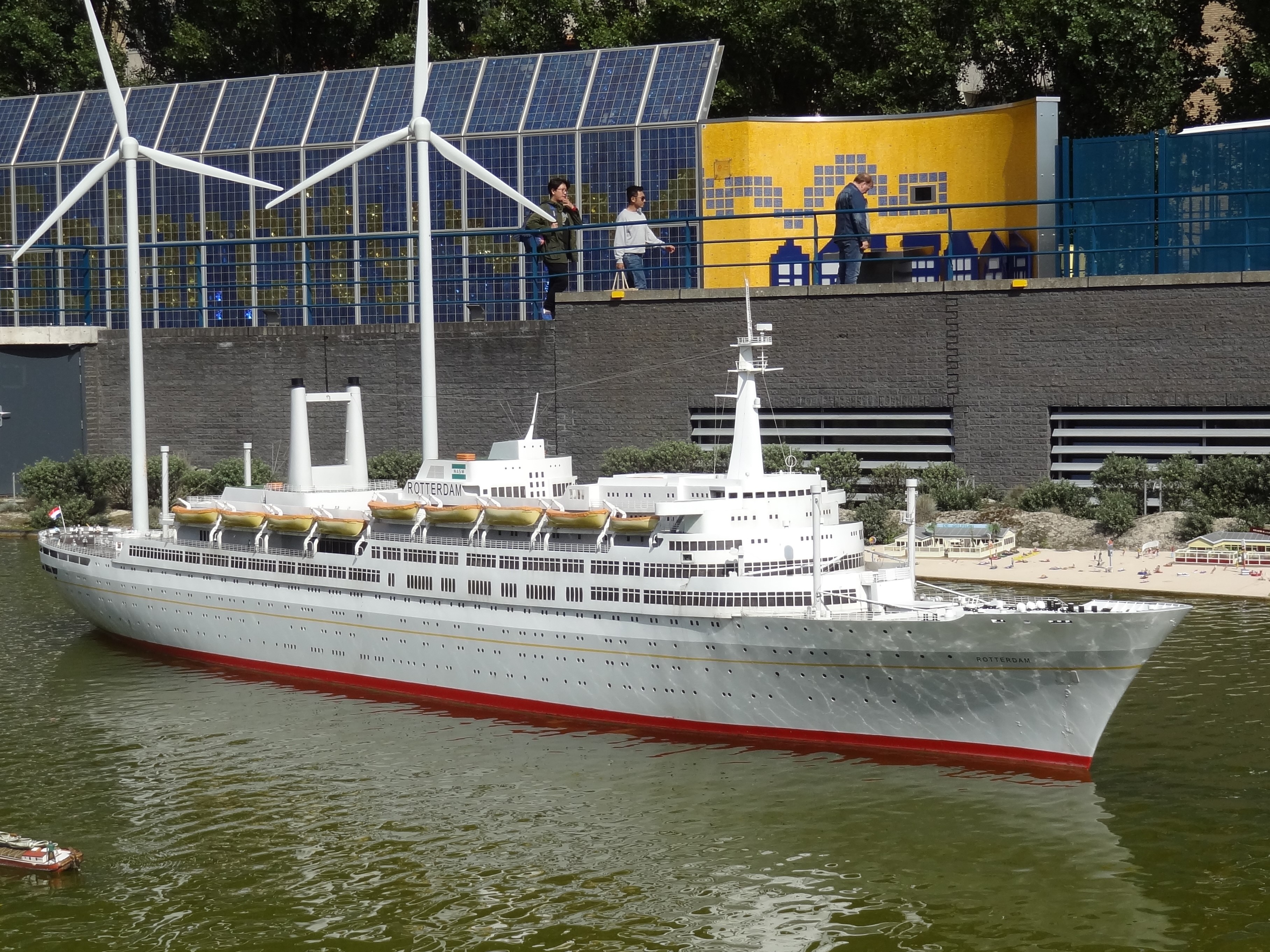
Everything is built at 1:25 scale. Modelers research a real building - its color, its proportions, its weathering - and a computer-guided machine cuts the parts before painters finish them by hand. Because the miniatures live outdoors, restoration is constant. The little residents change clothes seasonally: jackets in winter, T-shirts in summer. The cast of figures has grown more multicultural over the decades, as the country has. A 2011 to 2012 renovation cost eight million euros and reorganized the park around three themes - water as friend and enemy, historical cities, and the Netherlands as inspiration for the world. Coin slots trigger drawbridges, factories, oil tankers seemingly on fire. There is a model of the Rijksmuseum, the Binnenhof where Dutch democracy meets, Schiphol Airport with its little planes, the Port of Rotterdam in its full miniature scale, the Dom Tower of Utrecht, canal houses, tulip fields, windmills, the cube houses and Erasmus Bridge of Rotterdam's skyline. Since 2015, a non-miniature attraction called the Hof van Nederland - the Dutch Court - explains in four minutes how the Netherlands began as a state in 1572. Inspired by Madurodam, Walt Disney himself built Storybook Land at Disneyland in 1956, and Disneyland Paris added one in 1994. A visit to Madurodam also moved Fernando de Ercilla Ayestaran to build Catalunya en Miniatura, opened near Barcelona in 1983.
A Smaller Memorial Inside the Small City
On 27 July 2005, to mark the 60th anniversary of the Japanese surrender, a small version of the Indies Monument - the national memorial to the Dutch victims of the Japanese occupation of the Dutch East Indies - was unveiled inside Madurodam. It is roughly the size of a child. It sits among the miniature buildings of a country that was, when the Maduros built this park, learning slowly to remember its losses. A miniature monument inside a memorial city is a strange object. It is also a careful one. Madurodam has never made a museum of George Maduro's death. The park keeps its smile. But the smile sits over a foundation that two parents laid on purpose, in the city where their son had once briefly held off a German advance, in memory of a young law student from Curacao who never came home.
From the Air
Located at 52.0994 degrees N, 4.2976 degrees E in the Scheveningen district of northwest The Hague, just south of the dunes that separate the city from the North Sea. Best viewed at 1500-2500 ft AGL on approach to Rotterdam The Hague Airport (EHRD, about 8 nm south-southeast). From altitude, look for the Madurodam compound as a green rectangle west of the main A44 corridor and just inland from the Scheveningen beachfront; the nearby Indies Monument lies a few hundred meters south. The Hague is uncontrolled VFR below the Schiphol TMA - check NOTAMs for royal-family movements that occasionally restrict the city center.