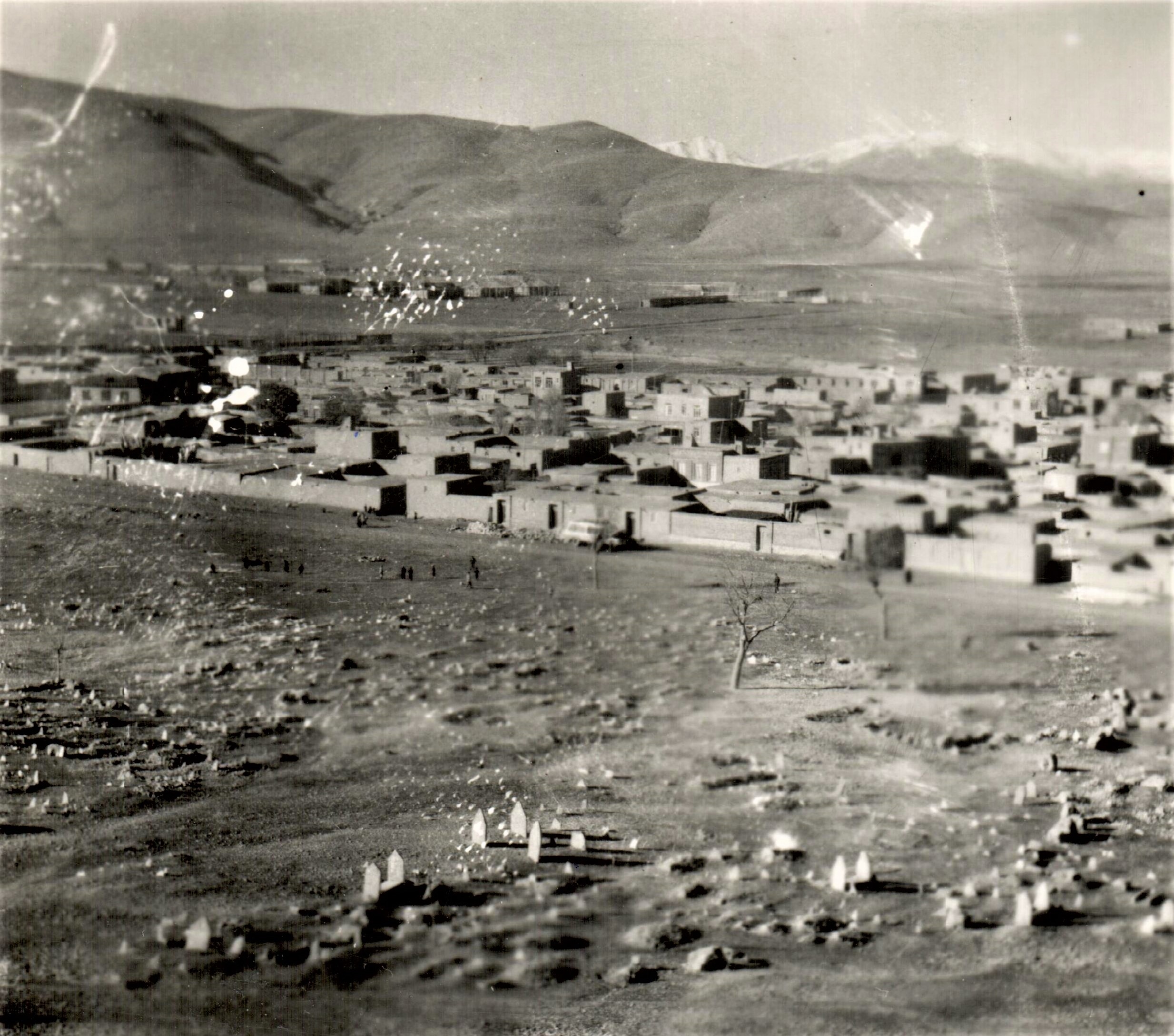
Mahabad
For eleven months in 1946, Mahabad was a capital. Not of a province or a district, but of a republic -- the only independent Kurdish state in modern history. That experiment ended with an execution, but the idea it represented did not. Today, the Unrepresented Nations and Peoples Organization still recognizes Mahabad as the capital of Iranian Kurdistan, a designation that says less about current politics than about what this city of 168,000 people means to the Kurdish imagination. Tucked into a narrow valley 1,300 meters above sea level, south of the shrinking expanse of Lake Urmia, Mahabad carries the weight of a cause far larger than its geography.
Cold Spring, Many Names
Before it was Mahabad, the city was Savojbolagh -- a Persian corruption of the Turkic phrase soghuk bulak, meaning "cold spring." The Kurdish version was simpler: Sablagh. The current name arrived after World War I, during the reign of Reza Shah, when the city's identity was being rewritten along with the country's. The town first appears in historical records during the 16th century Safavid era, when Mukri Kurds participated in the wars between the Safavid dynasty and the Ottoman Empire and steadily gained regional prominence. By the 17th century, Savojbolagh had become the seat of the Mukri principality, known as Mukriyan in Sorani Kurdish. Many historians credit Budaq Sultan Mukri, who built the town's congregational mosque, as the founder of the settlement that grew into the modern city.
Eleven Months of Sovereignty
On January 22, 1946, Qazi Muhammad, a respected religious jurist and Kurdish nationalist, declared Mahabad the capital of an independent republic. Soviet forces, who had occupied northern Iran during World War II, backed the venture. The republic governed a small cluster of Kurdish-speaking towns: Bukan, Piranshahr, Sardasht, and Oshnavieh. It lasted less than a year. When the United States brokered an agreement for Soviet withdrawal, Mohammad Reza Shah moved swiftly. His army invaded. Qazi Muhammad was arrested and hanged on March 31, 1947. American diplomat Archibald Roosevelt Jr. had urged the U.S. ambassador to persuade the Shah to spare Qazi's life. The Shah reassured the ambassador he had nothing to worry about. Roosevelt later concluded that the execution order was likely signed before the ambassador had left the room.
A City of Poets
Mahabad has produced a disproportionate number of Kurdish writers and poets. Hejar, whose given name was Abdurrahman Sharafkandi, wrote the first Kurdish-Kurdish-Persian dictionary in Iran. During the brief life of the Republic of Mahabad, he and the poet Hemin were named Kurdistan's national poets in recognition of their service to the cause through verse. Hemin later founded a Kurdish publishing house in Urmia after the fall of the Pahlavi dynasty in 1979, running a quarterly cultural magazine called Sirwe until his death in 1986. The dialect spoken in Mahabad has been adopted as the literary standard of the Kurdish language in western Iran, closely related to the Sorani standard used across the border in Iraqi Kurdistan. Mohammad Ghazi, another native of Mahabad, became one of Iran's most prolific translators, rendering more than 70 major literary works into Persian.
Life in the Valley
Mahabad sits 122 kilometers from the provincial capital of Urmia and 679 kilometers from Tehran. Its population, predominantly Sunni Kurdish, also includes speakers of Persian and Azeri Turkic. Neo-Aramaic-speaking Jews once inhabited the city as well, adding another thread to the linguistic tapestry. The city connected to Iran's national railway in 2013, when a 40-kilometer line to Miandoab opened. Volleyball is the most popular sport here, a passion that dates to the 1990s when Farmandarie Mahabad became champions of the Iranian first division. The team's national prominence was brief -- they finished fourth in the Iranian Super League in 1995 before dissolving -- but the city's devotion to the sport endured. Farmandarie Mahabad was reestablished in 2012, and a second team, Shahrdari Mahabad, followed the next year.
From the Air
Mahabad lies at approximately 36.77°N, 45.72°E in a narrow valley at 1,300 meters elevation in West Azerbaijan province, Iran. Lake Urmia is visible to the north, a massive saline lake that serves as a prominent navigation landmark. The city is 122 km south of Urmia and 679 km west of Tehran. The nearest major airport is Urmia Airport (OITR), approximately 120 km to the north. The surrounding terrain is mountainous Kurdish highlands. In clear weather, the valley setting and Lake Urmia provide strong visual orientation.