Mahdia Shipwreck
In June 1907, Greek sponge fishermen working the waters off the Tunisian coast near Mahdia noticed something unusual on the seafloor. What they found was the cargo of a ship that had sunk between 80 and 60 BC: dozens of heavy marble columns, bronze and marble sculptures, furniture fittings, decorative objects, and parts of catapults. The vessel had been carrying the plundered art of Athens to wealthy Roman buyers when a storm drove it onto the North African coast. The ship never reached Italy. Its cargo lay on the seabed for two thousand years.
Sulla's Shopping List
The marble columns found in the wreck have long been associated with Lucius Cornelius Sulla, the Roman dictator who sacked Athens in 86 BC. Scholars believe Sulla ordered the columns removed from Athenian buildings and shipped to Rome, where they would furnish the construction projects of a man who understood that architectural plunder was a form of political statement. The ship was en route from Piraeus, the port of Athens, to Italy, carrying a cargo that reads like the inventory of a looted museum. The columns were not the most artistically valuable objects aboard, but they were the heaviest, and their weight may have contributed to the ship's vulnerability in the storm that sank it.
Bronze Gods from the Deep
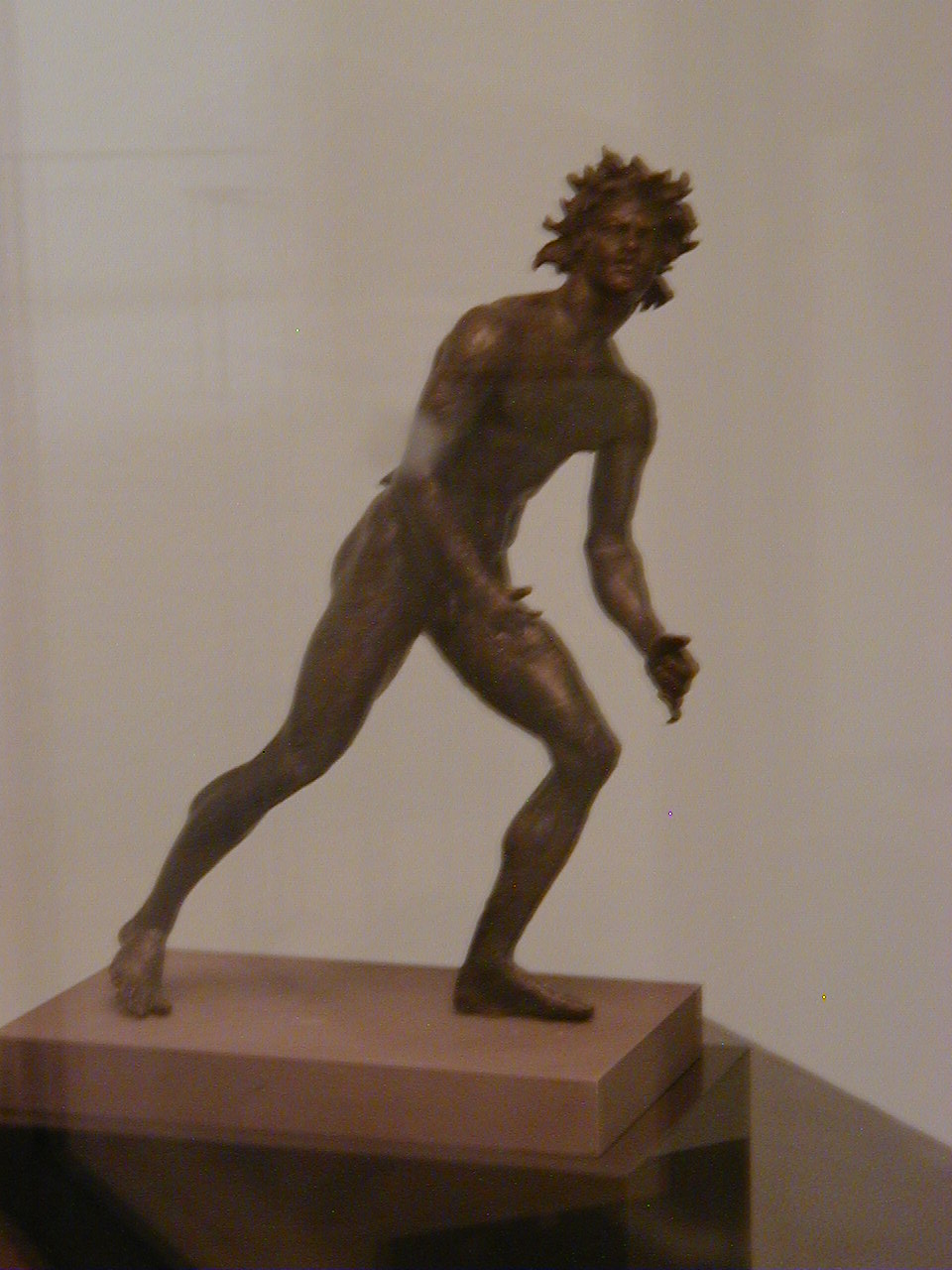
French archaeologist Alfred Merlin, then Director of Antiquities in the Protectorate of Tunisia, led the major salvage campaigns between 1907 and 1913. What his teams brought up was extraordinary. A herm figure of Dionysus, turbaned and serene, bore the signature of its maker, Boethos of Chalcedon, one of the most celebrated sculptors of the Hellenistic world. A lithe, winged boy wreathed in olive branches was identified by scholars as Agon or Eros Enagonios, Eros as the lord of contests. A marble bust probably representing Ariadne and a bronze bust of the same figure suggested the cargo included matched sets of mythological subjects. Two bronze figurines of dancing dwarfs added a note of whimsy to a collection dominated by divine subjects.
The Satyr and the Lead
Among five smaller bronzes recovered in 1910 was a satyr, its compact form capturing the wild energy of the mythological figure in a piece barely 35 centimeters tall. This bronze now resides in the Bardo National Museum in Tunis, along with the rest of the recovered cargo. But the wreck contained more than art. Lead objects, including anchors, tubes, plates, and ingots, were also aboard. Analysis of the lead ingots' isotope composition traced them to the Sierra de Cartagena in Spain, suggesting the ship had made multiple stops across the Mediterranean before its final voyage. The vessel was not merely an art transport; it was part of a commercial network that moved raw materials and luxury goods across the Roman world.
What Remains Below
Further survey work on the site was conducted by a team led by Mensun Bound, but no additional excavations have been possible. The wreck lies in waters that make sustained underwater archaeology difficult, and the political and financial complexities of undersea heritage in Tunisian territorial waters have prevented follow-up campaigns. Scholar Nikolaus Himmelmann noted that the Mahdia cargo contained no epic-scaled Homeric figures or copies of fifth-century Classical works, distinguishing it from the somewhat later Antikythera wreck found off the Greek coast. The comparison suggests that Roman art collectors had specific tastes, and that different ships carried different inventories tailored to different markets. What the seafloor near Mahdia still holds is anyone's guess. The sponge divers found one ship. The Mediterranean, with its millennia of commerce and warfare, almost certainly holds more.
From the Air
Located at 35.532N, 11.124E, approximately 5 km off the coast of Mahdia on Tunisia's eastern shore. The wreck site is underwater and not visible from the air, but the coastal town of Mahdia is a prominent promontory extending into the Mediterranean. Nearest airports: Monastir Habib Bourguiba International (DTMB), approximately 60 km north; Sfax-Thyna International (DTTX), approximately 80 km south. The cape of Mahdia is a distinctive landmark from the air.