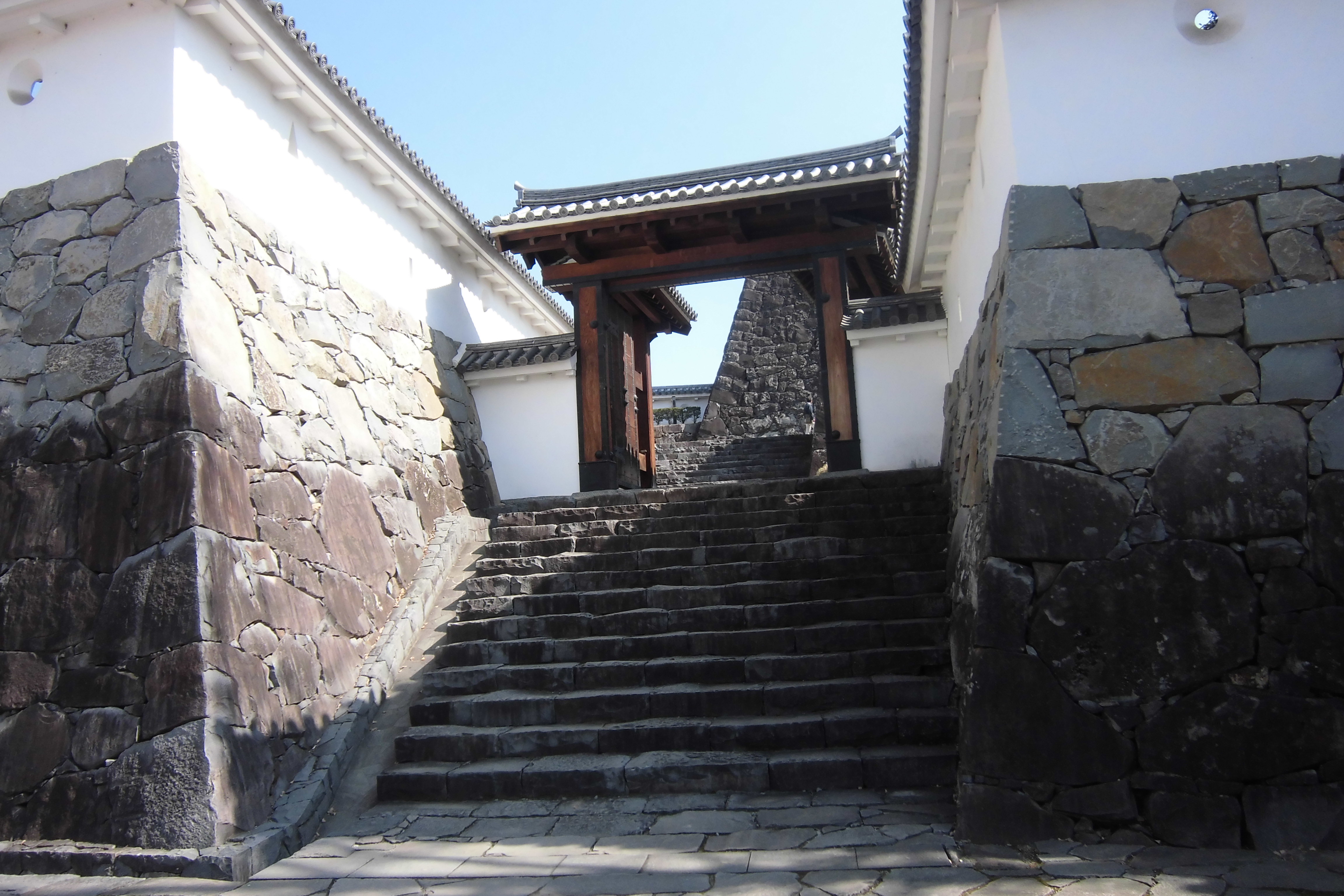
Maizuru Castle Park
The Shinsengumi were too slow. In March 1868, as the Tokugawa shogunate collapsed, the famed swordsmen-turned-soldiers marched west from Edo under Kondo Isami with orders to seize Kofu Castle before the Imperial army could reach it. They arrived to find the enemy already behind the walls. The Battle of Katsunuma that followed was a rout, and Kondo would be captured and beheaded weeks later. It was a fitting final chapter for a castle that had changed hands through betrayal, assassination, and political maneuvering for nearly three centuries. Today, the massive stone walls of Kofu Castle rise from the center of the city as Maizuru Castle Park, a ten-minute walk from the train station, its terraces open to the public since 1904.
Before the Castle, a Flood
Kofu Castle exists because Takeda Shingen tamed the water. The city of Kofu sits at the confluence of the Kamanashi and Fuefuki Rivers in the Kofu Basin, a natural bowl ringed by mountains in Yamanashi Prefecture. Before the Sengoku period warlord spent twenty years building flood control embankments along these rivers, the basin was considered barely habitable. Shingen governed from Tsutsujigasaki Castle, a fortified residence rather than a true hilltop fortress. After his death in 1573 and his son Takeda Katsuyori's defeat by the Oda and Tokugawa clans in 1582, the province fell into chaos. Oda Nobunaga's appointed governor was assassinated by Takeda loyalists within three months. Tokugawa Ieyasu won the province but was forced by Toyotomi Hideyoshi to trade it away after the 1590 Siege of Odawara. It was Hideyoshi's retainer Kato Mitsuyasu who finally chose the small hill of Ichijyomodoriyama and began building the castle that would bear the city's name.
Black Tower, Gold Tiles
Kato Mitsuyasu died in 1593 before finishing the castle. Asano Nagamasa, Hideyoshi's step-brother-in-law, completed it that same year. What he built was formidable. The castle spread in a T-shape along the ridge of the hill, its main body running east to west across terraces spanning 200 by 100 meters. The inner bailey crowned the hilltop at 100 by 50 meters, dominated by a four-story tenshu painted black with gold-colored roof tiles. Below it, a system of stone walls rose as high as 15 meters, enclosing multiple baileys and gates in a defensive labyrinth. After the Battle of Sekigahara in 1600, the Tokugawa clan claimed the castle as a strategic fallback position. If enemies ever took Edo Castle in what is now Tokyo, the shogun could retreat west to Kofu. The tenshu eventually crumbled and was never rebuilt, but the Tokugawa maintained the rest of the fortification for generations.
The Shogun's Retreat That Never Was
Kofu Castle's strategic role as the shogun's emergency refuge shaped its political importance far beyond its military use. The Tokugawa installed cadet branches of the ruling family as its lords, treating the appointment as a mark of high favor. When Tokugawa Tsunatoyo, the daimyo of Kofu, became heir to the fifth shogun Tokugawa Tsunayoshi, he moved to Edo Castle and was replaced in 1704 by Yanagisawa Yoshiyasu, one of Tsunayoshi's closest retainers. Yanagisawa, a descendant of the Takeda clan, worked to restore the region's prosperity. But when his son was transferred away, Kai Province became tenryo territory ruled directly by the shogunate through an appointed administrator. A devastating fire in 1727 destroyed the honmaru palace and the Akagenenmon gate, and the castle's slow decline began. By the time of the Boshin War in 1868 and the Shinsengumi's failed race to seize it, Kofu Castle's centuries as a power center were ending.
Stones That Remember
The Meiji government ordered all old fortifications destroyed in 1877, and Kofu Castle's remaining structures were pulled down. The outer grounds became the site of Kofu Station on the JR East Chuo Main Line, and government offices took over other parcels. But the massive stone walls, too heavy and too deeply set to easily remove, survived. In 1904 the area around the inner bailey opened to the public as Maizuru Castle Park, named for the castle's poetic alias, Maizuru, meaning dancing crane. Since the 1990s, archaeological excavations have uncovered foundations and artifacts, and reconstruction work has brought gates and a yagura watchtower back to life. The reconstructed tower, completed in 2004, now houses a museum displaying artifacts from the castle's original buildings. The site earned designation as a National Historic Site in 2019. Standing on the upper terrace today, visitors look out across the city that Takeda Shingen's flood walls made possible, built on a hilltop that three centuries of warlords, shoguns, and samurai considered worth fighting over.
From the Air
Maizuru Castle Park is at 35.665N, 138.571E in central Kofu city, Yamanashi Prefecture. The castle ruins are visible as a wooded hilltop park immediately south of Kofu Station. The Kofu Basin is a broad valley surrounded by mountains, with the Kamanashi and Fuefuki Rivers converging nearby. Best viewed from 2,000-4,000 feet AGL. Nearest airport: RJOY (Shizuoka Airport) approximately 90 km south. Mount Fuji is visible to the southeast. The Chuo Main Line railway corridor and Chuo Expressway run through the basin and serve as good visual references.