Maizuru Naval Arsenal
Forty-one destroyers slid down the ways at Maizuru between the wars, more than a quarter of every destroyer Japan fielded in World War II. That single statistic captures the scale of what this quiet port city on the Sea of Japan coast once was: one of four principal naval shipyards operated by the Imperial Japanese Navy, a place where steel, ambition, and wartime necessity converged on the shores of Kyoto Prefecture. Today the arsenal's red brick warehouses still stand along the waterfront, repurposed as museums and cultural spaces, while the pre-war dry docks and at least one of the original large cranes remain in active service, still building ships for a very different Japan.
From Naval District to Destroyer Factory
The story begins in 1889, when the Japanese government designated Maizuru as the fourth naval district responsible for defending the home islands. The bay's natural harbor, sheltered by mountains on three sides, made it an ideal anchorage. A ship repair facility with a dry dock opened in 1901, and by 1903 the yard had grown into a full-fledged arsenal capable of building warships from the keel up. Additional dry docks followed in 1904 and 1914. When the No. 3 dry dock was completed in 1914, it was the largest in Japan. The arsenal specialized in destroyer-sized and smaller vessels, and its output during World War I included ships of the Umikaze, Sakura, Kaba, Minekaze, and Momo classes, names that read like a botanical garden of Japanese naval power.
Mothballed and Reborn
The 1922 Washington Naval Treaty forced Japan to limit its fleet, and by 1923 the Navy Ministry was debating whether to close Maizuru entirely. The arsenal was largely mothballed, and much of its destroyer design and prototype work shifted to the Sasebo yard. For thirteen years the dry docks sat quiet. Then in 1936, as Japan's military ambitions expanded, Maizuru roared back to life. The reopened arsenal built destroyers at a furious pace through the late 1930s and into the 1940s. Among its products were six Fubuki-class destroyers, five of the fast Kagero class, the one-of-a-kind Shimakaze, and four Akizuki-class anti-aircraft destroyers. By war's end, Maizuru had produced 41 of the 153 destroyers relevant to the conflict, a staggering 27 percent of the total fleet.
The Port of Return
After Japan's surrender in 1945, Maizuru took on a role no one had planned for. The port became Japan's primary repatriation point for soldiers and civilians returning from Soviet-controlled territories. Over thirteen years, approximately 660,000 people stepped off ships onto Maizuru's docks, including some 460,000 internees returning from forced labor in Siberia. They arrived thin, exhausted, and often ill, carrying whatever they had managed to hide from guards. The Maizuru Repatriation Memorial Museum, opened in 1988, preserves their stories. Among its holdings is the 'Shirakaba Nisshi,' a diary written on birch bark containing 200 poems, and a memo pad smuggled home inside a pair of shoes. In 2015, UNESCO inscribed the museum's collection of over 540 repatriation records on its Memory of the World Register.
Red Brick and Reinvention
The arsenal itself went through a series of corporate transformations. In 1963 it became Maizuru Heavy Industries, then merged with Hitachi Zosen Corporation in 1971. A 2002 joint venture with JFE Engineering created Universal Shipbuilding Corporation, which in turn merged with IHI Marine United in 2013 to form Japan Marine United. Through every name change, ships have continued to leave the same berths where destroyers once launched. The red brick warehouses built between 1901 and 1921 to serve the naval base have been preserved by the city government and converted into museums, galleries, and event spaces. The former head office stands as a commemorative museum. Walking the waterfront, you can trace the full arc of modern Japan: imperial ambition, wartime industry, devastating loss, patient recovery, and quiet reinvention.
From the Air
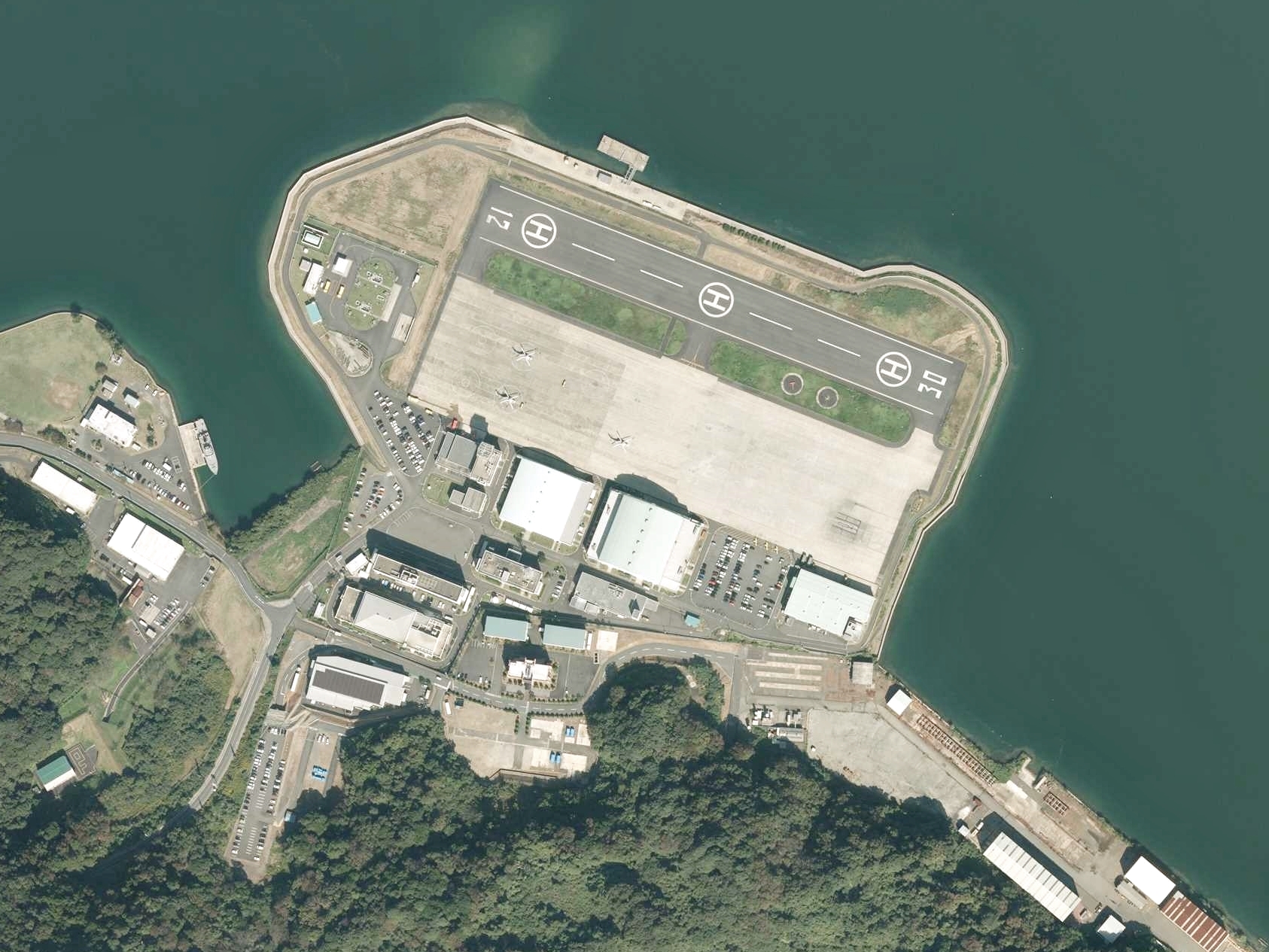
Located at 35.481N, 135.374E on the Sea of Japan coast in northern Kyoto Prefecture. The arsenal sits along the sheltered harbor of Maizuru Bay, visible as a waterfront industrial complex with distinctive red brick buildings. The bay is surrounded by mountains on three sides. The nearest significant airport is Kansai International (RJBB), roughly 130 km to the south. Osaka International (RJOO/Itami) is about 100 km south. From the air, look for the narrow bay opening and the shipyard infrastructure along the eastern shore.