Majete Wildlife Reserve
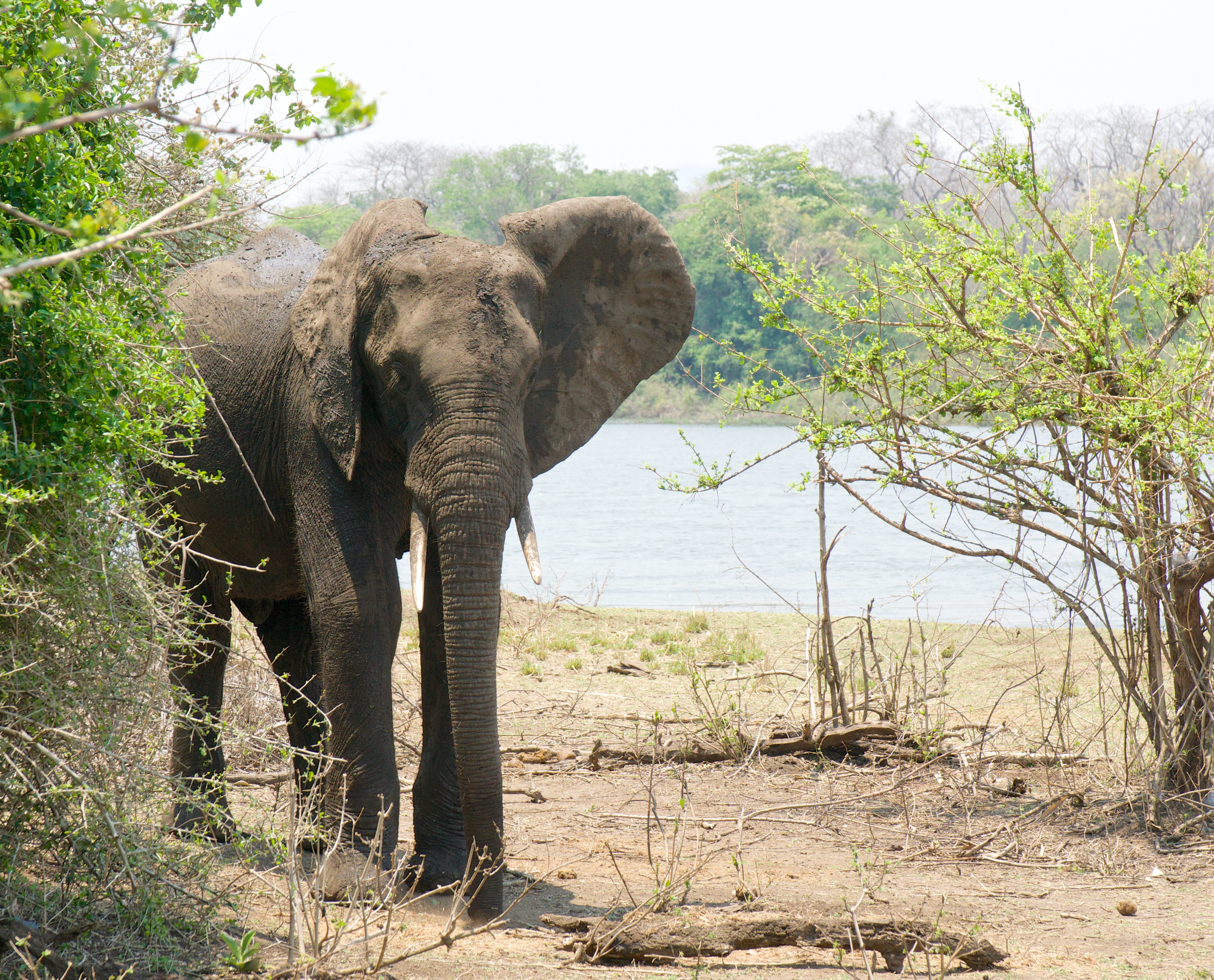
In 1988, an estimated 200 elephants roamed Majete Wildlife Reserve in southern Malawi. By 1992, every single one was dead -- killed by poachers who operated with impunity in a reserve that existed on paper but barely in practice. No fences, no functioning roads, no scouts with the resources to stop the slaughter. Majete had become what conservationists call a "paper park": legally protected, practically empty. Then, in 2003, the nonprofit organization African Parks signed a 25-year management agreement with Malawi's government. What followed was one of the most ambitious wildlife rehabilitation projects in southern Africa.
Building a Reserve from Scratch
African Parks did not inherit a functioning wildlife sanctuary. They inherited 700 square kilometers of hilly, wooded terrain in the Lower Shire Valley -- beautiful country, thick with deciduous woodland, grassy glades, acacia savannah, baobab trees, and miombo woodland on the rugged western highlands -- but almost devoid of the large animals that had once defined it. The organization started with infrastructure: 150 kilometers of new roads through the reserve, 40 kilometers of firebreaks, scout houses with electricity and running water, a fully equipped workshop and operations room, and the construction of a perimeter fence around an initial 14,000-hectare sanctuary. Three artificial waterholes were built inside. Only then did the animals begin to arrive.
Nearly a Thousand Second Chances
The restocking happened in phases, each one a logistical feat. Animals were sourced from other national parks in Malawi and from private reserves in Zambia and South Africa. Over two decades, approximately 3,000 individuals of 17 species were translocated -- black rhinos, lions, buffalo, waterbuck, bushbuck, Livingstone's eland, Lichtenstein's hartebeest, sable antelope, nyala, zebra, impala, and warthog. They were first released into the fenced sanctuary while the full perimeter was completed. Once the boundary fence enclosed the entire reserve, the animals were free to roam all 70,000 hectares. Nearly all species bred successfully, their populations growing by at least 10 percent since reintroduction. In 2019, a founder population of five cheetahs arrived from South Africa, adding the fastest land animal to a reserve that a generation earlier had been stripped clean.
The Shire River's Edge
The Shire River forms part of Majete's eastern boundary, flowing south from Lake Malawi toward the Zambezi. Along its banks, large populations of crocodiles and hippos never left -- they survived the poaching era that emptied the land of elephants, rhinos, and big cats, because the river was harder to strip bare. The waterways are fringed with riverine thicket, and the Matitu Falls on the Shire provide a scenic backdrop for one of the reserve's camping sites. Birdlife thrived too: 311 species have been recorded, reflecting the diversity of habitats that range from river margins to hilltop miombo. Majete sits at a low altitude, roughly 100 meters above sea level, making it warmer than much of Malawi. The landscape rolls and dips -- undulating country with patches of thicket, scattered baobabs standing solitary above the savannah, and lala palms clustering along the eastern lowlands.
From Paper Park to Proof of Concept
Majete was gazetted as a game reserve in 1955. Extensions in 1969 incorporated dry-season water sources, and a 1976 expansion brought the full width of the Shire River within its boundaries. None of that paperwork prevented the collapse. What changed was not the legal designation but the management model: a private-public partnership where African Parks took operational control while the Malawian government retained ownership. The model has since been replicated across the continent. Within Majete, the transformation is visible. Game drives along the unpaved roads -- a 4x4 is essential, as the reserve deliberately avoids tarmac to minimize its environmental footprint -- now yield sightings of species that had been absent for decades. Community campsites run by surrounding villages accommodate visitors at modest rates, ensuring that conservation generates local income. The reserve is about 70 kilometers southwest of Blantyre, Malawi's commercial capital, close enough to reach in a few hours but remote enough to feel like a different world.
From the Air
Located at 15.91S, 34.74E in the Lower Shire Valley of southern Malawi, approximately 70 km southwest of Blantyre. From altitude, the reserve appears as a large block of undulating woodland bordered by the Shire River to the east. The perimeter fence line may be visible as a cleared strip around the reserve boundary. The terrain is hilly in the west, flattening toward the river in the east, with scattered clearings and waterholes visible in the bush. Blantyre's Chileka International Airport (FWCL) is the nearest major airport. The Shire River, flowing south toward its confluence with the Zambezi, is a prominent navigation landmark.