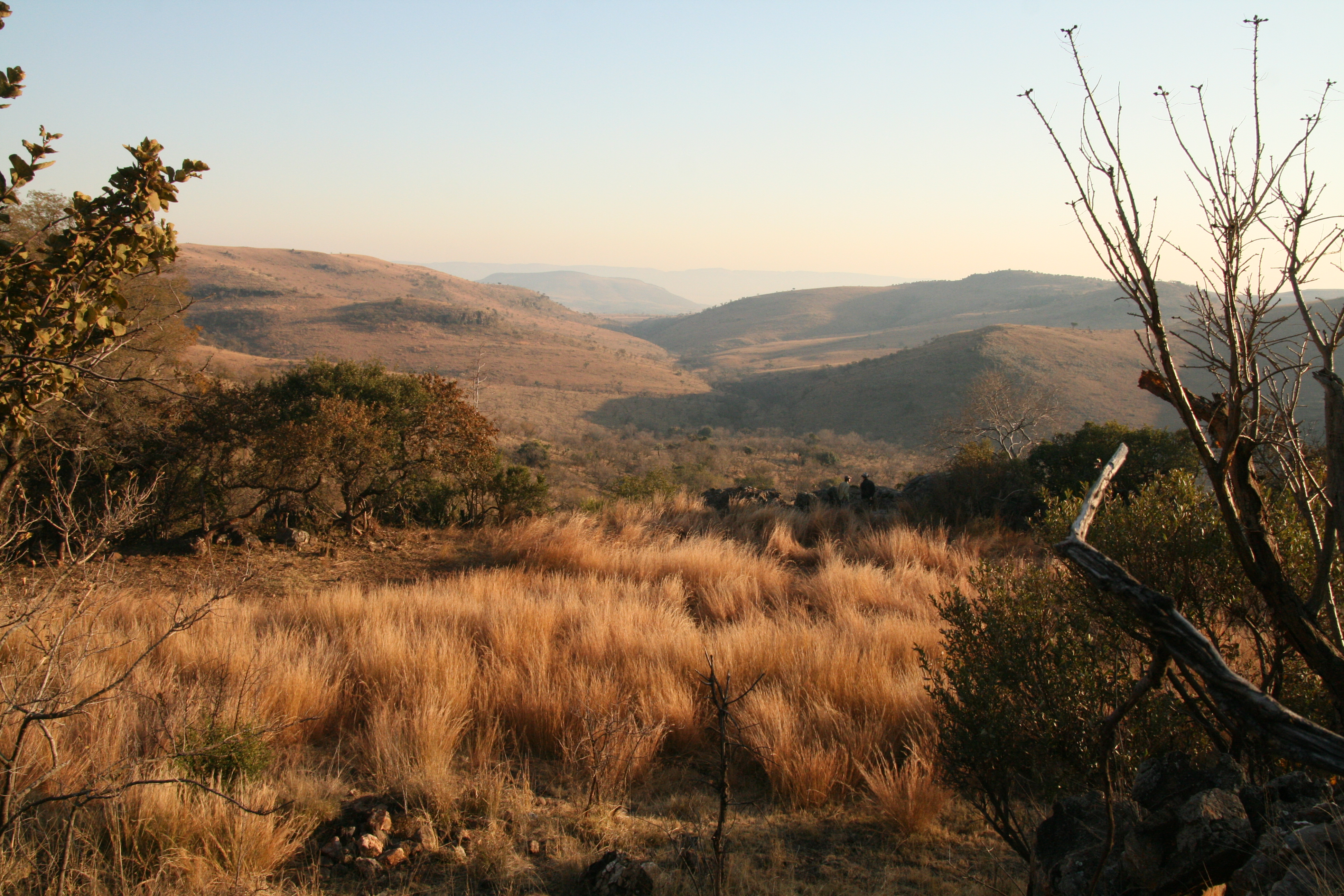
Malapa Fossil Site, Cradle of Humankind
On 15 August 2008, a nine-year-old boy named Matthew Berger chased his dog into the scrubby bush of the Cradle of Humankind, about 45 kilometers north-northwest of Johannesburg. He tripped over a log, looked down, and noticed a bone protruding from a chunk of rock. His father, paleoanthropologist Lee Berger of the University of the Witwatersrand, recognized it immediately as a hominid clavicle. That stumble opened Malapa, a fossil-bearing cave that would yield some of the most complete early human ancestor skeletons ever found and ignite a fierce debate about where our genus, Homo, actually begins.
A Landscape Riddled with Ancestors
Malapa sits within the Cradle of Humankind World Heritage Site, a stretch of dolomitic limestone about 15 kilometers northeast of the famous Sterkfontein and Swartkrans caves. This region of South Africa has produced nearly a third of all evidence for early human origins found in Africa, a density of discovery unmatched anywhere else on the continent. Investigations here stretch back to 1935, and by the time Lee Berger launched his mapping project in March 2008, approximately 130 caves had been cataloged in the area, with around twenty known fossil deposits. Berger's goal was straightforward: plot the known sites on Google Earth so researchers worldwide could share geographic data. He did not expect his son to find a new species in the process.
The Skeletons in the Death Trap
What emerged from Malapa over the following years was extraordinary. The cave yielded partial skeletons of a juvenile male and an adult female of a previously unknown species, which Berger and his team named Australopithecus sediba in 2010. The fossils were roughly two million years old, dating to a period when the transition from ape-like Australopithecus to the genus Homo was underway but poorly understood. The skeletons were remarkably complete by paleoanthropological standards, preserving enough anatomy to paint a detailed picture of the species. Australopithecus sediba had long arms like an ape and short, powerful hands, but its pelvis was surprisingly advanced and its long legs were capable of striding and possibly running in a human-like manner. The combination was startling: a creature caught between two worlds, arboreal and bipedal, grasping and walking.
A Death Scene Preserved in Stone
The cave itself told a story of sudden death. The hominid skeletons were found articulated, meaning the bones were still roughly in their anatomical positions rather than scattered, suggesting the individuals died quickly and were buried before scavengers could disarrange them. They were not alone. Among the fossils lay the remains of a sabre-toothed cat, antelopes, mice, and hares, all preserved in the same sediment. The leading hypothesis is that the cave functioned as a natural death trap: animals, including the hominids, may have fallen through an opening in the ground into the cave below, or been swept in by water. The mix of species frozen together in the rock offers a snapshot of the ecosystem these early human ancestors inhabited, a world of predators and prey sharing the same grasslands and dolomite ridges.
Bridging the Gap to Homo
Australopithecus sediba's mosaic anatomy placed it at the center of one of paleoanthropology's most contested questions: what species gave rise to the genus Homo? Berger's team argued that A. sediba was a strong candidate for a transitional species between Australopithecus africanus, known from nearby sites like the Taung Child and Mrs. Ples, and early members of our own genus such as Homo habilis or even Homo erectus. Not all researchers agreed, and the debate remains active. Some argue the fossils are too recent or too geographically isolated to represent the actual ancestor. Others point out that the combination of primitive and derived features in A. sediba is exactly what a transitional form should look like. Whatever its precise placement in the family tree, the discovery underscored how much remains unknown about human origins, even in one of the most intensively studied fossil regions on Earth.
Deep Time Beneath the Grasslands
From the air, the Cradle of Humankind reveals nothing of its significance. The landscape is unremarkable grassland and scattered bush, the limestone hidden beneath the surface. Yet beneath these gentle hills lies a network of caves that has preserved more evidence of early human evolution than almost any other place. Malapa is one node in this underground archive. The site remains active, with ongoing excavation and study, and its fossils continue to generate new research. For a discovery that began with a boy chasing a dog, Malapa has yielded insights that reach back two million years, connecting a quiet patch of South African veld to the deepest questions about what it means to be human.
From the Air
Located at 25.90°S, 27.80°E within the Cradle of Humankind World Heritage Site, about 45 km north-northwest of Johannesburg. The landscape is rolling grassland over dolomitic limestone, unremarkable from the air. Lanseria International Airport (FALA) is approximately 20 km to the southeast. O.R. Tambo International Airport (FAOR) in Johannesburg is about 60 km to the east. The nearby Sterkfontein Caves and Maropeng visitor center are visible landmarks. Visibility is generally excellent, though summer thunderstorms on the Highveld can develop rapidly.