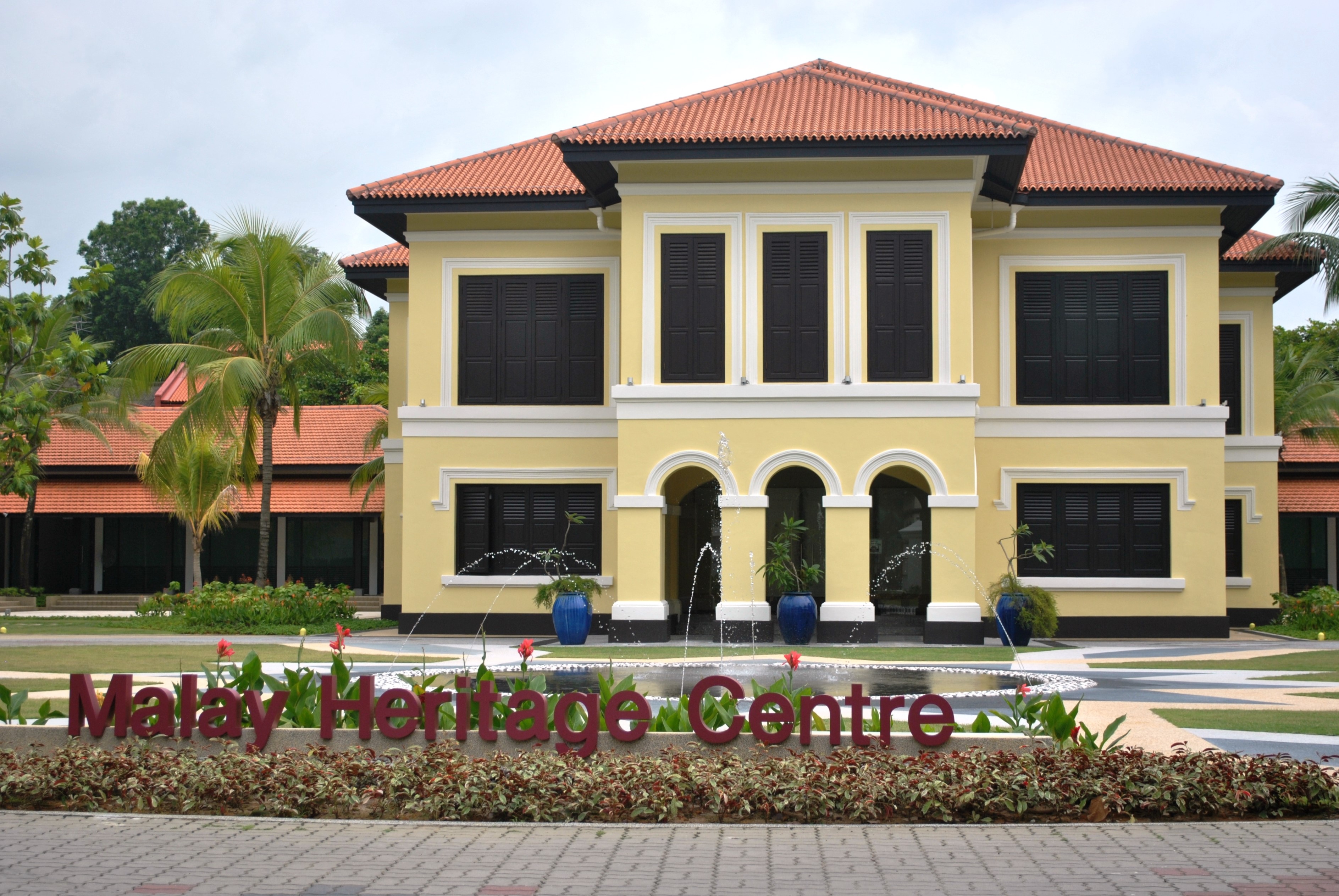
Malay Heritage Centre
In 1824, Stamford Raffles gave Sultan Hussein Shah of Johor fifty-six acres in Kampong Glam. It was not a gift born of generosity -- it was the price of a treaty, the cost of British access to a strategic island at the crossroads of Asian trade. On that land, the sultan's son would build a palace. Two centuries later, the palace still stands on Sultan Gate, though it no longer belongs to any royal family. It belongs to everyone. The Istana Kampong Glam is now the Malay Heritage Centre, a museum dedicated to the culture, customs, and stories of Singapore's Malay community, housed inside the very building where that community's complicated relationship with colonialism began.
A Palace Built Between Worlds
Sultan Ali Iskandar Shah, son of Hussein Shah, commissioned the Istana Kampong Glam in the 1840s. He hired George Drumgoole Coleman, the Irish architect responsible for much of early colonial Singapore's built landscape, and the result was something that belonged to no single tradition. Coleman blended Palladian columns and symmetry with indigenous Malay architectural motifs, creating a building that reflected the cultural intersection its occupants navigated daily. The sultans who lived here held titles recognized by the British but wielded little real power. Their authority was ceremonial, their residence grand but constrained. A succession dispute in 1896 ended even that arrangement, and the estate passed into state ownership. For over a century afterward, the palace sat in various states of use and neglect, its significance acknowledged but unfulfilled.
From Royal Residence to National Monument
Restoration began in 2004, and in June 2005, Prime Minister Lee Hsien Loong officially opened the Malay Heritage Centre. The transformation gave the building a purpose its royal builders could not have anticipated: telling the story of Malay Singaporeans through artifacts, multimedia installations, and diorama displays. The centre became both archive and classroom, preserving traditions that rapid urbanization might otherwise have erased. During Singapore's fiftieth anniversary celebrations in 2015, the Istana Kampong Glam received designation as a national monument, a formal recognition that the building's significance extends beyond architecture to the cultural identity it represents. The government committed S$1.7 million in annual funding in 2008, freeing the centre from the fundraising that had previously covered two-thirds of its operating costs.
Reinvention and Reopening
The centre closed for its first major renovation in August 2011, reopening thirteen months later with galleries that had been entirely reimagined. Over eighty percent of the artifacts displayed had never been shown before. The revamped permanent galleries reframed Kampong Glam itself as the story's protagonist, presenting the neighborhood as a lens through which to explore Malay history across centuries of trade, migration, and cultural exchange. A second, more ambitious closure began on 30 October 2022 for comprehensive redevelopment. The centre marked the occasion with MHC ClosingFest, a month of programming that served as both farewell and promise. Visitors gathered to celebrate local Malay culture before the doors shut for what is projected to be a multi-year transformation, with reopening confirmed for 25 April 2026.
Kampong Glam's Living Heritage
The Malay Heritage Centre sits at the heart of Kampong Glam, one of Singapore's oldest and most distinctive neighborhoods. Sultan Gate, Arab Street, and Haji Lane surround the grounds with textile shops, perfumeries, and restaurants that carry on the commercial traditions Raffles encouraged when he designated this area for the Malay and Arab communities in the 1820s. The Sultan Mosque, with its golden dome, rises just steps away. What makes the centre meaningful is not just what it preserves inside its walls but how it connects to the living culture outside them. Kampong Glam remains a place where Malay and Muslim heritage is not displayed behind glass but practiced in daily life, from the call to prayer that drifts over the rooftops to the Jawi script that still appears on shop signs. The museum gives context to a neighborhood that, in turn, gives the museum life.
From the Air
Located at 1.302N, 103.860E in the Kampong Glam historic district of central Singapore. The golden dome of the nearby Sultan Mosque is a prominent visual landmark from the air. Nearby airports: Singapore Changi (WSSS) approximately 15 km east, Seletar Airport (WSSL) approximately 12 km north. Best viewed below 3,000 feet. The Istana Kampong Glam sits within a cluster of heritage buildings along Sultan Gate, off Beach Road.