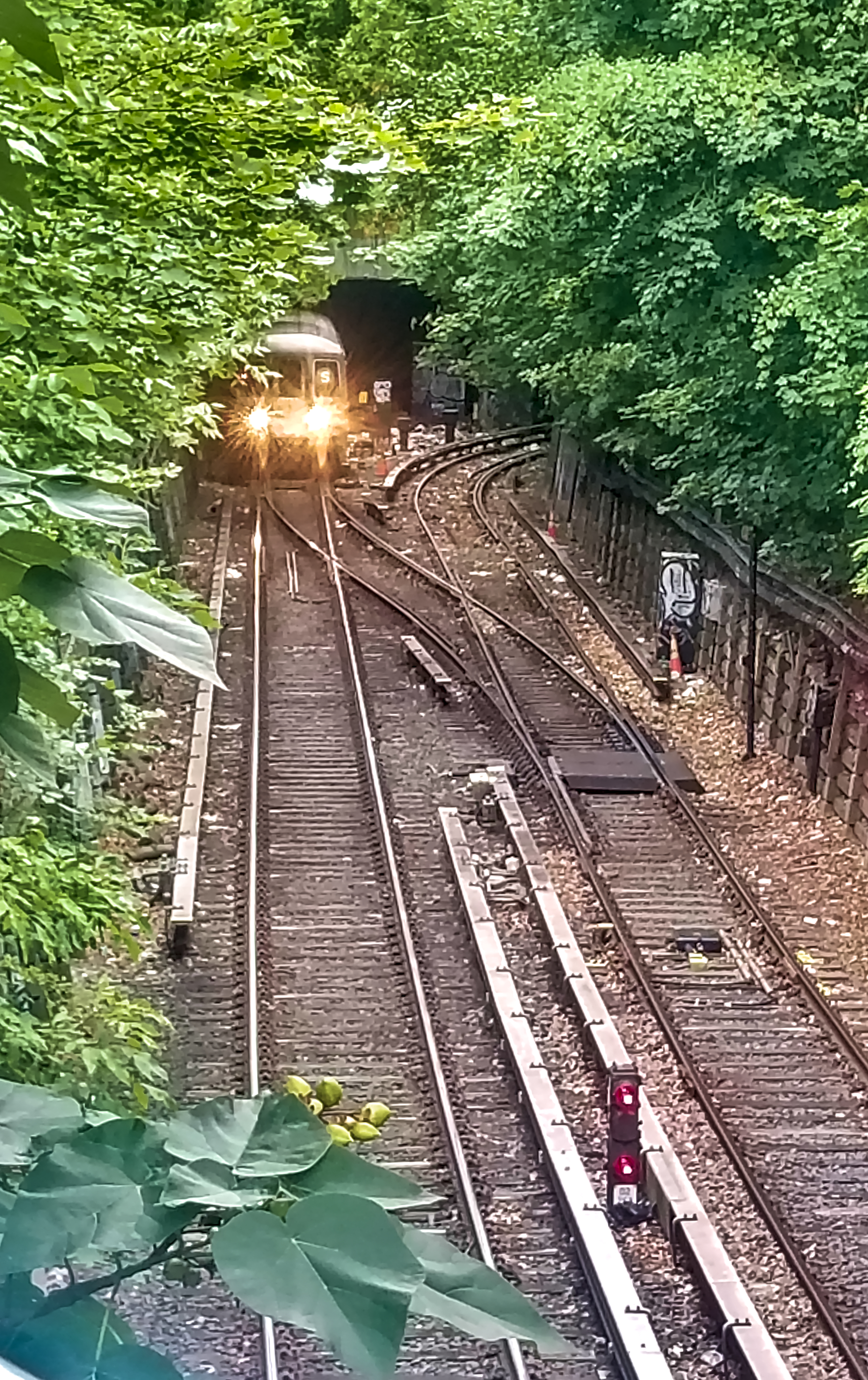
Malbone Street Wreck
Three days before the wreck, Antonio Edward Luciano buried his infant daughter. She had been taken by the Spanish flu, the same epidemic that had recently put Luciano himself in bed. He was 25 years old, a crew dispatcher for the Brooklyn Rapid Transit Company, and he had never operated a train on the Brighton Beach Line. On the evening of November 1, 1918, with the BRT's motormen on strike, the company put Luciano behind the controls of a five-car train carrying 650 rush-hour passengers. The standard training requirement was 90 hours of instruction and hands-on experience. Luciano had received a fraction of that. At 6:42 p.m., he entered the sharp S-curve tunnel beneath Willink Plaza at five times the posted speed limit. What happened next remains the deadliest disaster in the history of the New York City Subway.
A Strike, a Shortcut, and a Curve
The BRT was locked in a labor dispute. Rather than halt service, management filled the gaps with whoever was available. Luciano was a dispatcher - he coordinated schedules, not trains. But the BRT needed bodies in the cab, and Luciano was willing. The route he was given included a particularly treacherous stretch: a reverse S-curve where the Brighton Beach Line ducked beneath Flatbush Avenue near the entrance to Prospect Park. The curve had been built as a temporary workaround while a new underground mainline was under construction, routing Coney Island-bound trains around the construction zone. The speed limit through the curve was low for good reason. The track bent sharply, descended a 70-foot grade from Crown Heights, and the tunnel walls left no margin for error. Luciano, unfamiliar with the route, overshot multiple stations in the minutes before the crash. He never applied the brakes on the descent.
Wooden Cars at Speed
The train consisted of three heavy motor cars and two lighter trailer cars. Standard coupling procedure placed a single trailer between motor cars, using the heavier units to stabilize the lighter ones. On this train, the two trailers - cars 80 and 100 - were coupled together in the middle of the consist. When the lead car's rear wheels jumped the rails in the curve, the physics of the situation turned catastrophic. The two lightweight trailers, top-heavy with standing passengers, tore free of the tracks entirely. Their wooden bodies sheared apart against the tunnel walls, ripping away the left-hand sides and most of the roofs. The New York Times described the aftermath as "a darkened jungle of steel dust and wood splinters, glass shards and iron beams projecting like bayonets." The motor cars at the front and rear of the train sustained relatively minor damage. Nearly all of the deaths - at least 93, with some counts reaching 102 - occurred in the two wooden trailers.
Trial Without Answers
Luciano walked away from the wreck uninjured and left the scene. He and several BRT officials were indicted for manslaughter. Public fury was intense: at a December 1918 meeting, members of the victims' association were reportedly heard shouting "Kill them! Shoot them!" though the association denied the allegation. The trial was moved from Brooklyn to Mineola in Nassau County to ensure a fair proceeding. But the trial's structure worked against the truth. Because the BRT had to defend both its officials and Luciano simultaneously, neither side could adequately explain the excessive speed. Luciano claimed the brakes failed, but the BRT's own inspection showed the brakes were in working order and had never been applied. His insomnia, his grief, his unfamiliarity with the route - none of these were explored. By 1921, all defendants had been acquitted or had their charges dropped. The BRT paid out approximately $1.6 million in settlements before going into receivership.
The Street That Changed Its Name
The disaster was so traumatic that the city renamed the street where it happened. Within weeks, Malbone Street became Empire Boulevard - a name it still carries. Only a detached one-block stub in Crown Heights retains the original name. The BRT never recovered financially. It emerged from receivership in 1923 as the Brooklyn-Manhattan Transit Corporation, inheriting the obligation to pay the remaining claims. The tunnel itself stayed in daily passenger service for another 40 years, first as part of the Brighton Line and then the Franklin Avenue Line. In 1974, another train derailed at the same spot, this time due to a split switch rather than excessive speed - no fatalities resulted, but some passengers were injured, and the coincidence was unnerving. The tunnel today remains part of the Franklin Avenue Shuttle but is not used in regular passenger service.
Ghosts and Guardrails
The wreck drove changes that shaped the modern subway. Wooden cars were eventually phased out of tunnel and subway service, though the process took decades - cars of partial wooden construction ran on elevated lines until 1969. Speedometers became mandatory. Dead-man's controls were improved to halt runaway trains. Automatic trackside devices called trippers - mechanical train stops that physically engage the brakes if a train passes at excessive speed - were installed throughout the system. Luciano himself disappeared into a new identity. He adopted the name Anthony Lewis, became a house builder in Queens Village, and retired to Tucson, Arizona, where he died in 1985 at the age of 91. On November 1, 2019, 101 years after the crash, officials installed a permanent bronze memorial plaque at the northern exit of Prospect Park station and co-named the corner of Empire Boulevard and Flatbush Avenue as "Malbone Centennial Way."
From the Air
Located at 40.6628N, 73.9625W in the Flatbush neighborhood of Brooklyn. The crash site is beneath Willink Plaza, the intersection of Flatbush Avenue, Ocean Avenue, and Empire Boulevard (formerly Malbone Street), at the northeastern corner of Prospect Park. From altitude, Prospect Park's large green rectangle is the primary landmark, with the crash site at its northeastern entrance. The Prospect Park B/Q subway station is directly adjacent. Nearest airports: JFK (KJFK) 9nm southeast, LaGuardia (KLGA) 10nm north-northeast, Newark (KEWR) 14nm west. Recommended viewing altitude: 2,000-3,000 feet to see the relationship between Prospect Park, the intersection, and the subway line routing.