Malek National Museum and Library
Haj Hossein Aqa Malek lived for 101 years, from 1871 to 1972, and spent a substantial portion of that century collecting. Manuscripts, printed books, historical artworks -- the richest man in Iran assembled them with the same discipline others applied to building empires. Then he gave them all away. The museum and library that bear his name began in 1908 as a small collection in Mashhad, grew to fill his house near Tehran's Grand Bazaar, and eventually required a six-story building of its own in the historic Bagh-e Melli district. What makes the Malek National Museum and Library unusual is not just what it contains, but the terms of its gift: the collection was endowed as a non-profit, open to Iranian and foreign scholars alike, with the explicit aim of expanding knowledge among the people.
A Collector's Century
Malek began assembling his library in Mashhad, where manuscripts and printed books formed the core of the collection. He later moved everything to his residence in the Tehran Grand Bazaar district, transforming his home into a free-access library for scholars. The deed of endowment he drafted was specific: the institution would serve education, it would charge nothing, and its doors would remain open to anyone who came to learn. His eldest daughter, Ezzat Malek Malek, became one of the museum's most important contributors, shepherding its development long after her father's initial vision was established. Iran's first private museum had been built not by a government initiative but by one family's conviction that beauty and knowledge should not be hoarded.
The Street of Religions
In 1996, the collection moved from Malek's Grand Bazaar house to a purpose-built facility in the Bagh-e Melli precinct. The six-story building was designed in an Islamic architectural style befitting its contents. Its location is remarkable: the surrounding street is known informally as the Street of Religions, because it holds two churches, a fire temple, a synagogue, and a mosque in close proximity. This convergence of faiths makes the area one of Tehran's most distinctive cultural corridors and draws visitors -- domestic and international -- who come as much for the street itself as for any single institution along it.
Manuscripts and Memory
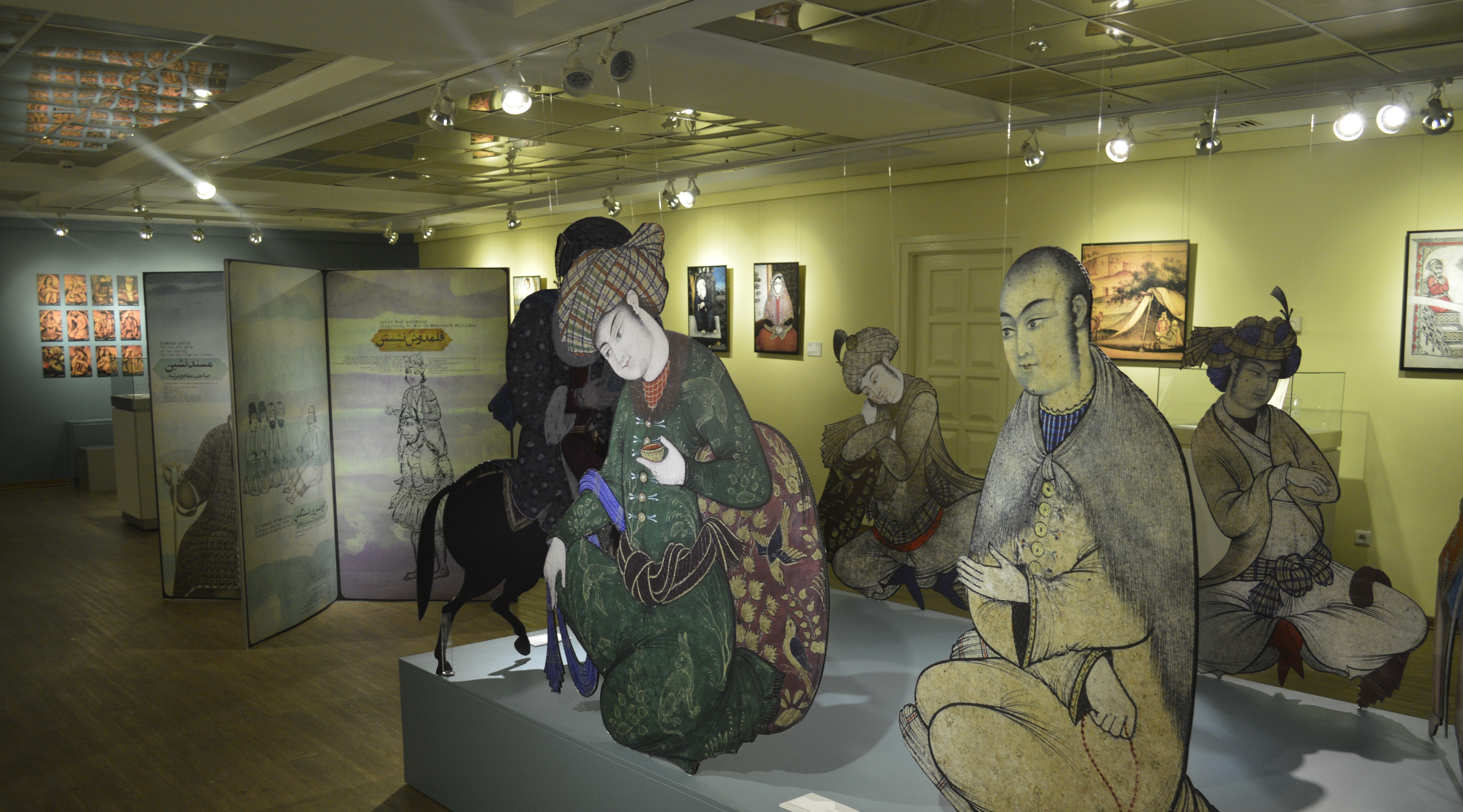
The collection spans Iranian history from the first millennium B.C. to the present day. Its manuscript holdings place it among Iran's six great libraries of exquisite handwritten works. Visitors encounter books, documents, and periodicals alongside artworks that trace the aesthetic traditions of Persian civilization across three thousand years. The museum holds permanent exhibitions of stamps and rotating temporary exhibitions that draw from its deep reserves. For university students and researchers, the library functions as a working archive. For tourists, the museum offers a compressed encounter with the breadth of Iranian artistic achievement -- calligraphy, miniature painting, decorative arts, and the physical objects of daily life across centuries.
Getting There
Practical access reflects the museum's public mission. Imam Khomeini Central Metro Station sits nearby, alongside a taxi terminal and two bus terminals. The Bagh-e Melli area is considered the cultural-historical center of Tehran, and the museum anchors a cluster of institutions that reward a full day's exploration. The building itself is easy to spot: six stories of Islamic-inspired architecture in a district where most structures serve bureaucratic rather than aesthetic purposes. Inside, the reading rooms and exhibition halls operate on a pace that rewards patience -- this is not a collection designed for quick consumption but for the sustained attention that Haj Hossein Aqa Malek believed knowledge required.
From the Air
Located at 35.687N, 51.416E in central Tehran, in the historic Bagh-e Melli district near Imam Khomeini Square. The six-story museum building sits in one of the city's densest cultural zones. Nearest airports are Mehrabad International Airport (OIII), approximately 8 km to the west, and Tehran Imam Khomeini International Airport (OIIE), roughly 50 km to the southwest. The area is identifiable from the air by its proximity to major government buildings and the dense commercial grid of the Grand Bazaar to the south. Best viewed on approach to Mehrabad from the east.