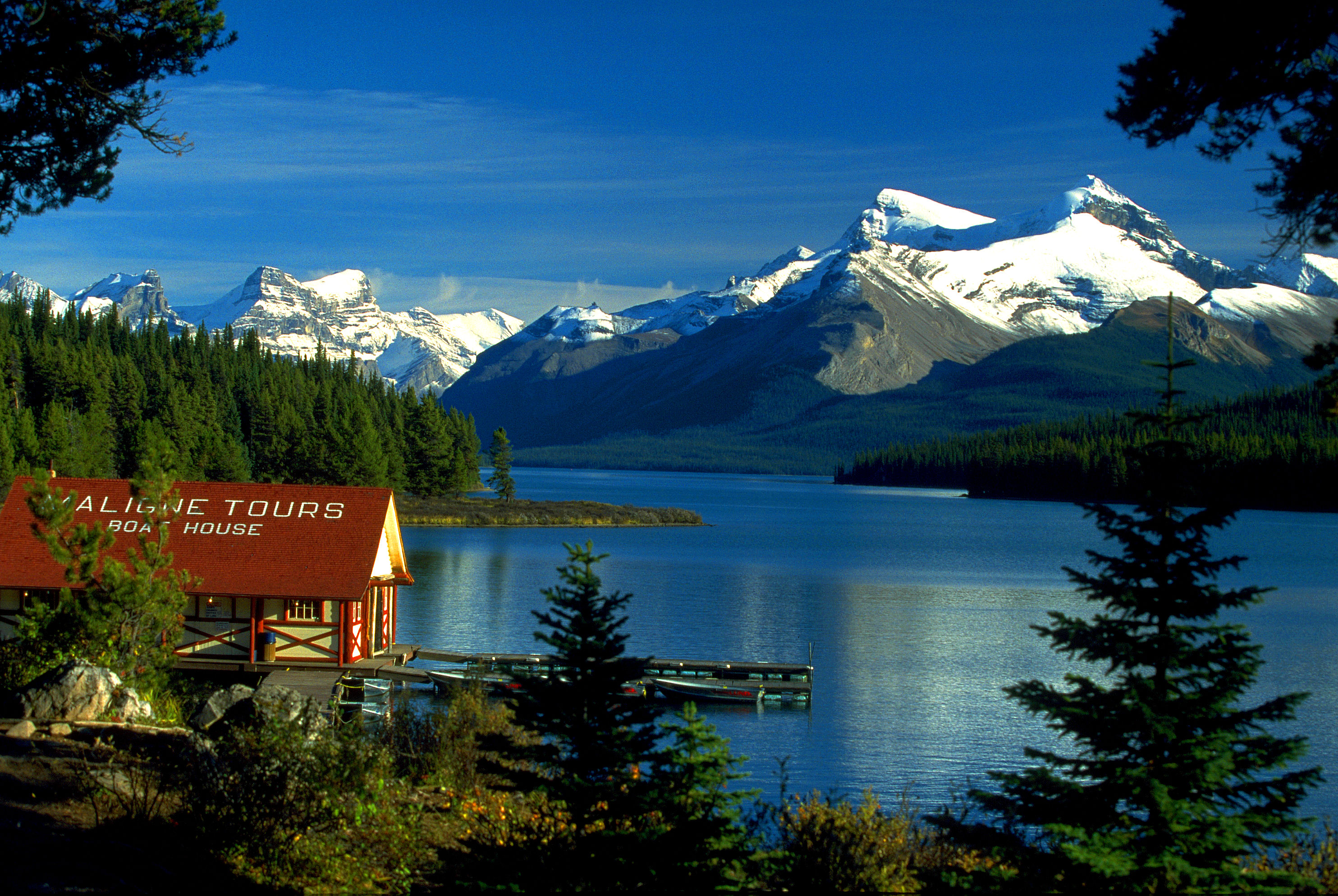
Spirit Island and the Most Photographed View in the Rockies
It's possible you've never heard of Spirit Island but almost certain you've seen it. A tiny speck of trees rising from turquoise water, framed by glacier-draped peaks - the image has sold a million postcards, graced a million calendars, convinced a million tourists to visit the Canadian Rockies. Spirit Island sits at the south end of Maligne Lake in Jasper National Park, accessible only by boat across 14 kilometers of water so impossibly blue it looks artificial. Indigenous peoples knew this lake for millennia; they called it 'Chaba Imne,' the Beaver Lake. Europeans didn't find it until 1908. Kodak once claimed Maligne Lake was the most photographed spot in the world. Whether or not that's true, Spirit Island has become the defining image of Canadian wilderness.
The Discovery
Mary Schäffer, an American Quaker widow, became one of the first Europeans to see Maligne Lake in 1908 - guided there by Stoney Nakoda Chief Samson Beaver, who drew her a map from memory. The lake had been known to Indigenous peoples for generations but remained outside European awareness until Schäffer's expedition. She named it Maligne (French for 'wicked') for the difficulty of reaching it, though the lake itself was anything but wicked. Her photographs and writings introduced the Canadian Rockies to an international audience. She returned in 1911 to map the lake properly, discovering that it was the largest in the Canadian Rockies - 22 kilometers long, fed by glaciers, cold and impossibly clear.
The Island
Spirit Island is tiny - a mound of glacial debris barely large enough to support a handful of evergreen trees. Its fame is entirely about composition: the small island in the foreground, the vast lake in the middle ground, the peaks of the Maligne Range towering behind. The scene is so perfectly arranged it looks designed by a landscape painter. And in a sense it was designed - not by humans but by the same glacial forces that carved the lake, deposited the island, and lifted the mountains. The Stoney Nakoda people have their own stories about the island, which they consider sacred. The name 'Spirit Island' came from these traditions, though the stories themselves are rarely shared with outsiders.
The Photograph
What makes a photograph iconic? Spirit Island has everything: foreground interest, middle distance, dramatic background, perfect symmetry, otherworldly color. The turquoise water comes from glacial flour - rock ground fine by ice and suspended in the water, scattering light into impossible blues and greens. The angle is specific: most Spirit Island photographs are taken from a single viewpoint at the south end of the lake, where the island aligns perfectly with the valley and peaks behind it. This is the shot that sold Kodak film, inspired Ansel Adams comparisons, and convinced generations that the Canadian Rockies are the most beautiful mountains on Earth.
The Journey
Spirit Island is not easy to reach, which is part of its appeal. Maligne Lake is 48 kilometers from Jasper townsite via a winding mountain road. At the lake, visitors board tour boats for the 45-minute cruise to the island. Private boats are prohibited beyond the first narrows, protecting the viewshed from traffic. The boat docks briefly at Spirit Island - just enough time to take the photograph, stand where millions have stood, experience the scene that defined a wilderness. Then it's back across the glacier-fed water, past cliffs where mountain goats balance, under peaks that hold their snow year-round. The journey is half the experience.
Visiting Maligne Lake
Maligne Lake is located in Jasper National Park, Alberta, 48 kilometers southeast of Jasper townsite via Maligne Lake Road. Boat tours to Spirit Island operate seasonally (mid-May to mid-October); book in advance as they sell out quickly. The cruise takes 90 minutes round-trip with a brief stop at the island. Canoe and kayak rentals are available but restricted to the north end of the lake. The chalet at the lake's north end offers food and gifts. Maligne Canyon, a spectacular slot canyon, is along the access road - stop on the way. Jasper townsite has full services. Edmonton is 360 kilometers east. Visit early morning or late afternoon for the best photography light; midday crowds can be heavy. The lake is what you came to Canada to see.
From the Air
Located at 52.70°N, 117.65°W in Jasper National Park, Alberta. From altitude, Maligne Lake appears as a long turquoise finger extending into the mountains - the color is startling against the surrounding peaks and forests. Spirit Island is barely visible, a dark dot near the lake's south end. The Maligne Range rises to the west; the Queen Elizabeth Ranges to the east. The lake's color comes from glacial flour suspended in the water, creating the iconic turquoise that photographs can barely capture. Jasper townsite is visible to the northwest. The lake extends 22 kilometers from its outlet to its southern glacial sources. This is the view that sold a million postcards.