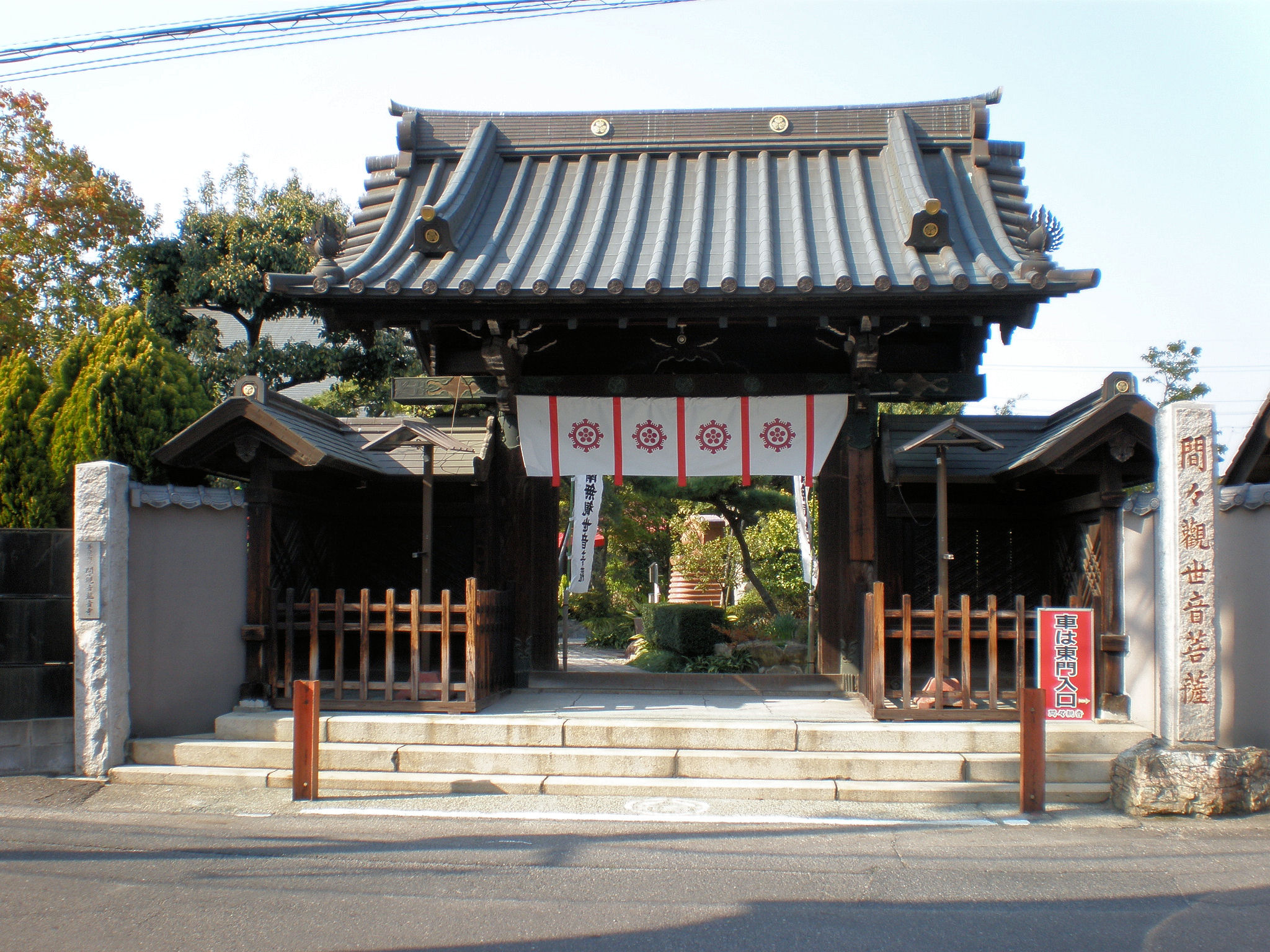
Mama Kannon
The purification fountain looks like no other in Japan. Where most temples offer a simple stone basin, Mama Kannon's chozu-ya features breast-shaped spouts, water streaming in gentle arcs as visitors rinse their hands before prayer. It is the first clue that this unassuming Jodo-shu Buddhist temple on the outskirts of Komaki, Aichi Prefecture, occupies a singular niche in the Japanese spiritual landscape: it is the country's only temple devoted entirely to breastfeeding and motherhood.
Moved by a Warlord's Command
Mama Kannon was founded in 1492 as Ryuon-ji, perched on the slopes of Mount Komaki in what was then Owari Province. The temple's early decades were quiet, but the turbulence of the Sengoku period soon reached its gates. Oda Nobunaga, the ambitious warlord who would eventually unify much of Japan, ordered the temple relocated from the mountainside to its present position just north of Mount Komaki. The move placed the temple closer to the surrounding community, and over the centuries it became woven into local life as the 24th stop on the Owari Thirty-three Kannon pilgrimage and the fifth temple on the Owari Saigoku Thirty-three Kannon circuit. Pilgrims walking both routes still pass through today, pausing beneath the gate before continuing their journey across the Nobi Plain.
A Miracle in Milk
The temple's principal image is a Thousand-Armed Kannon, the bodhisattva of compassion in the Jodo-shu tradition. Over time, devotion at Mama Kannon took on a focus found nowhere else in Japan. According to temple legend, in 1665 a woman suffering from lactation problems prayed fervently before the Kannon. Her prayers were answered: she began to produce milk and was able to nurse her child. Word spread, and the temple became a destination for expectant and new mothers seeking blessings for safe childbirth, abundant milk, and healthy infants. The name 'Mama' itself, written with characters meaning 'interval upon interval,' carries a phonetic echo of the Japanese word for breast, reinforcing the temple's maternal identity in the popular imagination.
Sculptures That Surprise
Visitors who arrive without knowing the temple's specialty are in for a visual jolt. Breast-shaped carvings and sculptures appear throughout the grounds, from the water fountain at the entrance to decorative reliefs on stone lanterns. Ema prayer boards, where worshippers write their wishes, are carved in the shape of breasts rather than the traditional flat wooden plaques found at other shrines and temples. The effect is striking but never irreverent; these forms are presented with the same care and devotion as any other sacred imagery in Japanese Buddhism. Pregnant women make up a visible share of the visitors, tying their prayers to the boards and circling the main hall in quiet contemplation. The overall atmosphere is one of earnest hope rather than novelty, though the temple has earned a place on lists of Japan's most unusual sacred sites.
A Pilgrim's Pause on the Nobi Plain
Komaki sits in the heart of Aichi Prefecture's industrial belt, surrounded by the factories and suburbs that sprawl between Nagoya and Gifu. Yet Mount Komaki and the temple's tree-lined approach offer a pocket of stillness. The Owari Thirty-three Kannon pilgrimage has connected temples across this landscape for centuries, and Mama Kannon remains one of its most distinctive stops. Beyond the spiritual circuit, the temple draws curious travelers and cultural tourists who have read about it in guidebooks or on Atlas Obscura. The combination of a genuine devotional tradition, unusual visual culture, and a story stretching back over five hundred years makes Mama Kannon a place where the sacred and the surprising coexist without contradiction.
From the Air
Located at 35.295N, 136.909E in Komaki, Aichi Prefecture. The temple sits just north of Mount Komaki (elevation 86 meters), which serves as a useful visual landmark. Nagoya Airfield (RJNG) lies approximately 5 km to the southeast. Chubu Centrair International Airport (RJGG) is about 40 km to the south. Best viewed at low altitude; the compact temple grounds are nestled among residential streets and may be difficult to distinguish above 3,000 feet without reference to Mount Komaki.