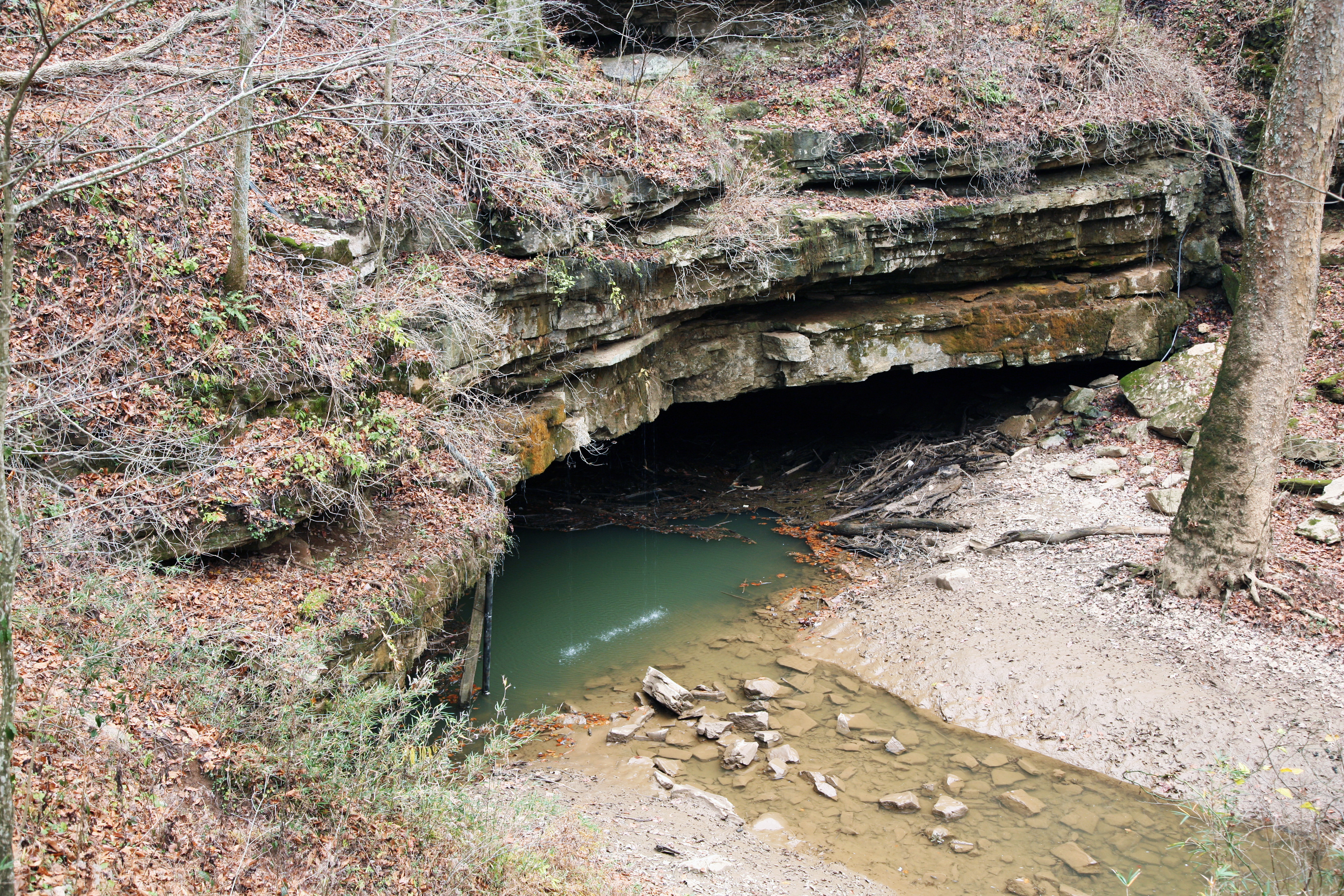
Mammoth Cave
Beneath the Kentucky hills lies the world's longest known cave system. Mammoth Cave has over 400 miles of explored passages - more than twice the length of the second-longest cave - and explorers continue adding miles each year. The cave formed over millions of years as groundwater dissolved limestone, creating passages, chambers, and underground rivers. Humans have used the cave for at least 5,000 years; Indigenous peoples mined minerals deep inside. In the 19th century, enslaved people gave tours; one, Stephen Bishop, became the cave's greatest explorer. Today, Mammoth Cave National Park offers multiple tour options into a underground world where time moves differently, where eyeless fish swim in eternal darkness, and where 400 miles is just what we've found so far.
The Length
Mammoth Cave's claim as the world's longest cave is secure and growing. The current surveyed length exceeds 420 miles, with new passages being discovered and mapped regularly. The nearest competitor (Sistema Sac Actun in Mexico) has roughly 220 miles. The cave's extent results from several factors: a large limestone formation, geologic stability over millions of years, and - crucially - generations of explorers systematically pushing into tight passages and mapping what they find. The cave is actually a system of interconnected caves; what were once thought to be separate caves (Mammoth, Flint Ridge, others) were eventually connected, dramatically extending the known length.
The History
Indigenous peoples entered Mammoth Cave at least 5,000 years ago, leaving cane torches, footprints, and human remains deep inside. They mined gypsum and other minerals; the cave preserved their traces perfectly. Modern exploitation began in the early 1800s for saltpeter (used in gunpowder). Enslaved people provided much of the labor and also gave tours to paying visitors. Stephen Bishop, enslaved by the cave's owner, became Mammoth Cave's greatest explorer - crossing the 'Bottomless Pit,' discovering eyeless fish, and creating the first comprehensive map. After emancipation, Bishop planned to buy his freedom; he died before completing the purchase. His contributions are now recognized prominently.
The Life
Mammoth Cave supports unique cave-adapted species. The Kentucky cave shrimp, eyeless cave fish, and various cave-adapted invertebrates live in the cave's underground rivers and pools. These species evolved in total darkness over millions of years, losing pigmentation and eyes while developing enhanced other senses. The cave environment is fragile; changes in water quality, temperature, or chemistry can devastate populations. Cave biologists study these species both for their evolutionary significance and as indicators of groundwater health. The sightless creatures of Mammoth Cave represent evolution in its starkest form - adaptation to a world without light.
The Tours
Mammoth Cave National Park offers multiple tour options, from easy paved paths to strenuous crawling expeditions. The Historic Tour covers passages used since the 1800s. The Domes and Dripstones Tour features large rooms and formations. The Wild Cave Tour requires crawling through tight passages for 6+ hours. Tours vary by length, difficulty, and accessibility. All tours require tickets; reservations are strongly recommended. The cave maintains 54°F year-round - bring a jacket regardless of surface weather. Each tour reveals different aspects of the cave's geology, history, and biology. The 420 miles of passages mean no single tour sees more than a fraction of the whole.
Visiting Mammoth Cave National Park
Mammoth Cave National Park is located in south-central Kentucky, accessible via Interstate 65 (Cave City exit). The visitor center sells tour tickets and provides orientation. Tours range from 1.25 to 6+ hours; options accommodate various physical abilities. Reservations are essential for popular tours and summer visits. The surface park includes hiking trails, camping, and canoeing on the Green River. Cave City and Park City have motels and restaurants. Louisville is 90 miles north; Nashville is 100 miles south. The cave temperature is 54°F regardless of season - dress in layers. Flash photography is prohibited. The longest cave in the world is growing longer; what you see today is a snapshot of ongoing discovery.
From the Air
Located at 37.19°N, 86.10°W in south-central Kentucky. From altitude, Mammoth Cave National Park is visible as a forested area along the Green River - the karst topography that creates the cave system produces a distinctive landscape of sinkholes and depressions. The cave itself is entirely underground, invisible from above. Cave City is visible to the east along Interstate 65. The Green River winds through the park. Louisville is 90 miles north. Nashville is 100 miles south. The terrain is Kentucky hill country - what appears to be solid ground is actually riddled with passages extending 400+ miles beneath the surface.