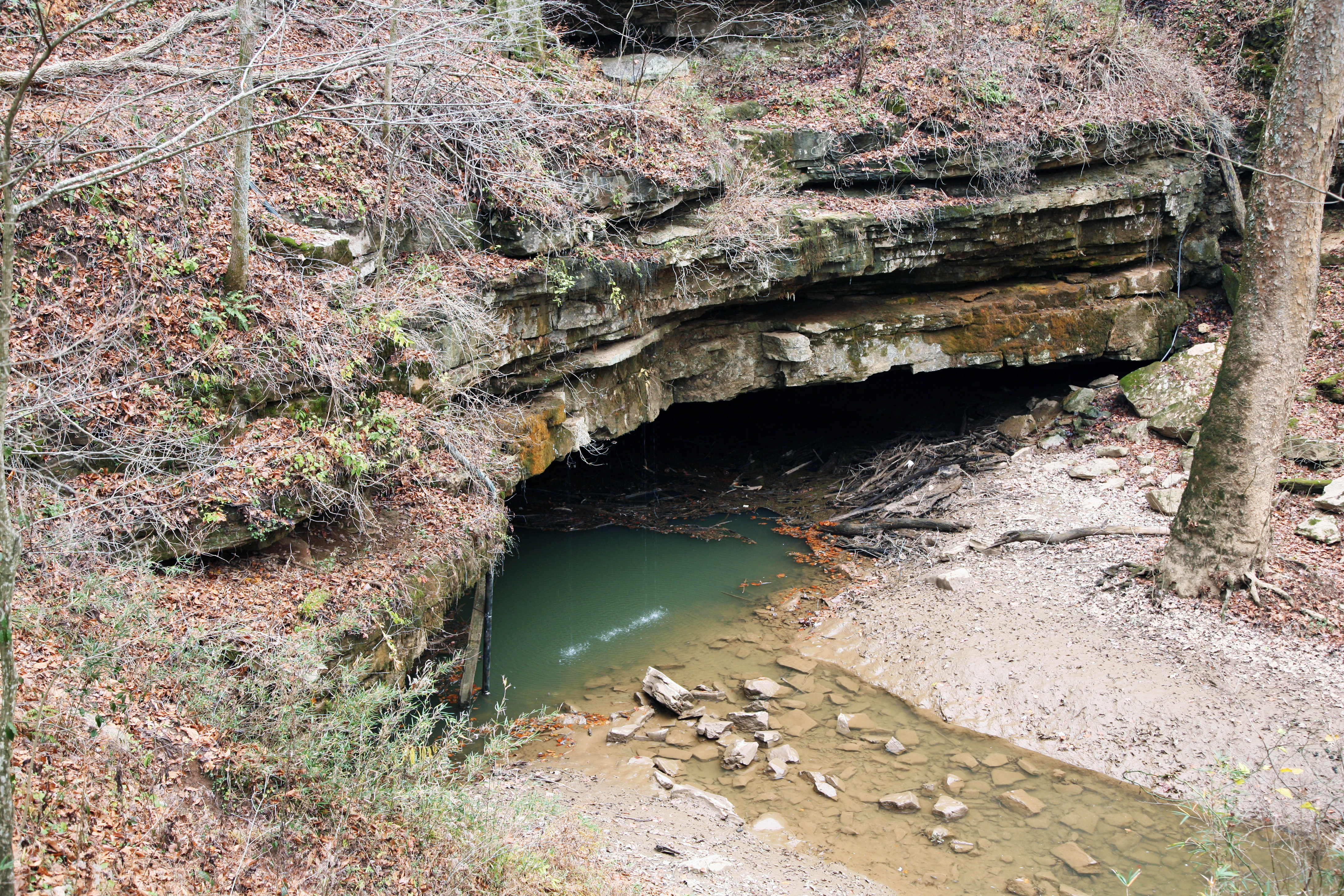
Mammoth Cave: The Labyrinth That Never Ends
Mammoth Cave doesn't end. Over 420 miles of surveyed passages make it the longest known cave system on Earth - twice as long as its nearest competitor - and explorers add miles every year. The limestone beneath central Kentucky has been dissolving for 10 million years, creating a three-dimensional maze that connects to smaller caves previously thought separate. Enslaved African Americans led the first commercial tours in the 1830s; Stephen Bishop, who explored and mapped vast sections by torchlight, remains the cave's most legendary guide. In the 1840s, tuberculosis patients lived underground for months, hoping cave air would cure them. It didn't, but they left their names smoked on ceilings, signatures from people who sought healing in darkness. The cave keeps its secrets but slowly reveals its scale.
The Formation
Mammoth Cave formed as slightly acidic groundwater dissolved limestone over millions of years. The Green River and its tributaries provided the hydraulic gradient - water flowing toward the river carved horizontal passages at different levels as the river cut deeper. Five distinct levels of passages record the river's history, the oldest near the surface, the youngest still actively forming. The cave's length comes from its age and the extensive limestone formation; passages extend in every direction, connecting to systems once thought isolated. Cave exploration continues; Mammoth has been connected to multiple 'separate' caves, each connection adding miles to the total.
The Guides
Stephen Bishop arrived at Mammoth Cave in 1838 as an enslaved man. Within two years, he had explored more cave than anyone before him, crawling through tight passages, crossing underground rivers, mapping by memory in absolute darkness. He discovered Mammoth's connection to other cave levels and features including Mammoth Dome and the River Styx. Bishop drew the first comprehensive map of the cave from memory; it remained accurate for decades. He led tours for 18 years, earning fame but not freedom until shortly before his death in 1857. Other enslaved guides - Mat and Nick Bransford among them - continued the tradition. The cave's early exploration was African American exploration.
The Tuberculosis Experiment
In 1842, Dr. John Croghan bought Mammoth Cave and constructed wooden huts inside for tuberculosis patients, believing the constant temperature, humidity, and 'pure' air would cure the disease. Patients lived underground for months - cooking, sleeping, and slowly dying in darkness. The experiment failed; the damp accelerated the disease. By spring 1843, the underground hospital closed. The stone huts remained, along with names smoked on the ceiling by patients marking their presence. The signatures survive - tuberculosis patients who sought miracles in darkness, leaving their names in smoke before returning to die in daylight.
The Exploration
Modern cave exploration has connected Mammoth to the Flint Ridge system, the Fisher Ridge system, and others, creating a single network exceeding 420 miles. The Cave Research Foundation and Central Kentucky Karst Coalition continue systematic survey; each expedition adds passages. Some areas require technical climbing, diving, or squeezing through spaces barely wider than human bodies. The cave's three-dimensional complexity - passages crossing above and below each other - makes mapping challenging. Total length is unknown; the cave extends beyond park boundaries, beneath private land, toward connections not yet discovered. Every expedition finds new cave.
Visiting Mammoth Cave
Mammoth Cave National Park is located in central Kentucky, roughly 90 miles south of Louisville via I-65. The park offers multiple cave tours ranging from easy walking to strenuous crawling; reservations are strongly recommended, especially for popular tours. The Historic Tour follows routes first mapped by Stephen Bishop. The Domes and Dripstones Tour showcases formations. Wild Cave Tours involve crawling through undeveloped passages. Surface hiking trails explore the Green River valley. The cave maintains 54°F year-round; bring a jacket. Cave City and surrounding towns offer lodging and the peculiar tourist attractions that accumulate near famous caves.
From the Air
Located at 37.19°N, 86.10°W in central Kentucky. From altitude, the karst landscape is visible as irregular terrain with sinkholes dotting the surface - each depression marking where the roof of an underlying passage collapsed. The Green River winds through the landscape, its valley marking the base level toward which all cave passages ultimately drain. The cave itself is invisible from above; the 420+ miles of passages extend in all directions beneath unremarkable forest and farmland. Mammoth Cave National Park preserves surface above the cave system. The scale is difficult to grasp: twice as long as any other known cave, extending beyond park boundaries, beyond what anyone has yet explored.