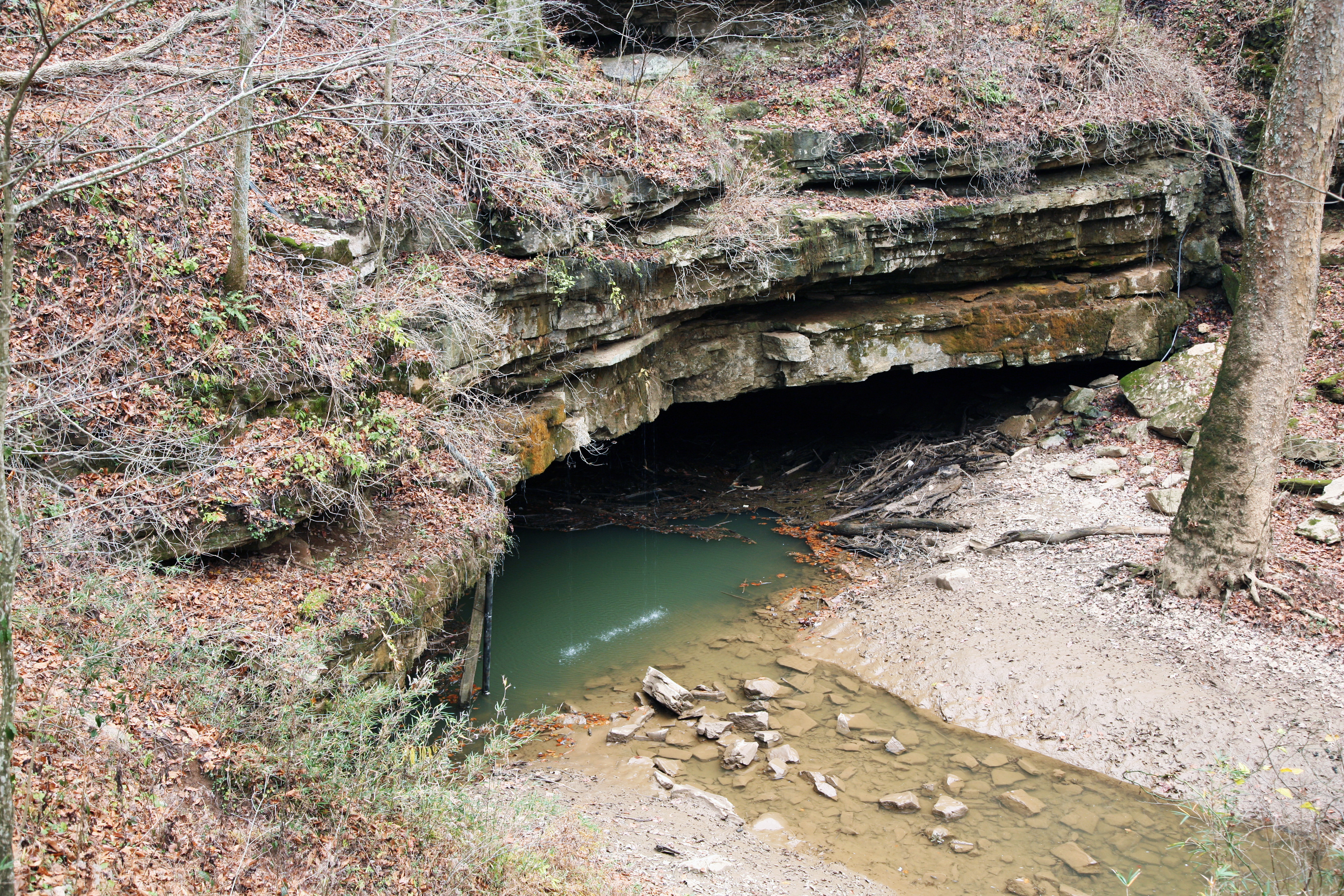
Mammoth Cave: The Longest Cave Ever Explored
They've been exploring Mammoth Cave for over 200 years and still haven't found the end. With more than 420 miles of surveyed passages, Mammoth Cave is the longest known cave system on Earth - twice as long as the second-longest. Expeditions continue to push into unexplored territory; each year adds miles to the total. The cave was a tourist attraction before the Civil War, when enslaved guides led visitors through passages by candlelight. It's been a saltpeter mine, a tuberculosis hospital, a mushroom farm. Its rivers hold species found nowhere else on Earth. And still the cave continues, passage after passage, beyond the reach of maps and lights, keeping its full extent secret.
The System
Mammoth Cave formed in limestone deposited 325 million years ago. Acidic groundwater dissolved the rock over millions of years, creating passages at multiple levels as the water table dropped. The cave's extraordinary length results from geography: the drainage basin is large, the limestone thick and relatively horizontal, and river systems have excavated extensively. Five levels of passages record the cave's evolution, from high dry passages to active streams still dissolving rock. The system includes vertical shafts, horizontal tunnels, domes, and river passages - every variety of cave formation in abundance. The scale defies comprehension; walking 420 miles underground would take weeks of continuous travel.
The Guides
The cave's first explorers were enslaved men. Stephen Bishop arrived at Mammoth Cave in 1838 and became its most famous guide, mapping miles of passages, discovering significant sections including the Bottomless Pit, and guiding visitors including Ralph Waldo Emerson. Bishop was self-educated, brilliant, and constrained by slavery; the cave he explored better than anyone else was owned by others who profited from his knowledge. After emancipation, other African American guides continued the tradition. The cave tourism industry was built on Black expertise; the guides' names are preserved in the passages they discovered while their fuller stories have only recently received attention.
The Connections
Mammoth Cave's record length came partly through connection. For years, Mammoth Cave and nearby Flint Ridge cave system were believed separate. In 1972, cavers pushed through a flooded crawlway and emerged in Mammoth Cave - connecting the systems and creating an instant world record. Since then, additional connections have incorporated other caves into the system. Each connection jumps the total length; each also simplifies what are really complex networks of intersecting passages. The mapping continues through organized projects, with cavers spending thousands of hours in wet, tight passages extending surveys. The 420-mile total grows each year.
The Life
The cave's perpetual darkness hosts species found nowhere else - eyeless crayfish, cave shrimp, beetles adapted to absolute blackness. The ecosystem depends on nutrients washed from the surface; the cave river carries organic material that feeds cave-adapted life. Several species are endangered; cave ecosystems are fragile and isolated. The National Park Service balances tourism with preservation, limiting access to sensitive areas. What took millions of years to evolve can be destroyed by contamination from the surface. The unique species represent evolutionary experiments in survival without light - life finding ways in environments that seem hostile to it.
Visiting Mammoth Cave
Mammoth Cave National Park is located in south-central Kentucky, approximately 90 miles south of Louisville via Interstate 65. Multiple cave tours are offered, ranging from easy walking tours to strenuous crawling trips; reserve in advance, especially for summer and special tours. The Historic Tour follows routes used since the 1800s. The Wild Cave Tour includes crawling through tight spaces. Above ground, the park offers hiking, camping, and river recreation. The visitor center provides orientation and tickets. Cave temperatures average 54°F year-round; wear layers. Allow at least half a day for cave tour and exploration. The experience of walking where 420 miles of passages extend into darkness is humbling - the world's longest cave continues beyond every light.
From the Air
Located at 37.19°N, 86.10°W in the rolling hills of south-central Kentucky. From altitude, Mammoth Cave National Park appears as forested land amid surrounding farmland - the park boundary visible as a change in land use. The Green River winds through the park. The cave system is entirely invisible from above; 420 miles of passages lie beneath ordinary-looking terrain. The visitor center and cave entrance areas are visible as small developed zones. Bowling Green is visible to the south. The landscape gives no hint of what lies beneath - the same limestone hills that look unremarkable from altitude contain the world's most extensive cave system, a subterranean geography larger than many surface river systems.